alright, i've been having a problem with USB Devices for a while now. The problem is that some USB Devices work fine and others don't. My mouse works fine. And when I need to print , I plug in my printer and windows detects it and it works fine. Same thing with my camera when I have to copy pictures onto my computer. No problems there.
But when I try to plug in my MP3 players, the mp3 players don't show up at all. I plug them in, then windows shows that the device was recognized (with the little notification in the corner for new hardware detected and the 'sound') , but when I go to look for the mp3 player(s) (they should show up as a drive letter - removable storage in 'my computer'), nothing appears there. Same thing with my USB thumb drives.
So i'm not sure why some devices work while others don't. I've already tried removing all my USB drivers and letting windows reinstall them but that doesn't seem to do the trick. My mp3 players and thumb drives are recognized perfectly on my other computer so I know there's nothing wrong with them. Any idea what's going on here? It's obviously throwing a hissy fit with removable storage devices but i'm not sure why.
Oh yeah, and also, my mp3 players and thumb drives, and any other device i tried worked fine before. Not sure why out of the blue certain devices stopped working.
Message edited by RobertEnglund on 11-12-2007 at 12:54:36 PM
Your camera showing up as a removable drive in "my computer"? Have you tried the devices you are having problems with at the moment in another computer to make sure they are fine?
my camera shows up in "my computer" , and it shows the name of my camera but without a drive letter , just a small icon of a camera next to it. here's a screenshot of what it looks like. and like my original post says, the devices that don't work on my computer work fine on my other.
do you ran diskmgmt.msc to make sure there is not something else taking the letter it wants to use. my card reader has taken my flash drives letter before. you only need to fix it once and it will remember....
BC,they do show up in device manager. Using Win XP SP2. Haven't loaded the drivers from cd because I don't have the CD and the manufacturer's website doesn't have the drivers.
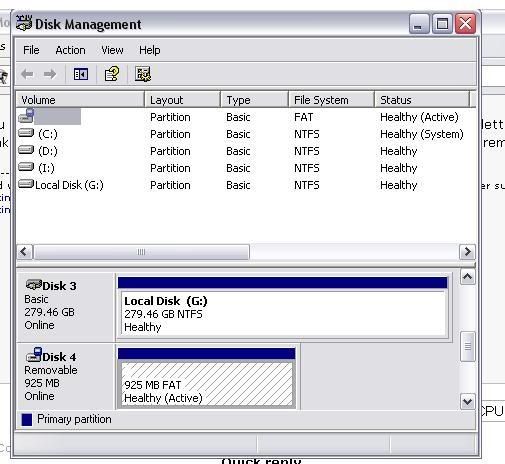
Nukemaster, I ran disk managment , here's what shows up whenever I ran it. What do I need to do from this point? The Device in question is the one that shows up with no drive letter that's in the FAT format.
Right click the drive and click on "Change Drive Letter and Paths..."
Now click on ADD, then select the letter you want to use(make sure it is not a letter that will not be used in the future.you dont want a conflict..)
Now go look in my computer...
SUCCESS!!!! YAY 256 megs of "extra" space
Note: this change will only effect your computer. So the letter you select will not be used on other computers unless you go set it on every computer you use....
Message edited by nukemaster on 11-22-2007 at 02:49:29 AM
thanks for the walkthrough, it's funny because i've actually done this before but wasn't sure if you wanted me to the same thing. anyways, the drive letter was change to P, i think i assigned it like J or K before. It shows up as P in disk management , but when I go to my computer, it's not there. When i type in P:\ in the explorer bar i get an error msg saying it can't be found. but I was able to explore my P drive in disk management. So what's going on here? It looks like i'm ALMOST done solving the problem, but would like for it to show up whenever i open "my computer"
yeah, when I explore from disk management it kinda works. It'll allow me to see what's in the drive but after about two seconds it'll redirect me to my computer where the drive won't show up.
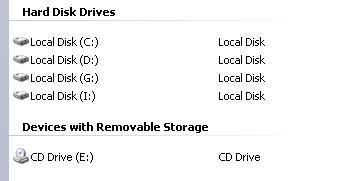
what I also noticed is that when i Look in my computer there's no drive there
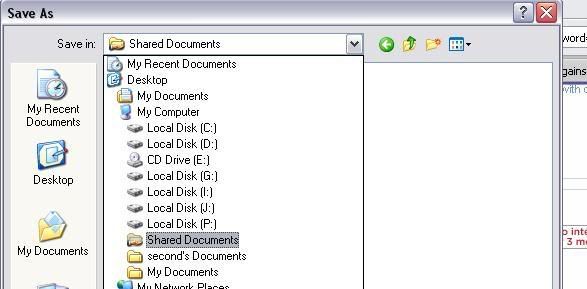
BUT when i try to save a file and browse to find a location to save it on my computer from the pulldown menu, the drives letter's that i've assigned to my usb devices are showing up.
if you look at the screenshot of my computer there's only like 4 drive letters there, but on the other screenshot on the pulldown menu, there's like 6. the extra drives are from when I tried renaming the driver letter before, and i guess the computer remembered those changes. and no, i've never used software to hide my drive letters or anything funky like that.
Message edited by RobertEnglund on 11-23-2007 at 04:15:33 PM
This process was the cause of the USB drives not showing up properly. It seems to be a normal Windows process, but it is also registered as a worm. In the registry, in HKLM->Software->Microsoft->Windows->CurrentVersion->Run there was an entry for rundll32.exe with the title "WildTrangent CDA", which I think is related to AIM games.
It seems that I'm the only one who's having this problem, but maybe there's someone else out there with this problem for which the solution is far from obvious.
Thanks for the help BC, i think I had run across that post on google before I checked here or one similar to that. Still pretty much nothing. I did go into my registry and delete the drive letters that weren't being used by my HDD's or DVD-Rom drive and went back into disk management and reassigned a drive letter to my removable devices. Still doesn't want to show up in my computer. But at least now I can at least access my mp3 player through this computer, just have to go trough disk management.
Another thing is that I can't see my scanner at all. Windows doesn't even detect its' hooked up. I'm probably just going to back everything up and reinstall windows.
I had a somewhat similar problem (looked for link to topic, but I can't find it). After a fresh install of vista (on newly built computer) the OS would not recognize any external hard drives unless they were plugged in after booting up the operating system. If you rebooted with it plugged in, it would disappear - and also take forever to finish its reboot. Flash drives, however, were recognized fine. Anyway, point of story is it never got totally fixed but it improved after following MB mfg. advice to download the chipset from Intel's website and install it. Intel says don't bother reinstalling it for USB related problems (or something like that), but it did improve things for me. Maybe worth a try?
You are about to answer a thread that has been inactive for more than 6 months. If you still wish to proceed, please ensure that your posting is original and does not duplicate or overlap any prior responses to this thread.