AMD Code Name Troubles
AMD produced a multitude of CPUs with eight different codenames for the Socket 939 platform. Technologically, these differed only in three important areas: production process, L2 cache size and support for the SSE3 instruction set. AMD introduced this last aspect into its CPUs beginning in May 2005.
When a processor's production process is changed or a new feature is added, this is not reflected in the product name. For example, the Athlon 64 3500+ exists with and without SSE3 extensions as well as in 90 nm and 130 nm versions. In other words, the customer may buy the Clawhammer, Newcastle, Winchester or Venice version of the processor, but wouldn't be able to tell the difference from the retail package or the model number. This is problematic, as all of these versions differ significantly where performance and heat dissipation are concerned.
Since buyers want some way to differentiate the individual variants, the retail channel has come up with its own solution and has begun quoting the processor's codename next to the model number. This exemplifies how confusing buying a CPU can be for the customer, and how hard it is for retailers to advertise processors in a meaningful way.
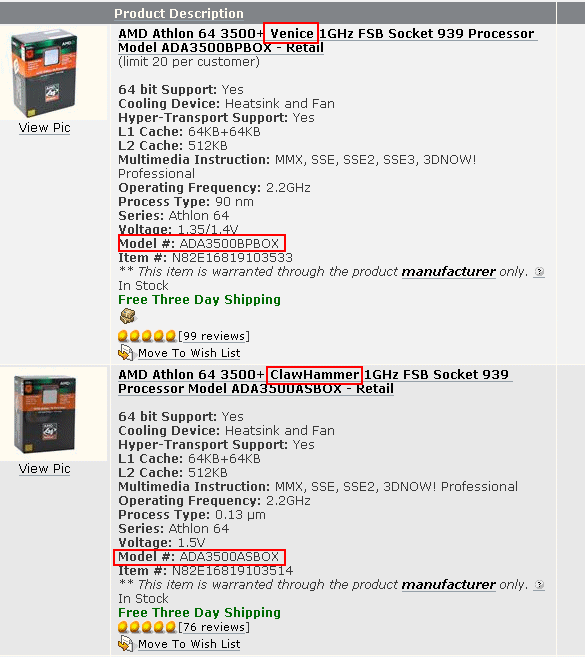
Special identifiers such as the codename and the model number are necessary to help customers find their way around the multitude of AMD processors.
In the past, there have been several reports of re-labeled AMD CPUs finding their way into the retail channel. In response to this, the chipmaker has come up with an exceptional way to help their customers identify original AMD CPUs, giving their customers some peace of mind. The boxed versions of processors have a little hologram in the bottom left corner on the front of the box.
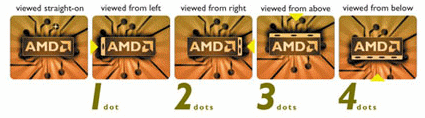
AMD describes how to check the authenticity of the hologram. As explained, different details will be visible when the hologram is viewed from different directions.