Extreme Edition: Extreme Extra Performance?
| Pentium EE 800 Series | |
|---|---|
| 0 | SSE3, TM2, HT, C1E, XD, EMT64 |

The Pentium Extreme Edition 840 will set you back by $1,100.
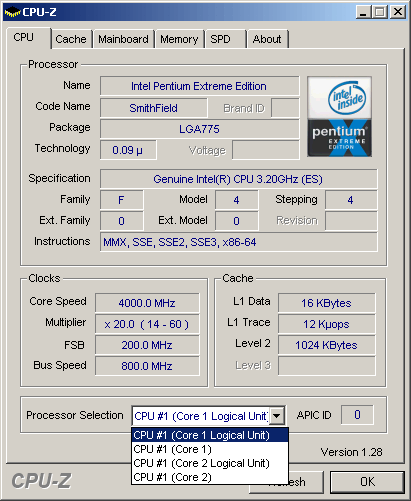
The Extreme Edition is easy to overclock to 4 GHz - but only with the right cooling solution.
The performance of the Extreme Edition with Hyper Threading, which costs 40% more than its non-extreme sibling, is nothing short of sobering. It can only pull ahead by a measly 7% in a very small number of benchmarks, such as the MainConcept encoder. Depending on the application, it can even be slower than the Pentium D, as witnessed in our Windows Media Encoder 9 benchmark, where it fell behind by 2%.
As a consequence, the only advantage of the Extreme Edition is its unlocked multiplier, as well as more balanced performance when multiple threads are running concurrently. However, this is a rather rare scenario in the desktop environment.
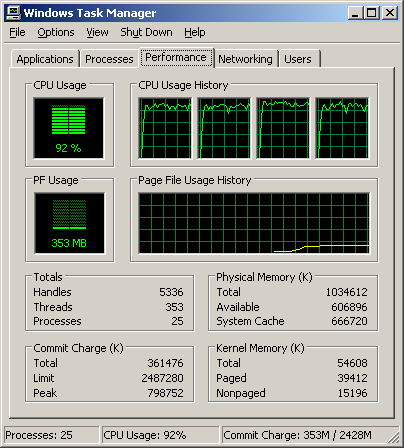
Thanks to the processor's HT functionality, the user has four virtual processors at his disposal.
When the first Extreme Edition processor was introduced exactly two years ago, it offered users extra performance. The Extreme Edition was about 10% faster - in nearly every application! Today, things are not as shiny any more. Real performance advantages are nearly impossible to spot, but the 40% price premium remains.
The strengths of the Extreme Edition lie in classic workstation applications such as 3D Studio Max, Lightwave, Solid Works or others. However, potential buyers would be better advised to consider a dual processor system instead, since a pair of HT-capable Xeons with twice the amount of L2 cache is about 35% less expensive, not to mention a good deal faster. Even when a high-end workstation board is factored in, the price will still be a good deal lower.