









Asus routers gain FCC's 'Conditional Approval' for sale in the US as TP-Link remains locked out — Asus's Wi-Fi 8 ambitions remain intact
Upcoming Wi-Fi 8 products from Asus get the green light from the FCC
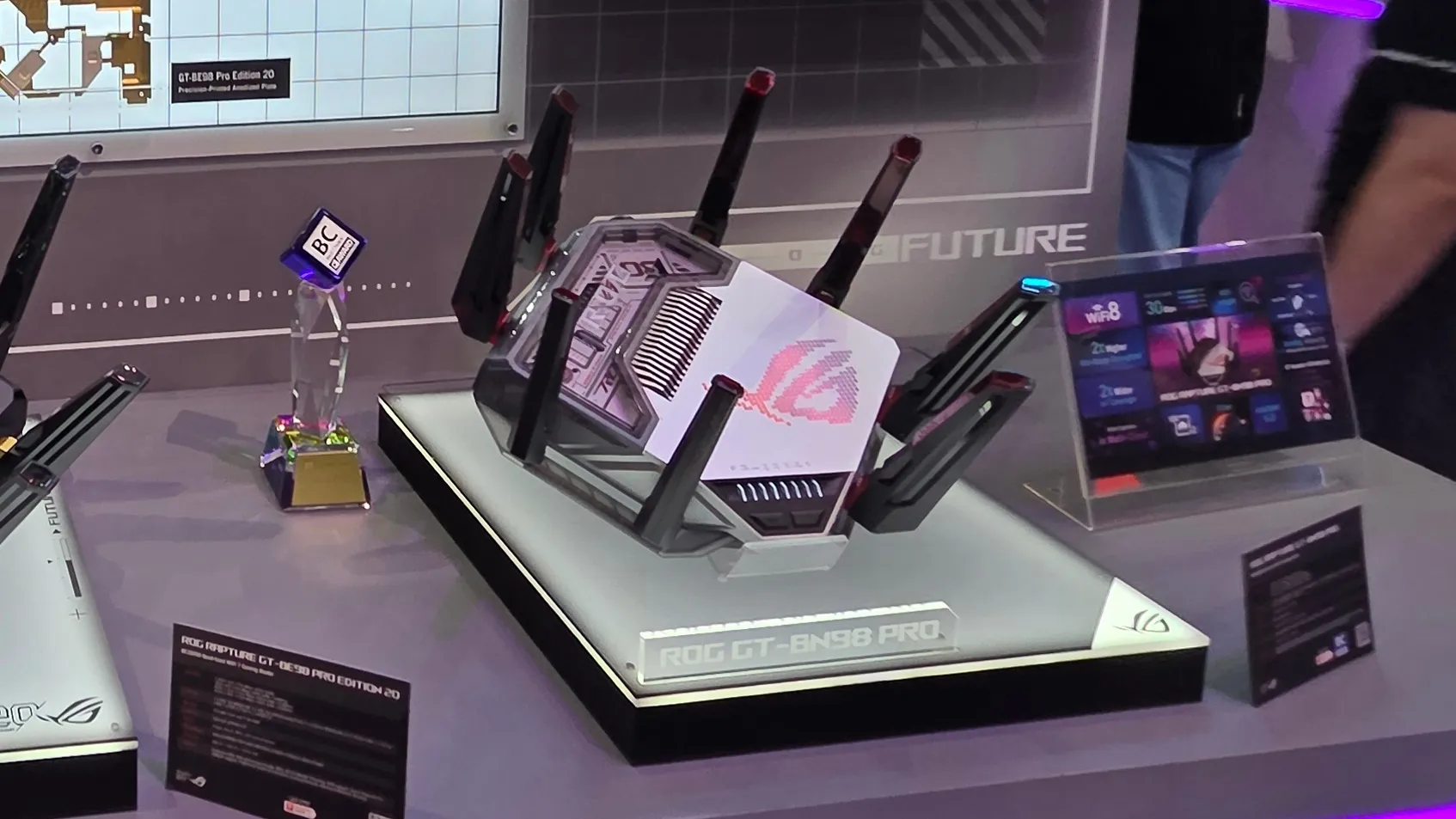
2026 has been a trying year for router manufacturers, as the Federal Communications Commission (FCC) has subjected leading companies to strict oversight and outright bans. As an olive branch of sorts, the FCC has handed out "conditional approvals" to be included on the Covered List to companies that have jumped through all the necessary hoops to satisfy the commission's concerns. Asus is the latest company to secure that approval, which was confirmed in an FCC notice issued this week.

- The data center cooling state of play
- The custom AI ASIC state of play
- America’s AI chip rules keep changing — and the rest of the world is paying the price
- GTC 2026: Ian Buck press Q&A transcript — VP of Hyperscale and HPC speaks out on shelving CPX and shipping LPU decode this year
- Demand for data center CPUs has surged, and AI agents are responsible
According to the FCC, the following Asus networking products have been granted conditional approval:
- RT Series
- ROG GT Series
- OG Strix GS Series
- TUF Gaming Series
- ExpertWiFi Series
- ZenWiFi Mesh Series
- 5G MiFi Series
- Wireless repeaters
- Wireless access points
In other words, Asus' entire wireless networking portfolio is cleared for sale in the U.S., with the conditional approval granted until March 6, 2028 (18 months from the date of issuance). The FCC explains, "We find that each of the Conditional Approvals constitutes 'a specific determination' by [Department of War] that such devices do not pose risks to U.S. national security."
This latest move by the FCC is a welcome sigh of relief for Asus, a Taiwanese company with an extensive networking portfolio and some of the best Wi-Fi routers. More importantly, Asus is ready to unleash a whole new generation of Wi-Fi 8 products over the next year. Wi-Fi 8 promises significant reliability and quality-of-life improvements across a wide range of wireless devices, so having a front-row seat to the transition from Wi-Fi 7 to Wi-Fi 8 is pivotal for Asus.
We've already seen a concept ROG NeoCore Wi-Fi 8 router from Asus at CES this year, and the company announced its first consumer Wi-Fi 8 router, the ROG Rapture GT-BN98 Pro, in June. The ROG Rapture GT-BN98 Pro is promising a 2x uplift in real-world throughput compared to its current-generation Wi-Fi 7 products.
Asus joins Netgear and Amazon Eero/Leo on the conditional approval list. The largest player in the U.S. wireless router market is TP-Link, and it still hasn't gained FCC approval. The U.S. government has been reluctant to give its blessing, and a war of words has been brewing over alleged Chinese ties despite TP-Link Systems Inc. being headquartered in California. As a result, the company has not confirmed a release date for its newly announced Wi-Fi 8 "Ultra" routers in the U.S.
Get Tom's Hardware's best news and in-depth reviews, straight to your inbox.

Brandon Hill is a senior editor at Tom's Hardware. He has written about PC and Mac tech since the late 1990s with bylines at AnandTech, DailyTech, and Hot Hardware. When he is not consuming copious amounts of tech news, he can be found enjoying the NC mountains or the beach with his wife and two sons.
-
thestryker Reply
If this whole mess was actually about security then maybe that would have been a requirement unfortunately it's not.Scott_Tx said:Make the source code open source, that should be step 1. -
RBBrittain Someone will need to sue the FCC because the "router ban" is illegal and unsupported by any evidence. If backdoors in existing routers justified it, why does it apply ONLY to new routers? And where's the evidence that U.S.-made routers (which don't exist) are any safer than foreign-made routers? This was nothing more than a backdoor TP-Link ban, because there was NO clear proof of improper Chinese connections to the present company, just insinuations based on hackers targeting its highly popular routers.Reply -
wakuwaku Reply
Which Asus already does. You can download the source code for their router firmware from their website. Specific versions can be requested from them if you can't find the exact version you want.Scott_Tx said:Make the source code open source, that should be step 1.
The parts that are closed source mostly, if not all, come from American suppliers. Broadcomm, Qualcomm, nVidia, Trend Micro etc. Whatever Asus made themselves are open source. Maybe ask them to open source their stuff first, then we talk. -
bill001g It is not routers I would worry about. You are now constantly seeing reports of various electronic devices having spying software from robot vacuums to tvs. Then again people are stupid they run out to buy the newest apple products even knowing apple is one of the worst offenders in collection of private data.Reply
There is a very long history of china networking companies putting backdoors into products. Huawei got caught "accidentally" leaving software active in their cell tower routers that collected information about every call going though the equipment and sent it back to china. Almost every product from huawei, even non cell phone related, has been banned in the USA and many EU countries for years .
I suspect there is more to this that the FCC is not releasing. Even if a router was compromised almost all data is now encrypted by the end devices so I wonder what they are concerned about. -
rob24 Actually, there is a US made router that everyone seems to be forgetting about and it's currently the only router made in the USA. Consumer or Enterprise. STARLINK. Made in Austin, TX and I have 2 of them. One at home and one in my 18 wheeler. However, at home I disabled the router function and purchased a different router because it lacks the security and it lacks Ethernet ports because its a version 2 router. I had to buy an adapter just to get an ethernet port. Unfortunately, its TP-Link and it looks like I'll have to buy a different router because the government has a mistrust of the manufacturer. Its Unfortunate because the router is a great piece of equipment and it was expensive when I bought it.Reply -
checkbuzz Reply
You're wrong, Huawei never got caught out doing any such thing and you cannot support your claim with any evidence. Much like the TP-Link router ban, this is simply about trying to maintain US tech dominance by old school protectionism, the last refuge of losers.bill001g said:It is not routers I would worry about. You are now constantly seeing reports of various electronic devices having spying software from robot vacuums to tvs. Then again people are stupid they run out to buy the newest apple products even knowing apple is one of the worst offenders in collection of private data.
There is a very long history of china networking companies putting backdoors into products. Huawei got caught "accidentally" leaving software active in their cell tower routers that collected information about every call going though the equipment and sent it back to china. Almost every product from huawei, even non cell phone related, has been banned in the USA and many EU countries for years .
I suspect there is more to this that the FCC is not releasing. Even if a router was compromised almost all data is now encrypted by the end devices so I wonder what they are concerned about. -
checkbuzz Reply
Oh what a strange and unexpected coincidence, Trumps largest donor and political ally also just happens to own the only US made router company, next minute all non US routers get banned with zero evidence to support the claims against them.rob24 said:Actually, there is a US made router that everyone seems to be forgetting about and it's currently the only router made in the USA. Consumer or Enterprise. STARLINK. Made in Austin, TX and I have 2 of them. One at home and one in my 18 wheeler. However, at home I disabled the router function and purchased a different router because it lacks the security and it lacks Ethernet ports because its a version 2 router. I had to buy an adapter just to get an ethernet port. Unfortunately, its TP-Link and it looks like I'll have to buy a different router because the government has a mistrust of the manufacturer. Its Unfortunate because the router is a great piece of equipment and it was expensive when I bought it.
What a simply astounding coincidence! -
txfeinbergs Reply
I don't buy cars or routers from sycophants.rob24 said:Actually, there is a US made router that everyone seems to be forgetting about and it's currently the only router made in the USA. Consumer or Enterprise. STARLINK. Made in Austin, TX and I have 2 of them. One at home and one in my 18 wheeler. However, at home I disabled the router function and purchased a different router because it lacks the security and it lacks Ethernet ports because its a version 2 router. I had to buy an adapter just to get an ethernet port. Unfortunately, its TP-Link and it looks like I'll have to buy a different router because the government has a mistrust of the manufacturer. Its Unfortunate because the router is a great piece of equipment and it was expensive when I bought it. -
Trailer98 Reply
Then what cars and routers do you purchase?txfeinbergs said:I don't buy cars or routers from sycophants.