









Intel says it will launch new core with Nova Lake on desktop first, not in data center — VP Robert Hallock hopes enthusiasts ‘do the math’ compared to AMD
A (very diplomatic) shot across the bow at Robert Hallock’s former employer.

Intel will launch its new core with Nova Lake on desktop first, not in the data center. Tom’s Hardware Premium recently sat down with Intel VP and general manager of the enthusiast channel business Robert Hallock and asked about his reaction to AMD launching Zen 6 first in the data center with new EPYC Venice CPUs — breaking with over a decade of AMD leading with a client release for its new architectures. Hallock opened up about Intel’s enthusiast roadmap and said the company is “very serious” about executing that roadmap.
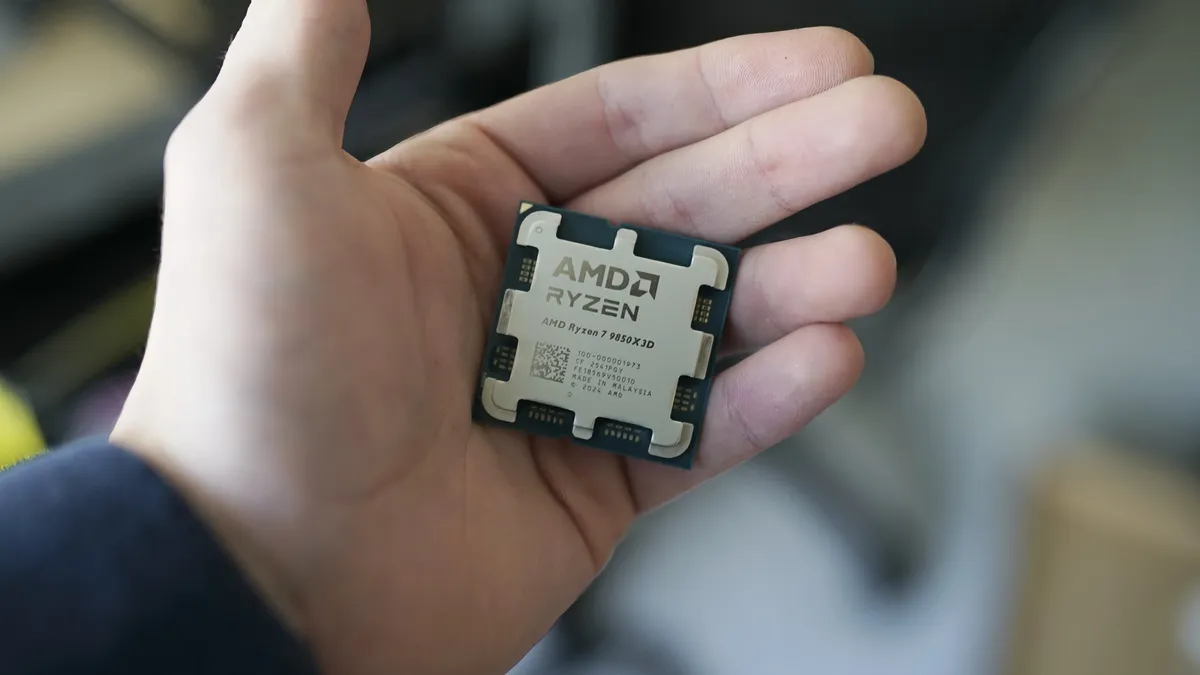
“I think it's a natural reaction for them. Makes a lot of sense. What I would say is, as we think about our own roadmap, I have a new core. It's coming to desktop first. I mean, I hope enthusiasts do the math about that one, and that's all I'm going to say,” said Hallock when we asked for his reaction to the Venice launch.
AMD has a unified processor architecture across client and enterprise, which, combined with chiplets, allows AMD to easily scale up or down new architectures to fit a wide range of applications. The core architecture and chiplets at work in the data center are largely identical to the ones in a consumer processor; minus some obvious cutting around memory channels, PCIe lanes, etc.
Intel’s architecture sharing isn’t as clean, with various codenames thrown around for each core with each new generation of products, regardless of whether those products are from Xeon or not. However, Intel’s core architectures share a lot of DNA. Golden Cove was launched first with Sapphire Rapids but was tweaked for Raptor Lake with Raptor Cove; Redwood Cove launched in Meteor Lake first before working its way into Granite Rapids. The rumored “Panther Cove” core architecture for upcoming Diamond Rapids CPUs is likely a refresh of the Cougar Cove cores in Panther Lake. With Nova Lake, the new core (rumored to be called Coyote Cove) will launch on desktop first, with whatever variation (or perhaps an entirely new core) working its way into Xeon eventually.
The sudden surge in demand for CPUs in new agentic AI data centers has upended the traditional release cadence of AMD and Nvidia. Nvidia has shifted great focus toward its new Vera CPU, while AMD moved forward with Venice ahead of Olympus Ridge; the codename for consumer CPUs with the Zen 6 microarchitecture. Intel’s roadmap, at least among the enthusiast desktop business, remains steadfast, Hallock suggested.
“I have all the new CPUs all the way out to 2030. I have [a] back to back to back to back cadence of product for gamers, for desktop, built for that purpose,” Hallock said. “Obviously I can’t go into what any of that is, but I am accelerating for the gaming market… we’re moving faster than we ever have in product, in release cadence.”
It’s worth reiterating that Hallock is referring to Intel’s roadmap here. He does not have processors in hand reaching out to 2030.
Get Tom's Hardware's best news and in-depth reviews, straight to your inbox.
Although the roadmap sounds ambitious, Intel lost plenty of points with the enthusiast community when Arrow Lake launched. You know the story by now, with the new range often underperforming the older Raptor Lake offerings in games. Hallock says he understands that hesitation.
“I understand people are skeptical after the last couple years. I truly get that. But the signal Intel is trying to send is, like, we’re gearing up for one of the most significant desktop CPU launches we have ever had.”
Intel has made some efforts to regain the lost trust with Arrow Lake with Arrow Lake Refresh. The two CPUs in the range, the Core Ultra 5 250K Plus and Core Ultra 7 270K Plus, rank among the best CPUs for gaming, helping erode the narrative that the original Arrow Lake range set in stone. That wasn’t an accident. Hallock revealed that a “pretty much completely different” team worked on Arrow Lake Refresh, and that team is moving forward with Nova Lake.
“We took a team that was time-shared with other businesses, and now this slice of the market has a full org structure inside Intel… they’re putting real people with a lot of budget behind it, right? And having an owner, a sponsor, people that care about it, looking after it, custodians of that work, it makes a real difference,” Hallock said. “[The team was] pretty much completely different. Marketing people, different product managers, different business people, and we simply have a different philosophy on how this market should run and what people should get for their dollar.”
Presumably, Hallock’s team and the philosophy driving it is born partially out of his time at AMD. The VP spent 12 years at AMD, covering numerous significant milestones, including the introduction of Ryzen and the Zen core, and AMD’s first 3D V-Cache CPU. He joined Intel in 2023, and has overseen the launch of Arrow Lake and Arrow Lake Refresh. As a technical marketing leader, Hallock doesn’t meddle in the nuts and bolts of processor design. However, he covers the rollout of products, including aspects like naming and branding.
You can read the transcript of the full interview at our Tom's Hardware Premium site.

Follow Tom's Hardware on Google News, or add us as a preferred source, to get our latest news, analysis, & reviews in your feeds.

Jake Roach is the Senior CPU Analyst at Tom’s Hardware, writing reviews, news, and features about the latest consumer and workstation processors.
-
jp7189 2030 sounds like a good time to reevaluate Intel. If they have built a consistent track record of producing better products than AMD, and without pushing them so far they sacrifice reliability (I'm looking at you 13900k), then I might return to Intel on my personal computers.Reply -
cvzalez Reply
In 2030 no one will use a desktop computer like we use today and for the desktops and even servers that will be used, probably x86 will be a niche legacy plataform with everything else being RiscV or Arm based.jp7189 said:2030 sounds like a good time to reevaluate Intel. If they have built a consistent track record of producing better products than AMD, and without pushing them so far they sacrifice reliability (I'm looking at you 13900k), then I might return to Intel on my personal computers. -
Paolooliva No one would be unhappy with a Nova desktop launch in 2026, but I would separate hope from reality. A Nova desktop launch would require motherboards with an LGA1954 socket — where are they? Especially considering the rumors of a CES 2027 presentation. Furthermore, to date it is still unclear whether Nova will be produced on 18A, N2P, or 18A-P, and with how many cores in the CPU tile. To me, "in 2026" seems more than optimistic, more like a mirage.Reply
In the end, let's be clear: Hallock's statement that "Nova desktop will come before Nova server" is one thing, and that is obviously plausible, since a CPU tile with X8P-X16E is certainly much less problematic to bring to market than a server CPU tile with X48/X64 P-cores. But Nova desktop coming before Zen 6 desktop is a completely different claim — and that is not what Hallock said. -
usertests Trying to persuade knuckle draggers to be mad at AMD for launching Zen 6 Epyc before Olympic Ridge.Reply
There isn't any reason to wait that long. You can just buy Nova Lake. Wait a year or two if you must for any Raptor Lake-esque problems to appear.jp7189 said:2030 sounds like a good time to reevaluate Intel. If they have built a consistent track record of producing better products than AMD, and without pushing them so far they sacrifice reliability (I'm looking at you 13900k), then I might return to Intel on my personal computers.
But if you did wait that long, you could time it for a supposed transition away from E-cores and/or reintroduction of hyperthreading, possibly on the same LGA 1954 socket.
Another "desktop/x86 is dead" take divorced from reality. It will remain in all segments.cvzalez said:In 2030 no one will use a desktop computer like we use today and for the desktops and even servers that will be used, probably x86 will be a niche legacy plataform with everything else being RiscV or Arm based.
https://wccftech.com/amd-arm-eaten-intel-server-lead-yet-x86-is-poised-to-own-the-ai-cpu-wave-through-2030/ -
Makaveli Reply
lmaocvzalez said:In 2030 no one will use a desktop computer like we use today and for the desktops and even servers that will be used, probably x86 will be a niche legacy plataform with everything else being RiscV or Arm based. -
Neilbob Reply
A very 2010-ish statement.cvzalez said:In 2030 no one will use a desktop computer like we use today and for the desktops and even servers that will be used, probably x86 will be a niche legacy plataform with everything else being RiscV or Arm based.
You may be slightly overestimating the scale of possible changes that can occur in just three and a half years. -
Thunder64 “Obviously I can’t go into what any of that is, but I am accelerating for the gaming market… we’re moving faster than we ever have in product, in release cadence.”Reply
If that promise is anything like 5N4Y it isn't worth anything. -
JayNor does the NVL-S integration of tb5, wifi7, bluetooth 6 attract gamers? I could see tb5 for external GPUs being a nice feature, if they get that all worked out.Reply -
usertests Reply
I think eGPUs are a tiny and expensive meme market. Maybe a good idea if you assemble your own with a cheap adapter, but mostly something for TechTubers to hype up.JayNor said:does the NVL-S integration of tb5, wifi7, bluetooth 6 attract gamers? I could see tb5 for external GPUs being a nice feature, if they get that all worked out.
I don't know the implications of integrating Wi-Fi/BT. Is it something OEMs care about?
bLLC seems like the biggest feature for gamers. If it works properly, it should finally stop AMD from leading by 20-30% on 1080p gaming charts, a perennial embarrassment for Intel. It provides competition for X3D, which may keep AMD's prices in check. Nova Lake-S should also offer more than the 96 MiB L3 of 5800X3D through 9850X3D right out of the gate, which is exciting. -
dion_ Reply
In 2030 everyone will use a desktop computer like we use today and for the desktops and even servers that will be used, probably RiscV and Arm will be niche platforms with everything else being x86 based.cvzalez said:In 2030 no one will use a desktop computer like we use today and for the desktops and even servers that will be used, probably x86 will be a niche legacy plataform with everything else being RiscV or Arm based.