









Leaked Intel Nova Lake product list has three 'BFC' chips with up to 144MB of game-boosting L3 cache — next-gen CPU lineup reportedly takes shape with up to 28 cores in Core Ultra 9 4970K BFC
bLLC is now, apparently, BFC.
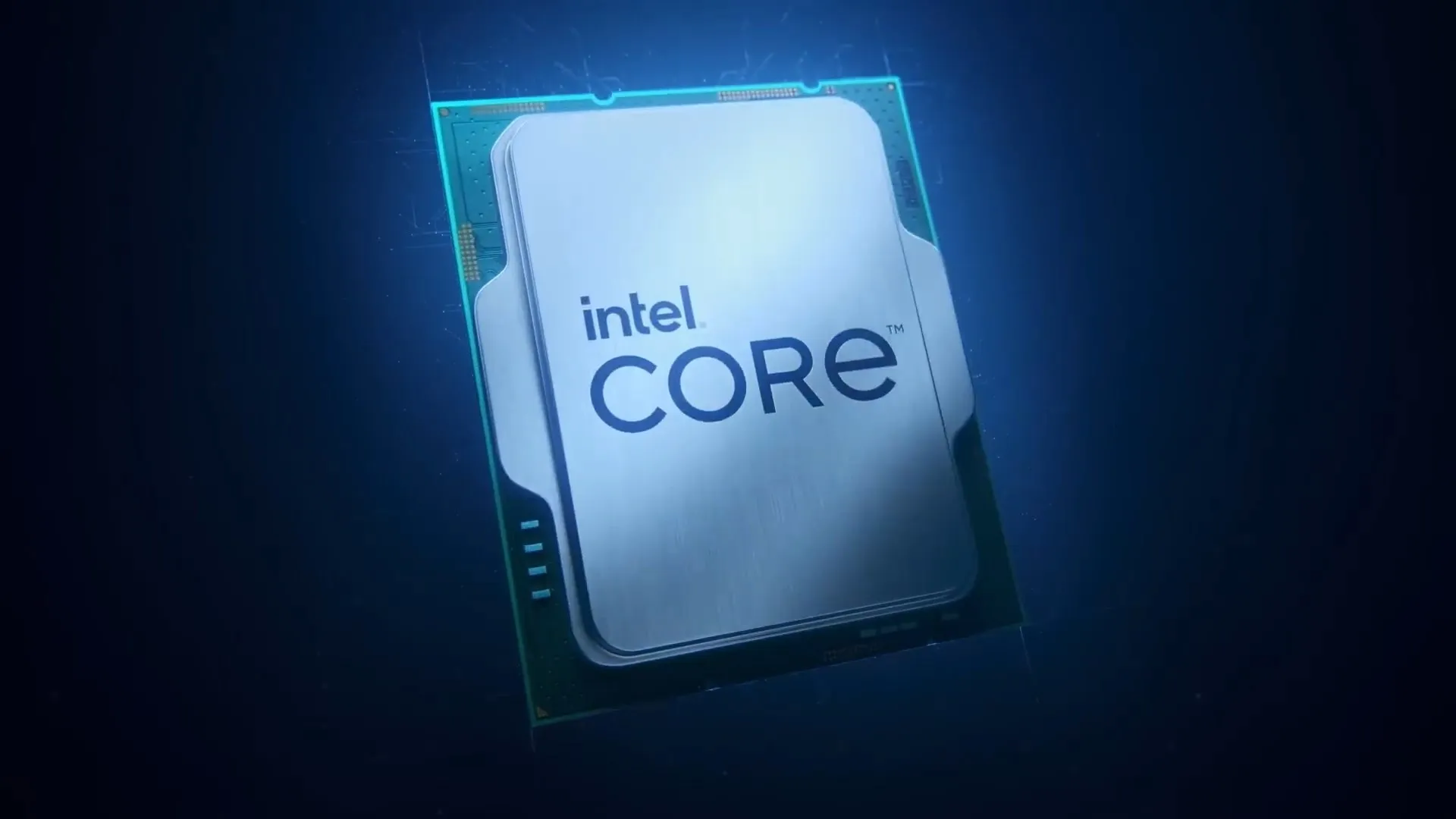
A rumored SKU table for Intel's upcoming Nova Lake desktop CPUs has surfaced, showcasing seven models that will (presumably) make up Intel's initial NVL-S lineup. The list includes three models with the "BFC" tag, which seems to be Intel's branding for bLLC, or big last level cache. It's been heavily rumored to show up with Nova Lake, countering AMD's assault on the best CPUs for gaming with its X3D chips.
- Intel VP Robert Hallock sets Nova Lake expectations, teases return to Raptor Lake for DDR4 platforms
- CPU scaling with DLSS
- Intel's one-two punch plan in desktop CPUs is taking shape
- Benchmarking AMD's BC-250, offering Steam Machine-like performance at half the price
- AMD splits Zen 7 into three EPYC families for 2028 and starts selling server CPUs by the agent
As previously rumored, the table tops out at the flagship Core Ultra 9 4970K BFC, which the spec list suggests is a 28-core chip with 8 P-cores, 16 E-cores, and 4 LPE-cores. It also lists a 125W TDP and an integrated GPU with 32 Execution Units (EUs). This 32-EU iGPU is apparently a staple across the range, short of the Core Ultra 5 4650KF, which lacks integrated graphics.
Intel retired the use of "EUs" in favor of its Xe cores several years ago. Rumors suggest Intel isn't releasing a large, 12-Xe core model of Nova Lake. The 32-EU count here likely comes out to 4 Xe cores (each core has eight matrix and vector ALUs).
The table does not include the heavily rumored 52-core Nova Lake model. However, as the Nova Lake launch approaches, it has become clear that the 52-core model, as well as other potential models with a dual-tile configuration, will arrive after the main range of chips. Presumably, these models will target the HEDT crowd with their high core counts.
SKU |
Cores (P + E + LPE) |
TDP |
iGPU |
Core Ultra 9 4970K BFC |
24 (8 + 16 + 4) |
125W |
32 EUs |
Core Ultra 9 4950K |
24 (8 + 16 + 4) |
125W |
32 EUs |
Core Ultra 9 4900 BFC |
22 (6 + 12 + 4) |
65W |
32 EUs |
Core Ultra 7 4870K BFC |
24 (8 + 12 + 4) |
125W |
32 EUs |
Core Ultra 7 4850K |
24 (8 + 12 + 4) |
125W |
32 EUs |
Core Ultra 5 4650KF |
22 (6 + 12 + 4) |
125W |
N / A |
Core Ultra 5 4650K |
22 (6 + 12 + 4) |
125W |
32 EUs |
*Names and specifications rumored, unconfirmed by Intel
There are several interesting details when looking at the range broadly. Most notably is the four-number model identifier, which Intel didn't use with Arrow Lake chips like the Core Ultra 7 270K Plus. This larger identifier has been previously rumored, and it makes sense if the lineup above is indeed real. There's quite a bit of specificity in this stack, and something like the "Core Ultra 9 497K" doesn't signal what a "Core Ultra 9 4970K" does.
Regardless of naming, the SKU table shows three models with BFC, two of which fall under the Core Ultra 9 umbrella. There isn't a Core Ultra 5 BFC option. The most interesting model is the Core Ultra 9 4900 BFC, which matches the 22-core count of the Core Ultra 5 models, though with the addition of BFC and a lower 65W TDP. Given this chip doesn't have a K suffix, it looks like a specialized, low-power gaming chip, perhaps for small form factor desktops.
Get Tom's Hardware's best news and in-depth reviews, straight to your inbox.
In addition, the Core Ultra 5 model is the only one with an F suffix, noting that it lacks integrated graphics. As we saw with the Arrow Lake refresh, Intel released a Core Ultra 5 250KF Plus, though it never gave the 270K Plus the KF treatment.
According to the table, Intel could use "BFC" to note chips with a larger L3 cache, something that's been heavily rumored for Nova Lake as AMD's X3D chips dominate gaming in our CPU benchmark hierarchy. This is the first time we've heard it referred to as BFC; however, with previous rumors referring to the additional cache as bLLC.
As for what BFC stands for, there are a few possible candidates, and we'll leave it to your imagination as to what words that start with "F" could fit between "Big" and "Cache."
Although Intel's Nova Lake chips have been the topic of the rumor mill for well over a year, the launch is approaching. At the beginning of the year, Intel's CEO confirmed Nova Lake would arrive before the end of the year. Assuming that's still true, we'd expect to learn more any day now.
Signs certainly point to a launch happening soon. Just this week, Nova Lake platforms passed compliance at USB and PCIe standard bodies. At Computex earlier this year, we saw two Z990 motherboards in the flesh. And last month, a leaked slide presumably from one of Intel's partners provided a tease as to what the platform could look like.
Hopefully we'll have more details soon. In the meantime, make sure to check out our recent interview with Intel's Robert Hallock, where the executive goes into some of the expectations around Nova Lake, on Tom's Hardware Premium.

Follow Tom's Hardware on Google News, or add us as a preferred source, to get our latest news, analysis, & reviews in your feeds.

Jake Roach is the Senior CPU Analyst at Tom’s Hardware, writing reviews, news, and features about the latest consumer and workstation processors.
-
usertests ReplyThe 32-EU count here likely comes out to 4 Xe cores (each core has eight matrix and vector ALUs).
It should be 2 Xe3 cores. I think they were increased to 16 "EUs" each.
I don't think Intel could have come up with a better name than "BFC" for their "X3D" competitor.Vicecrow said:Yeah it's time to bring the BFG to the table!
They will get free advertising from memes and explainer articles. -
bigdragon 4000-series Intel CPUs? Ivy Bridge returns!Reply
I do find this lineup to be mildly confusing given how similar each of the chips are. I'm sure it'll make more sense once speeds and prices are applied. I wish my 270k+ had a bigger cache. I've been thrilled with its performance so far! -
thestryker Reply
Ressurecting the Extreme Edition moniker would have been an infinitely better option. They also already have "S" which they could easily pivot to using since I doubt we're going to see binned silicon like that has been again.usertests said:I don't think Intel could have come up with a better name than "BFC" for their "X3D" competitor.
They have to come up with an official name as well though. No matter what naming convention was chosen the explainer articles would happen. So that leaves the memes which could easily blow up in their faces if they don't beat Zen 6 X3D in performance.usertests said:They will get free advertising from memes and explainer articles.
Haswell!bigdragon said:Ivy Bridge
While I don't dislike the 4 digit naming scheme I wish they'd just left things alone. Laptops are keeping the 3 digit naming, but the HX will shift to 4 digit making the move even sillier.
I know why they're doing it, it's a 65W part, but calling the 6P bLLC part a U9 when there's an 8P bLLC part as U7 sucks. Doubly so when the rest of the 6P parts are under the U5 designation.bigdragon said:I do find this lineup to be mildly confusing given how similar each of the chips are. -
SkyBill40 Guess Intel is finally tired of having their faces punched and their lunch stolen by AMD, eh?Reply -
usertests Reply
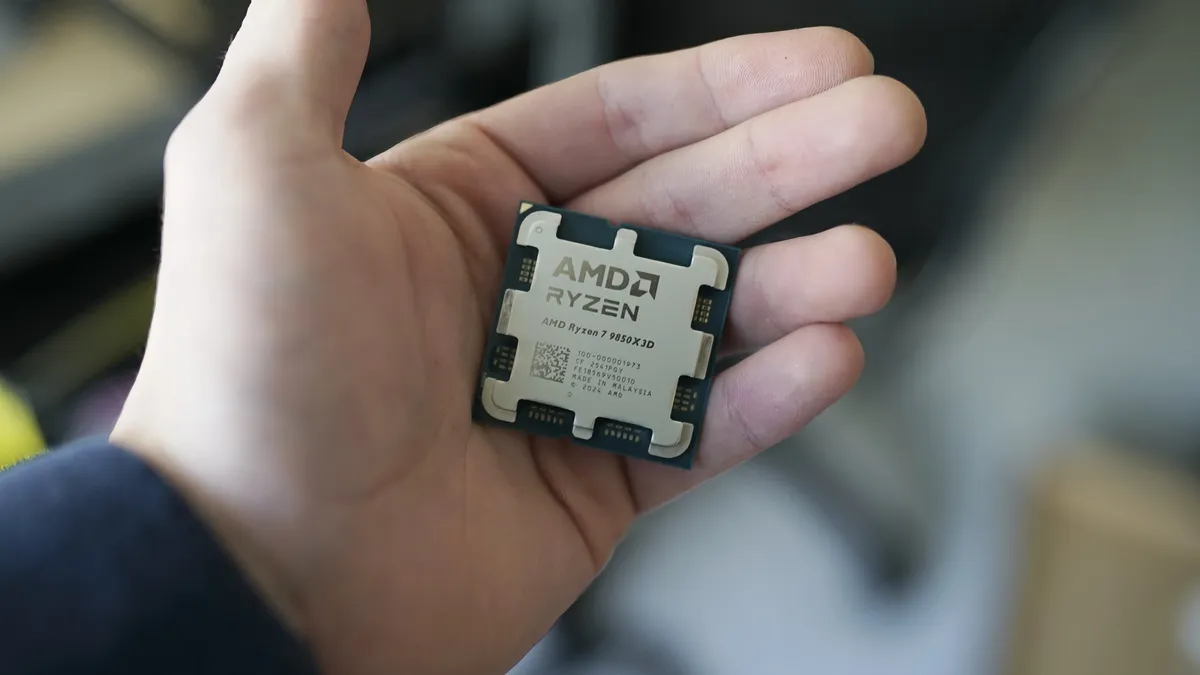
X3D leading the benchmark charts over and over was indeed intolerable for Intel. Unless something goes terribly wrong, they will leapfrog past the 9850X3D, since they'll have (up to) 144 MiB of L3 cache per tile instead of 96 MiB, IPC improvements, the return of AVX-512 (relevant for some emulators like RPCS3), etc.SkyBill40 said:Guess Intel is finally tired of having their faces punched and their lunch stolen by AMD, eh?
And since they're rumored to be making a large planar die with the cache, completely separate from the non-bLLC offering, it looks to me like they are throwing money at the problem to make it go away. -
Vicecrow I'am waiting for ddr6. Maybe update to raptor lake next and keep my ddr4 4000 a little longer.Reply -
thestryker Reply
In what world is gaming a distant afterthought for client parts?me-three said:Not sure why Intel would care about winning gaming benchmarks at this point, when gaming is a distant afterthought for every chip vendor.
Gaming is the only thing Intel has not been able to outperform AMD on since the launch of the 7800X3D (Jan 2023). They've gone back and forth on everything else (aside from AVX512) throughout the generations which have launched since. Yet if you look at the general sentiment it's that Intel isn't competitive despite it really only being a narrow portion which isn't. This is simply because gaming is a primary driver for client sales to individual buyers.
If your argument is that companies are focused on enterprise sales this is certainly true, but Intel's enterprise and client have an extremely narrow overlap. This isn't like AMD where client and enterprise use the same manufacturing nodes and has an overlap in CCD. Intel bought TSMC N2P wafer allocation which needs to be used, and currently none of their enterprise CPUs use TSMC nodes for any portion of them. That means they need to be looking at client parts for this manufacturing: PTL only uses an advanced TSMC node for the big Graphics Tile and ARL uses N3B so it would need to be retooled which would be a stupid waste of resources when they could make NVL instead.
I don't particularly expect NVL-S to be a full SKU lineup, and it seems likely that bLLC will be relatively low volume, but this doesn't make it pointless. These parts aren't going to be aimed at the general market since that's been the hardest hit which is probably why the leaks have indicated bLLC are the launch processors. There's always a market for the fastest hardware and chances are these will fit that bill which means they'll sell.
So what you're saying is that this is a market Intel should simply cede to AMD then?me-three said:Yes, the "BFC" moniker implies a gaming angle. But wasn't X3D more than sufficient to meet gaming needs of even 5090 gamers? Was there a big outcry for more CPU oomph, like for GPUs? -
TerryLaze Reply
No damage is ever done....factchecker said:Too little too late for Intel. The damage has been done
Not to nvidia with burning down cards
not to amd with exploding CPUs
not to intel with nuclear reactor power draw.
(And many many other examples for all of them)
Nobody cares, if it's the best product at the moment then people will buy it no matter what.