









Team Group CEO warns memory crisis could reach point where 'even money can't buy goods' — will get worse next year, with 'no downward trend in price whatsoever'
More bad news on the horizon.
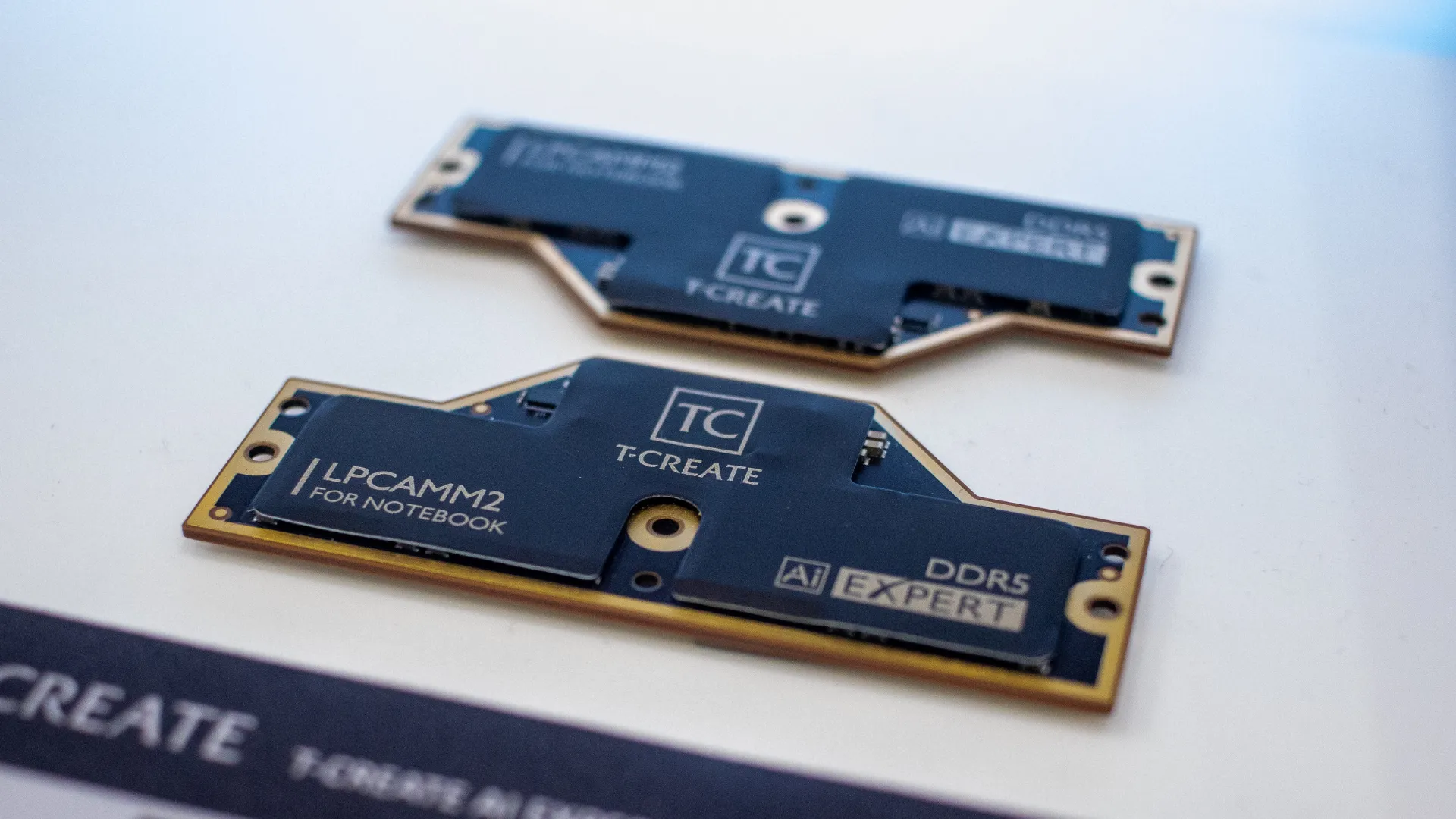
Team Group CEO Chen Ching-wen said during the company’s November 2 earnings call that the memory chip shortage is expected to become worse from the end of 2026 until the end of 2027. BigGo Finance quoted Chen as saying that there is “no downward price trend whatsoever,” and that some purchasers could face a scenario “even money can’t buy goods.” He also noted that the spread between spot and contract prices for memory chips ranges from 30% to 50%, meaning short-term supply is significantly more expensive than long-term contracts.
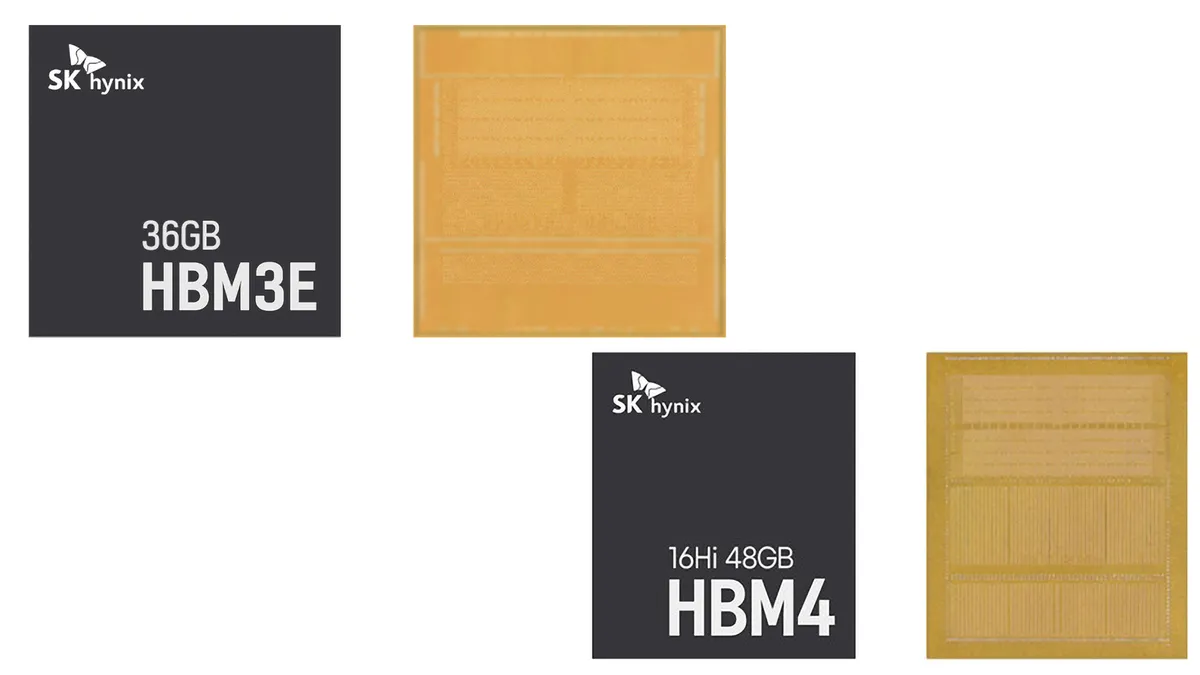
"We have contracts but can't get enough volume, so we have to go to the spot market and pay a premium to grab supply," the Team Group chief said during the briefing. Contract prices for 16GB DDR5 chips climbed from $8.70 in October 2025 to $48 by September 2026. This is an increase of more than 550% in the past 12 months, and it seems that the price hikes are not letting up. He also estimated that supply and demand will not balance until the latter half of 2028 or perhaps even later. “How can prices fall when there’s nothing left?” said the CEO.
The Chairman also noted that even though CXMT and YMTC have increased their market share to almost 10%, most high-end DRAM and NAND flash chips still come from Kioxia, Micron, Samsung, and SK hynix. Even then, the prices for the chips that these Chinese companies make still track the market closely, meaning they’re not the budget savior that many were expecting. As such, he expects that pricing for budget components will not ease until 2029, while high-end chips will continue to remain in short supply.
These estimates go against Acer CEO Jason Chen’s prediction that component pricing will reverse by the latter half of 2027. Chen suggests that only high-end chips, like LPDDR5X-9600 and Nvidia N1-series SoCs, will remain in shortage while mainstream parts will finally go down. PCs will still experience hikes between 5% and 20% until the end of this year, plateau during the first half of 2027, before finally going down. Chen claims that most major suppliers want to hype the shortage for as long as possible to preserve their margins.
Unfortunately, there’s no way for us to know which of these predictions will come true. While consumers would gladly want to have a break from the nearly continuous price hikes that PC parts and components have been experiencing over the past months, the AI data center build-out is apparently continuing, even as many Americans voted against it.

Follow Tom's Hardware on Google News, or add us as a preferred source, to get our latest news, analysis, & reviews in your feeds.
Get Tom's Hardware's best news and in-depth reviews, straight to your inbox.

Jowi Morales is a tech enthusiast with years of experience working in the industry. He’s been writing with several tech publications since 2021, where he’s been interested in tech hardware and consumer electronics.
-
usertests ReplyTeam Group CEO Chen Ching-wen said during the company’s November 2 earnings call that the memory chip shortage is expected to become worse from the end of 2026 until the end of 2027.
It might go that way, but all pre-Nov 3 predictions are outdated in light of the U.S. election results. It's as simple as that. -
hotaru251 i mean it'll be 2030 by time new factories start producing volume at earliest.Reply
Only hope prior to that is if the bubble pops and infinite scaling mentality is shown to not be viable and thus they dont consume everything and theres actual supply again. -
thestryker It seems like a pretty rational conclusion given that no new capacity has come online yet. Without demand falling there's no way for any real pricing stabilization before there's more capacity. Team Group is one of the companies entirely at the whims of the market so it doesn't really benefit them to inflate concern. I was hoping for somewhat of a static pricing situation for next year, at least at the retail level, but it's very much reliant on nothing changing.Reply -
alan.campbell99 Reckon I'll be keeping all my laptops in case one manifests a RAM issue, could be an issue replacing any of it .Reply -
KitsuneKas Reply
What demand? Aside from the major players like Anthropic, OpenAI, Google, etc., AI companies are reporting hardware idle times upwards of 70%.thestryker said:It seems like a pretty rational conclusion given that no new capacity has come online yet. Without demand falling there's no way for any real pricing stabilization before there's more capacity. Team Group is one of the companies entirely at the whims of the market so it doesn't really benefit them to inflate concern. I was hoping for somewhat of a static pricing situation for next year, at least at the retail level, but it's very much reliant on nothing changing.
There's already more infrastructure than there is demand. Companies are reporting that they're buying more hardware than they actually need to meet their demands, just to keep it out of the hands of their competitors.
At this point the demand is essentially self-sustaining. RAM is scarce because everyone is buying RAM because RAM is scarce because... -
thestryker Reply
You realize that demand doesn't need a reason right?KitsuneKas said:What demand? Aside from the major players like Anthropic, OpenAI, Google, etc., AI companies are reporting hardware idle times upwards of 70%.
There's already more infrastructure than there is demand. Companies are reporting that they're buying more hardware than they actually need to meet their demands, just to keep it out of the hands of their competitors.
At this point the demand is essentially self-sustaining. RAM is scarce because everyone is buying RAM because RAM is scarce because...
It's being bought at a rate higher than it can be produced which means demand outstrips supply. -
usertests Reply
And that demand can evaporate suddenly, after some kind of black swan event.thestryker said:You realize that demand doesn't need a reason right?
It's being bought at a rate higher than it can be produced which means demand outstrips supply.
AI investors forced to navigate the blue wave AI's Building Boom Meets A Blue Wave. 'Neocloud' Stocks Fall. -
rangerstyle Sooooo....demand for AI means more data centers, which creates demand for memory, yet consumers wanting to use the AI cant because they lack the memory in their own computers to utilize the AI.Reply
Eventually something will have to give. -
thesyndrome Reply
The conspiracy theory is that this is a planned effort to make it so the only devices consumers can buy are cheap devices using older memory and with barely any storage, with the goal of having these devices be used ONLY for streaming cloud computing (because they will be too weak for anything else), where we would have to pay a subscription to cloud providers to use their services in an extremely locked down way that is completely controlled; think of it like Nvidia's Geforce Now, except instead of remotely connecting to a PC that is running a game, you are remotely connecting to a PC so you can use a user area on it, which will be monitored and restricted to prevent any autonomy by the user.rangerstyle said:Sooooo....demand for AI means more data centers, which creates demand for memory, yet consumers wanting to use the AI cant because they lack the memory in their own computers to utilize the AI.
Eventually something will have to give.
If that has any truth to it, then that will be the way these companies want us to access their AI: in an operating system not locally installed, that is completely at their mercy that we are paying for the privilege for.