









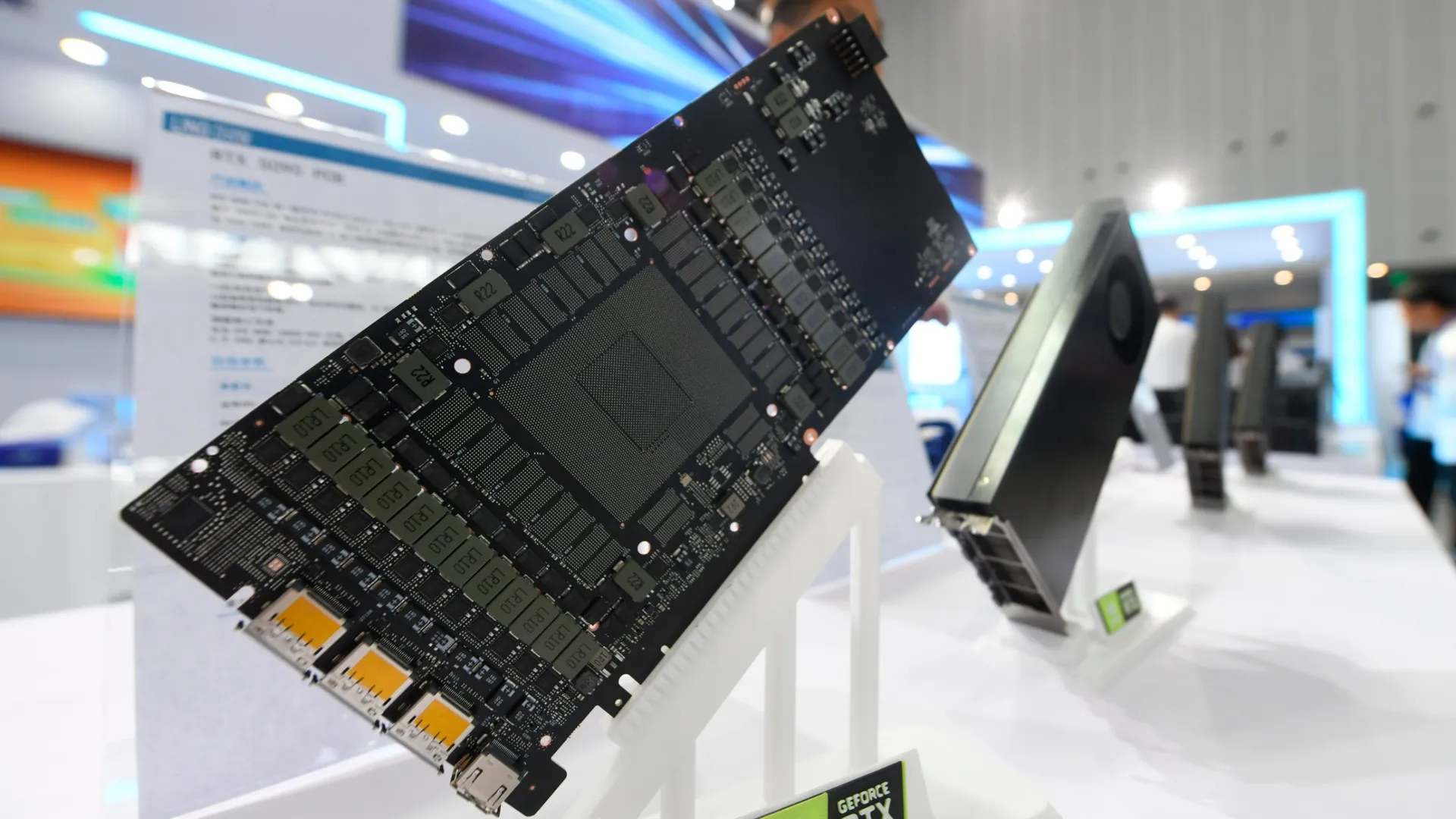
The GeForce RTX 5090 is already at the pinnacle of the best graphics cards. However, Shenzhen Suqiao Intelligent Technology Co., Ltd., a Chinese OEM/ODM, has reportedly made it even more powerful by outfitting the Blackwell flagship with 96GB of memory, 3X more than the original. The company is already selling these modified GeForce RTX 5090 96GB on Alibaba for $3888, 35% less than the vanilla GeForce RTX 5090 in the U.S.
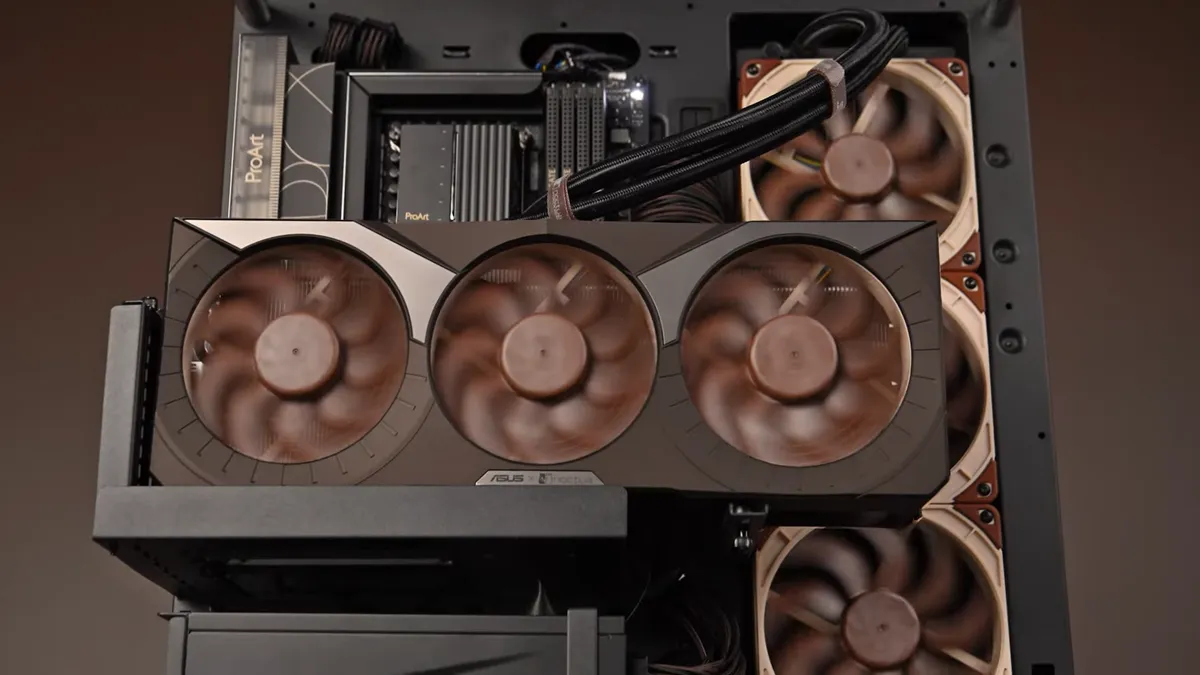
You can say whatever you want about China, but you cannot deny that factories there have produced some of the most interesting modified graphics cards, including the GeForce RTX 5080 32GB, the GeForce RTX 4090 48GB, and the GeForce RTX 3090 48GB. While some of these projects are fueled by pure curiosity, most of them are a result of the recent AI boom that has stimulated Chinese factories to think outside the box and give existing and even past graphics cards a memory upgrade so consumers can repurpose them for AI workloads. While we have seen a fair share of absurd rumors, such as the GeForce RTX 5090 128GB, the conjuration of the GeForce RTX 5090 96GB seems more plausible from a technical standpoint, and there is precedent for a Blackwell-based graphics card with 96GB of memory.
Before diving into the GeForce RTX 5090 96GB, it is worth noting that the Alibaba listing is from Suqiao, a Chinese manufacturer with over 10 years of experience making graphics cards, motherboards, and servers. So it is not a random Chinese chop shop but rather an established OEM/ODM, which lends some credence to the existence of the GeForce RTX 5090 96GB. Needless to say, the Alibaba listing is full of questionable specifications, such as GDDR6X memory or memory speeds of 14 Gbps.
The RTX Pro 6000 Blackwell, which has 96GB of GDDR7 memory, uses the same GB202 silicon as the GeForce RTX 5090, but with more enabled Streaming Multiprocessors (SMs). Therefore, a 96GB configuration is possible on GB202; however, the GeForce RTX 5090 96GB likely uses a custom PCB, allowing the manufacturer to install the memory chips in clamshell mode, which doubles the total memory on the PCB. The vendor could either procure the GB202 silicon individually or extract it from mainstream GeForce RTX 5090 graphics cards and reball it onto the custom PCB.
Even in clamshell mode, with memory pads on both sides of the PCB, there are only 32 of them. The RTX Pro 6000 Blackwell has 32 GDDR7 chips, each 24Gb (3GB) in capacity. The problem we have with the GeForce RTX 5090 96GB that raises a red flag about its authenticity is the mention of GDDR6X. Micron only produced GDDR6X memory chips in 16 Gb (2GB), so the maximum capacity would be 48GB in clamshell mode. Plus, GDDR6X operates between 19 Gbps and 24 Gbps, much higher than the listed 14 Gbps, which corresponds to standard GDDR6.
Modified firmware and software-level hacks are necessary to run Nvidia graphics cards with modified memory capacity. For instance, the GeForce RTX 4090 48GB was possible because modders modified Nvidia's firmware to get these graphics cards running. However, rumors on the street suggest that a leaked firmware for the GeForce RTX 5090 has been available for a few months, which could explain why we are starting to see these GeForce RTX 5090 96GB graphics cards surface.
Suqiao listed the GeForce RTX 5090 96GB for $3,888, significantly lower than other Alibaba merchants who have it closer to $5,900. For reference, custom GeForce RTX 5090 graphics cards start at $6,000 in the U.S. market. After the latest price hikes, Nvidia is selling the RTX Pro 6000 Blackwell for $16,000, although it can go up to $17,999, depending on which variant you pick up. If the GeForce RTX 5090 96GB is real, even at $6,000, it would be a steal for anyone running AI models.
Get Tom's Hardware's best news and in-depth reviews, straight to your inbox.

Follow Tom's Hardware on Google News, or add us as a preferred source, to get our latest news, analysis, & reviews in your feeds.

Zhiye Liu is a news editor, memory reviewer, and SSD tester at Tom’s Hardware. Although he loves everything that’s hardware, he has a soft spot for CPUs, GPUs, and RAM.
-
usertests Maybe the listing is fake, but this kind of modification shouldn't be too hard. It's just turning an RTX 5090 into a NVIDIA RTX PRO 6000 Blackwell Workstation Edition with slightly fewer cores enabled.Reply -
usertests Reply
Micron has a roadmap suggesting 4 GB (32 Gb) GDDR7 modules will come within a couple years.palladin9479 said:Still not enough VRAM for techtube.
So eventually, you will see 128 GB GDDR7 on a 512-bit GPU (32 modules in clamshell configuration). -
palladin9479 Reply
I doubt we'll see consumer clamshell cards again. It's a terrible design compromise where you run your VRAM at half speed to get more capacity. Something workstation or datacenter GPUs do but not something a consumer needs.usertests said:Micron has a roadmap suggesting 4 GB (32 Gb) GDDR7 modules will come within a couple years.
So eventually, you will see 128 GB GDDR7 on a 512-bit GPU (32 modules in clamshell configuration). -
usertests Reply
The popular 9060 XT 16GB uses clamshell memory. It has the same 128-bit bus and memory bandwidth as a 9060 XT 8GB. I don't think anybody cares that the memory chips aren't technically being used to their full potential as they would be on a 256-bit memory bus, it's all about the capacity on a "budget" GPU. Doubled bandwidth could increase performance, but it would also increase power consumption of the card.palladin9479 said:I doubt we'll see consumer clamshell cards again. It's a terrible design compromise where you run your VRAM at half speed to get more capacity. Something workstation or datacenter GPUs do but not something a consumer needs.
Same story with the 5060 Ti 16GB. There's usually at least one card like this per generation. Even the 64-bit 6500 XT 8GB, although not many of those got made. -
usertests I guess I could see the rise of 3 GB and 4 GB GDDR7 modules putting an end to clamshell cards, IF the prices are not super-inflated as 3 GB modules supposedly are right now.Reply
If you can give the consumer 16 GB on 128-bit using 4x4GB, no clamshell, is there any point to giving them more (such as 8x3GB)? Probably not, unless the next-gen console games are extremely VRAM demanding.
I think JEDEC has specified 6 GB and 8 GB GDDR7 modules in the GDDR7 standard, but there's no guarantee that memory manufacturers will ever make them before moving onto the next thing. -
palladin9479 Reply
Yes and it's a bad design. Those DRAM chips have half their traces disconnected. If you are going to use eight GDDR DRAM chips then you need to use eight 32-bit memory channels for them.usertests said:The popular 9060 XT 16GB uses clamshell memory.
Each GDDR DRAM chip is a 32-bit interface that accepts two 16-bit commands per cycle. You are halving your memory performance to double capacity, which is a bad trade off for consumers as performance is almost universally limited by memory bandwidth not capacity.
The only reason we even see that in consumer space is because the memory cartel was years behind on 24/32Gb modules and techtubers used rage bait to spread misinformation online.
Doubled bandwidth could increase performance, but it would also increase power consumption of the card.
That is not how power consumption works, clamshell mode use's more power because eight chips use more power then four. Halving the traces does not reduce their power usage, it's the same voltage and clock speed. If anything it's lower total memory performance as you spend twice as much power budget on those extra chips and need more VRAM cooling for it, though the monster is still the GPU itself.