









GPU repair service will upgrade the 11GB of VRAM on your RTX 2080 Ti to 22GB — mod involves physically adjusting the strap resistors on the PCB to support a new BIOS
Plug-and-play convenience for an advanced mod.
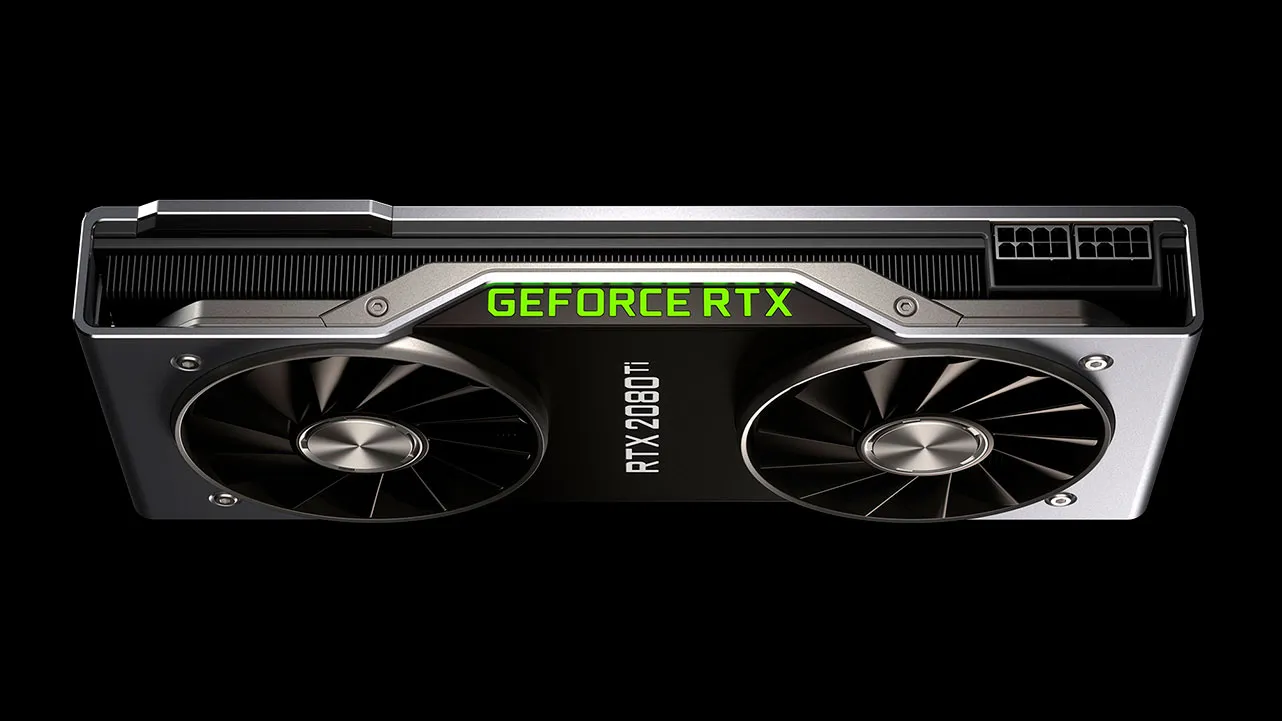
Limits on the amount of VRAM on Nvidia's consumer GPUs have forced the modding community to take matters into their own hands. Time and again we've seen various DIY memory upgrades being performed, and it's even offered as a proper repair service in underground markets, but rarely is it done openly. As such, we've just spotted a vendor that will upgrade the 11GB of VRAM on an RTX 2080 Ti to 22GB and provide the BIOS for it upfront — no shady back-alley deals required.
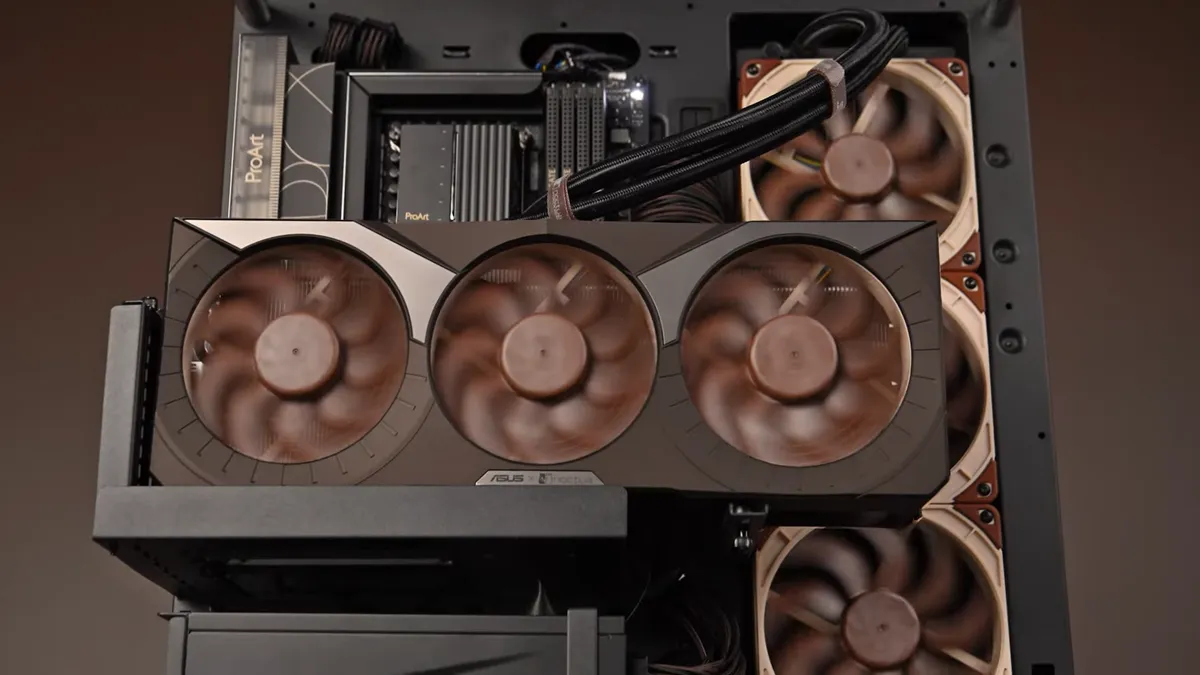
The name of the shop is GPU Solutions (very creative, we know), and it's based in the UAE, though they say they serve customers around the world. On their website, you can select the "Graphics Card Memory Upgrade" service for both the RTX 2080 Ti and the RTX 3070, though the former has more details. These guys also have a YouTube channel where they've already performed the upgrade on an Asus Strix variant before.
The upgrade works just like any other you might've already seen. The card is disassembled to reach the PCB and remove the preexisting VRAM modules. The RTX 2080 Ti uses 11x 1GB GDDR6 chips, so replacing them with the same amount of 2GB GDDR6 doubles the memory capacity instantly. This is a rather straightforward way of going about a VRAM upgrade, because oftentimes it actually requires a custom PCB.

Once the hardware part of the job is done, the VBIOS is then manually edited to support the new memory pool. This can either be an easy tweak or a lot of work just to get the BIOS to recognize the card, depending on how that specific GPU was built by the manufacturer. For instance, Nvidia was once said to include 16GB of memory with the RTX 3070, but it ended up shipping with 8GB instead, so customizing the BIOS is as simple as unlocking its full potential.
In this case, there wasn't any software tweaking; the core supports multiple memory configs, so the repairperson physically modified the memory strap resistors on the PCB. The original config for the 11GB modules was set to low, low, low. They desoldered and moved the resistors to a new configuration: high, high, and low, which made the GPU recognize and report 22GB of VRAM inside GPU-Z.

The fact that you get not only double the VRAM on your RTX 2080 Ti but a working, stable BIOS out of the box adds to the overall package significantly. These kinds of mods are usually very hands-on, which means limited to just enthusiasts and tinkerers, but the factory-like service GPU Solution is providing means pretty much anyone can get it done without a hassle.
Their website doesn't mention the charges for an upgrade like this, but considering the ongoing component crisis, the memory modules won't be cheap. They also clarify that the upgrade can only be performed on a card with "compatible PCB layouts." If yours qualifies, they'll also replace the thermal pads and thermal paste accordingly, plus provide substantial benchmarking data to prove the modded card is stable.
Get Tom's Hardware's best news and in-depth reviews, straight to your inbox.
Doubling the VRAM should allow you to squeeze a lot more performance out of your 2080 Ti in AI workloads and creative applications such as video editing. It's also helpful in gaming but not to a significant degree since the GPU itself isn't as powerful as modern offerings that are otherwise bottlenecked by memory capacity. Ultimately, this remains a pretty reasonable upgrade because the true, full potential of this GPU was achieved three years ago when someone modded it with an insane 44GB of VRAM.

Follow Tom's Hardware on Google News, or add us as a preferred source, to get our latest news, analysis, & reviews in your feeds.

Hassam Nasir is a die-hard hardware enthusiast with years of experience as a tech editor and writer, focusing on detailed CPU comparisons and general hardware news. When he’s not working, you’ll find him bending tubes for his ever-evolving custom water-loop gaming rig or benchmarking the latest CPUs and GPUs just for fun.
-
usertests Is a 2080 Ti 22 GB really desirable for AI? It should be significantly worse than a 4060 Ti 16 GB.Reply
RTX 3070 16 GB is fun for everyone, if the price is right. -
hotaru251 Reply
yes.usertests said:Is a 2080 Ti 22 GB really desirable for AI?
even if its "slower" than a modern gpu the increased vram is what you want to run larger models and only GPU nvidia offers above 16gb is their 90 sku which is a small fortune. -
Lamarr the Strelok How can this be a "reasonable upgrade" if you don't know how much it costs? Seriously, come on.Reply -
JamesJones44 Reply
I would say it depends. Having enough VRAM to fit the entire model can still beat having to transfer parts over system memory with faster/optimized hardware. I just depends on what you are doing and the size of the model.Deleted member 2824971 said:No, is what I'd say, because those older GPUs are missing support for the smaller quantizations and ML optimized data types to squeeze more inference into the same amount of RAM.
That being said, 22GB vs 16GB of VRAM isn't all that significant of a difference, you might be able to go from 10 billion parameter 8 bit model to 16 billion parameter model fitting in VRAM, that's unlikely to help most workloads. -
Lamarr the Strelok To be clear this is the only time Ive had a problem with Hassam's work.He's usually very very good.Not a huge deal just a bit annoying is all.Reply -
usertests Reply
Underwhelming for AI, and I don't imagine the 2080 Ti needs more than 11 GB for gaming very often. It's on par with the RX 9060 XT 8GB and RTX 3070 8GB in TPU: https://www.techpowerup.com/gpu-specs/geforce-rtx-2080-ti.c3305Deleted member 2824971 said:No, an RTX 2080ti with 22GB of RAM may extend the gaming side of that chip, but for machine learning, I am ready to bet a case of beer, that upgrading an existing RTX 2080ti is rubbish vs buying RTX 5000 cards new.
Nobody named the price of these mods, but that's probably what will make it look decisively worse than newer-gen 16 GB options. Maybe people in the UAE need to go these lengths? -
Lamarr the Strelok Reply
Why exactly are they desperate? They're no different than other sites that fall over themselves making pathetic excuses for Nvidia in general.And that's been on the wane recently here too, thankfully.Deleted member 2824971 said:They sell news.
They are desperate.
So yeah, not even close compared to other sites. Surprised there are no allegations of authors using AI instead of real reporters.Or reporters are afraid of losing their jobs to AI,so they're desperate for some reason.AI won't replace people in journalism. Real news anyway. -
JamesJones44 Reply
I think we are talking about two different use cases. I would never expect a company or professional to use a RTX 2080ti with 22 GB of RAM or even a 5070 ti for that matter, if we are talking FP16, 16 GB of RAM isn't enough to run anything meaningful. In that scenario I am also a hard no.Deleted member 2824971 said:I've looked at videos describing the double RAM upgrades for RTX 4090, much closer not only to my heart, but also to professional cards sold by Nvidia.
From what I can tell, the upgrade is quite involved and requires both highly skilled labor and components that aren't cheap.
For anyone thinking about sending his RTX 2080ti in for an upgrade, the quoted price is likely to be beyond purchasing an RTX 5070ti new would cost, the latter even including a warranty... sometimes.
And that point it makes no sense to go down that road.
I've gone through the core Wikipedia article and it confirms what I remember: the RTX 2080ti is a Turing generation device, which means its main ML related improvements are a bit of INT4, INT8 and FP16 support.
INT4 and INT8 are fast, but very imprecise, impacting quality or hallucinations and they also don't yet seem to be supported at comparable scale than with the successors: in a way Turing was a very short-lived/underpeforming generation on both sides, consumer and AI.
FP16 turned out to be a bad match for ML, it's optimizing precision at the cost of scale, a better match for HPC and engineering than neural network simulation: that's why starting with Google the industry quickly went with "brain floats" or BF16, which offers more range and less precision. Today that's often an intermediate format used for training and tuning, but later carefully quantified to 8 or 4 bit sized data types for speed in inference.
And there it's a race with plenty of bespoke formats, all trading bits for speed vs quality, four bit float formats that share exponents across whole vectors surfing the waves.
That means an RTX 5000 able to manage those floating 4-bit weights can pack 4x as many of them as a Turing GPU using an FP16 format unsuited for ML...
No, an RTX 2080ti with 22GB of RAM may extend the gaming side of that chip, but for machine learning, I am ready to bet a case of beer, that upgrading an existing RTX 2080ti is rubbish vs buying RTX 5000 cards new.
If I asked my son to give me his RTX 2080ti to verify that claim, he'll want an RTX 4070 I keep as a spare as a stand-in. And then I fully expect he'll never want to swap back again, because the RTX 4070 beats the 2080ti in pretty near everything, except energy consumption.
I've had a similar issue when we dissolved our ML lab two years ago. It had quite a few V100 with 16GB of HBM in it, which I knew could even capably run games via remote frame buffer tech (essentially something like Steam remote play, those GPUs don't have a video output). But their only advantage was supporting BF16, which couldn't compete even with an RTX 3090 sporting 24GB of GDDR6 in terms of model size.
While generational progress for games in Nvidia GPUs may be put in question or even been laughed at, when it comes to ML and inference, each generation was a big bang: not all Nvidia GPUs are the same!
However, depending on the price, for the home person/tinkerer who just wants to run LM Studio, OpenClaw, etc. to run agents to draft replies, manage schedules, etc. (those who are flying Mac minis off the shelf) it could be valuable if the price was right, but that's a big if.