









Nvidia RTX 20, 30, and 40-series GPUs hacked to remove a half-speed AI throttle — firmware exploit doubles RTX 4090's peak tensor rate, lifts RTX 3090 Ti matrix math up to 80%
Real workloads gain less than peak tensor rates, and chatbot token speeds stay about the same.
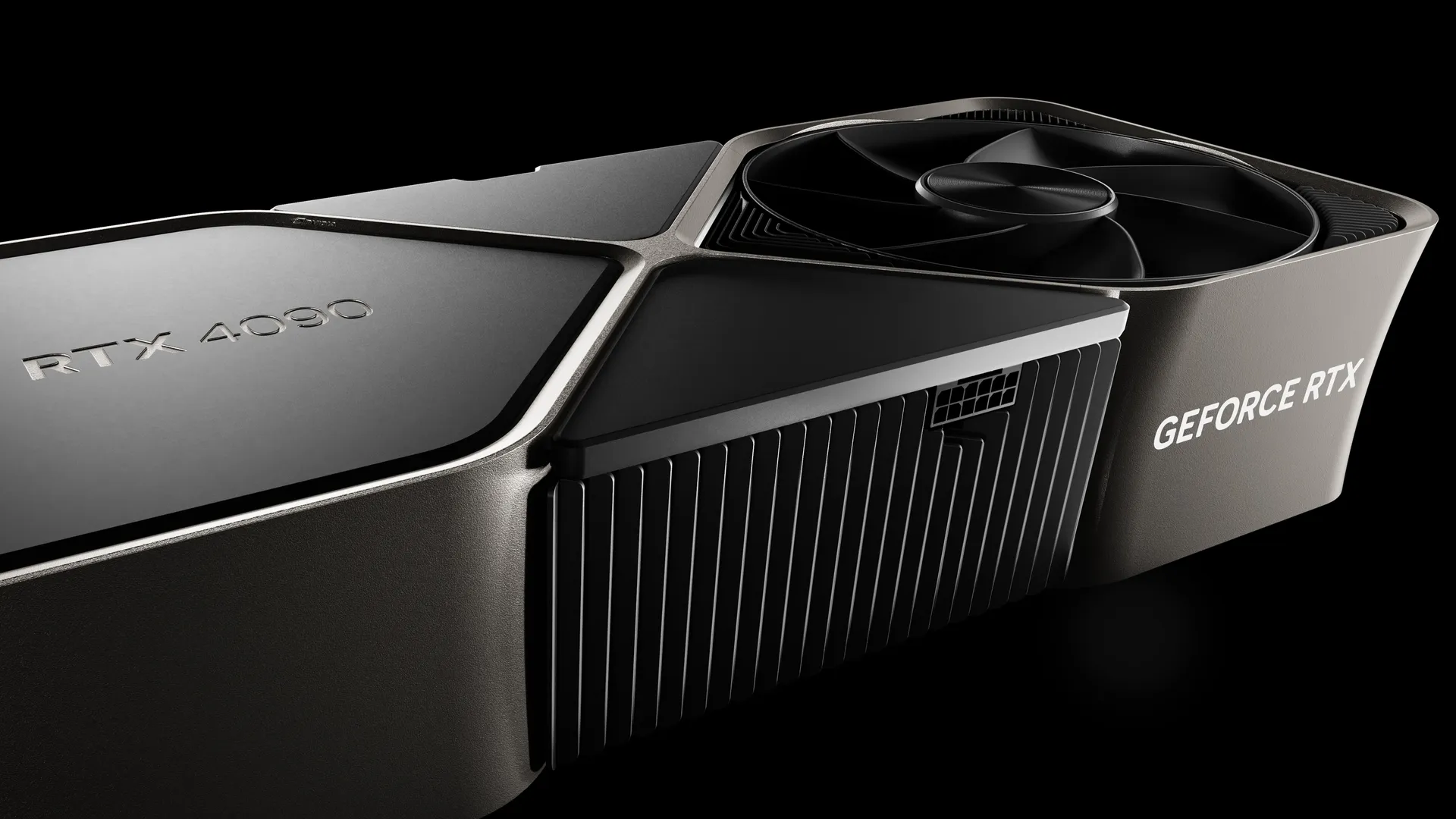
Modders have discovered a way to remove imposed half-speed AI performance limits on Nvidia RTX 20, 30, and 40-series GPUs with a firmware exploit, VideoCardz reports. Without the limitation, the RTX 4090 can achieve double its peak tensor rate, and matrix math can improve by up to 80% for the RTX 3090 Ti, with gains on other cards varying. Real workloads gain significantly less than the RTX 4090’s doubled peak would imply, and chatbot token speeds remain about the same, as that performance is dependent on memory bandwidth.
For all impacted GeForce generations, Nvidia imposed a limit that, per its own published specs, runs FP32-accumulate math at half each card’s FP16-accumulate rate. That does not apply to its Turing and Ampere pro cards. The unlock returns native matrix-math throughput to owners of the cards, which can speed up prompt processing and image generation.
Three separate projects offer generation unlocks, each with its own unofficial Linux module, while experimental Windows builds pursue a different approach. Card coverage varies by generation, with gpu-unlock handling Ampere and listing the GA102/GA103/GA104/GA106 series IDs. An Ada fork, gpu-unlock-ada, covers the RTX 4090 and, experimentally, the 4090 D, 4070 Ti Super, and the 4060 Ti 16GB. The turing-unlock project, adapted from gpu-unlock, works with the RTX 2080 Ti. See Table 1 for a breakdown.
Generation |
Project |
Cards with reported results |
Experimental or untested |
|---|---|---|---|
RTX 20 (Turing) |
turing-unlock |
RTX 2080 Ti (22GB memory-modded cards) |
Other Turing GPUs, added untested; FP16 only, since Turing lacks BF16 support |
RTX 30 (Ampere) |
gpu-unlock |
RTX 3090 Ti, 3090, 3080 10GB, 3080 20GB (memory-modded), 3070, 3060 12GB |
RTX 3070 Ti and GA103 cards untested; one RTX 3080 Ti 20GB OEM card stays at half rate |
RTX 40 (Ada Lovelace) |
gpu-unlock-ada |
RTX 4090 |
RTX 4090 D, 4070 Ti Super, 4060 Ti 16GB (experimental, one card each) |
RTX 50 (Blackwell) |
None |
— |
Not supported; gpu-unlock’s developer calls it out of scope |
How much faster the cards get
The peak doubling is for tensor rates, with the Ada fork developer’s RTX 4090 moving from 165.6 to 331.6 TFLOPS on FP16 and 165.5 to 330.6 TFLOPS on BF16. The gpu-unlock-ada README states that, in one independent owner’s matrix-multiply benchmark, cuBLAS GEMM medians only saw improvements of 12–34% and up to 20%, respectively. A separate data point, for an RTX 4070 Ti on Windows, saw larger matrix-multiply gains of +80.1% and +76.4%, the difference possibly caused by power limits.
In the matrix-multiply benchmark, a tested RTX 3090 Ti scored +35% for FP16, +80% for BF16, and +94% for TF32, based on a user’s test with a modified Nvidia driver. The gpu-unlock README lists BF16 matrix-multiply gains from user reports of +25–67% for the RTX 3090, +70–73% for the 3080 10GB, +56–59% for a memory-modded 20GB version, +73–81% for the 3070, and around +80% for the 3060 12GB, though it notes they are not directly comparable. The power limit “matters a lot”: the lowest figure, +25%, came from cards capped at 225 W. For Ampere, LLM prefill improved 14–36%, with diffusion and FlashAttention speeding up, but LLM decode and INT8 stayed “about the same.”
An RTX 2080 Ti with a 22GB memory mod, a Dell OEM card limited to 250 W, saw FP16 matrix-multiply improvements of +36% to +64% depending on size; BF16 is unaffected, since Turing has no BF16 hardware. A user’s variant of the card at 260 W saw a +59% improvement. A separate project, KohakUnlock, on a Leadtek 2080 Ti 22GB saw an 85% improvement on an instruction rate test, with a best matrix-multiply median of +53% against a second, locked card of the same model.
There is “not a claim of a 2× application/game speedup,” says KohakUnlock’s README. See Table 2 for a rundown of the numbers for all three generations. The turing-unlock README notes that the mod “may damage your hardware,” while KohakUnlock adds that it “can hang a GPU or host, prevent boot, corrupt data, or damage hardware,” so caution is advised.
Get Tom's Hardware's best news and in-depth reviews, straight to your inbox.
Card |
Precision |
Gain |
Tested by |
|---|---|---|---|
RTX 4090 |
FP16 / BF16 |
+12–34% / up to +20% |
One owner, Linux, 450 W |
RTX 4070 Ti (MSI) |
FP16 / BF16 |
+80.1% / +76.4% |
Separate Windows port, one card |
RTX 3090 Ti |
FP16 / BF16 / TF32 |
+35% / +80% / +94% |
One user, modified Nvidia driver, 450 W |
RTX 3090 |
BF16 |
+25–67% |
User reports; lowest at a 225 W cap |
RTX 3080 10GB |
BF16 |
+70–73% |
User report |
RTX 3080 20GB mod |
BF16 |
+56–59% |
User reports |
RTX 3070 |
BF16 |
+73–81% |
User reports |
RTX 3060 12GB |
BF16 |
About +80% |
User reports |
RTX 2080 Ti 22GB mod (Dell) |
FP16 |
+36–64% |
turing-unlock developer, 250 W, by matrix size |
RTX 2080 Ti 22GB mod |
FP16 |
+59% |
One user, 260 W |
RTX 2080 Ti 22GB mod (Leadtek) |
FP16 |
+53% |
KohakUnlock; best median vs. a locked card |
RTX 2080 Ti 11GB (ASUS, stock) |
FP16 |
+77% |
haohervchb pre-boot loader |
How the exploit works
The explainer for gpu-unlock states that the rate limits are in two “speed selector” registers that the host driver can’t write, but Nvidia’s signed SEC2 “Booter” firmware has a stack buffer overflow which can be exploited to run code in “heavy secure” mode. This was discovered after Nvidia published a debug Booter encrypted with a known public test key. A single 4-byte write with the V67 payload opens the privilege mask so the host can set the full rate, and the module then resets the card before Nvidia’s driver binds it.
The underlying bug is described in Jon Pry’s “A Canary in the Crypto Mine: Defeating Stack Protection in a GPU Secure Coprocessor,” published on Zenodo in June. The stack overflow was found on the CMP 170HX in the Heavy Secure Falcon, and the V67 constants come from WildFlash1st/cmp90hx-unlock. The pre-driver timing gpu-unlock uses appear to come from WildFlash1st’s separate Windows EFI bootloader, cmp90hx-unlock-for-windows, while the best-known use of the exploit is the CMP Unlocker for the CMP 170HX. Zagitta, the maintainer of gpu-unlock, said on Hacker News that the project is their work but “the exploits … aren’t my ideas by any means” and that the unlock “just flips the 2 bits” needed.
Zagitta said that RTX 40 support is in progress and that forks are already unlocking those cards. Zagitta added that Hopper and Blackwell cards are “out of scope for this approach” at least.
The Ada fork says other boards “remain unverified” and that shared firmware “does not establish support for untested cards.” The turing-unlock project, likewise, has a list of untested Turing IDs. Gaps remain for GA103 and most Ada and Turing cards. None of the projects contains a roadmap, but data is being gathered, as gpu-unlock is asking GPU owners for compatibility reports.

Follow Tom’s Hardware on Google News, or add us as a preferred source, to get our latest news, analysis, & reviews in your feeds.

Shane Downing is a Contributing Writer for Tom’s Hardware, covering consumer storage, PC hardware, and AI.
-
bill001g I will let other people risk their cards playing with this stuff. Who knows why this limit exists. Likely nvidia being the evil greedy company they are but it could also be related to heat or something else that greatly reduces the life of the card. Just because you can mod a card to say increase the power limit does not mean its a good idea.Reply
I was complaining when coin mining caused the massive increase in GPU but the prices just continue to increase. It is pretty bad when you can sell 3 and 4 year old cards for more than you paid new.
I do not know the type of AI you run locally but you would have to ask if the cost of buying tokens to run it in the cloud is more than the cost of a video card if it fails using this software hack. -
aberkae Reply
6090 performance at $0.00 with the help of ai vibe coding and sh!t 🤪warezme said:I'm curious as to how this unlock benefits the general performance of the card.
Nvidia marketing no not like that! -
razor512 Reply
I would really like to see a range of tests done in a wide range of non-gaming applications that heavily rely on GPU compute, especially ones where Nvidia traditionally struggled when their GeForce cards were used instead of their astronomically overpriced workstation cards.warezme said:I'm curious as to how this unlock benefits the general performance of the card.
Though with that in mind, many professional/ workstation applications have commonly experienced a large performance hit on GeForce cards as compared to the consumer Radeon cards. One hope is that there might be some benefit to non-gaming workloads like these.
https://i.imgur.com/HuCIqcO.png
Beyond that, it would also be interesting to see if it has any benefits to DLSS on older cards that lack FP8, and may be running these models under FP16. -
quorm Replyrazor512 said:I would really like to see a range of tests done in a wide range of non-gaming applications that heavily rely on GPU compute, especially ones where Nvidia traditionally struggled when their GeForce cards were used instead of their astronomically overpriced workstation cards.
Though with that in mind, many professional/ workstation applications have commonly experienced a large performance hit on GeForce cards as compared to the consumer Radeon cards. One hope is that there might be some benefit to non-gaming workloads like these.
https://i.imgur.com/HuCIqcO.png
Beyond that, it would also be interesting to see if it has any benefits to DLSS on older cards that lack FP8, and may be running these models under FP16.
I would also be interested in seeing such a comparison. -
Butchbal I just installed the GPU unlocker patch for windows on my RTX 3080 TI 12gb (Dell OEM version). Computer is a Dell XPS 8590, Intel I9 16 core processor w/ 32 mb system ram. Here are the before and after benchmark results.Reply
The patched run nearly doubles certain Tensor Core workloads, but shows little change in ordinary compute or GPU memory bandwidth. AI benchmark gains are smaller and mixed.
The biggest improvements are matrix operations using FP32 accumulation:
Tensor Core testWithout patchWith patchChangeCUDA FP16 → FP3279.57 TFLOPS152.16 TFLOPS+91.22%CUDA BF16 → FP3279.75 TFLOPS154.71 TFLOPS+93.99%CUDA TF32 → FP3239.78 TFLOPS78.48 TFLOPS+97.26%Vulkan FP16 → FP3278.43 TFLOPS156.57 TFLOPS+99.64%Vulkan BF16 → FP3278.60 TFLOPS156.58 TFLOPS+99.21%Other results show where that benefit does—and doesn’t—appear:
AreaDifference with patchFP16 Tensor Cores using FP16 accumulationEssentially unchanged: −0.85% CUDA, +0.16% VulkanOrdinary CUDA arithmetic0.16–1.92% lower throughputOpenCL arithmetic−1.81% to +0.23%GPU global-memory bandwidthAll measurements within approximately 1.1%DirectML FP16 matrix multiplicationEssentially unchanged: +0.06%DirectML transformer prefill3.26–7.68% higher throughputDirectML convolution0.69–9.24% higher throughputThe evidence supports a selective Tensor Core improvement, rather than a general doubling of GPU performance. These files do not establish a gaming speedup, and one run per condition cannot separate smaller changes from normal variation