









AI-induced memory shortage is changing how devices are built, Fairphone says memory now 60% of materials cost — smaller laptop and phone makers are redesigning products and have to test for fake chips
Memory shortage continues to hit smaller brands.

With the ongoing memory shortage, smaller smartphone and laptop manufacturers are reportedly looking at new ways to tackle the problem. While some are changing how they design their products, others are placing orders months in advance and are even forced to test incoming memory chips to make sure they are not fake. A Reuters report suggests that more than the price, availability has become a bigger problem, with manufacturers struggling to secure enough chips in the first place. Still, device makers like Fairphone say that memory now makes up nearly 60% of a device's bill of materials.
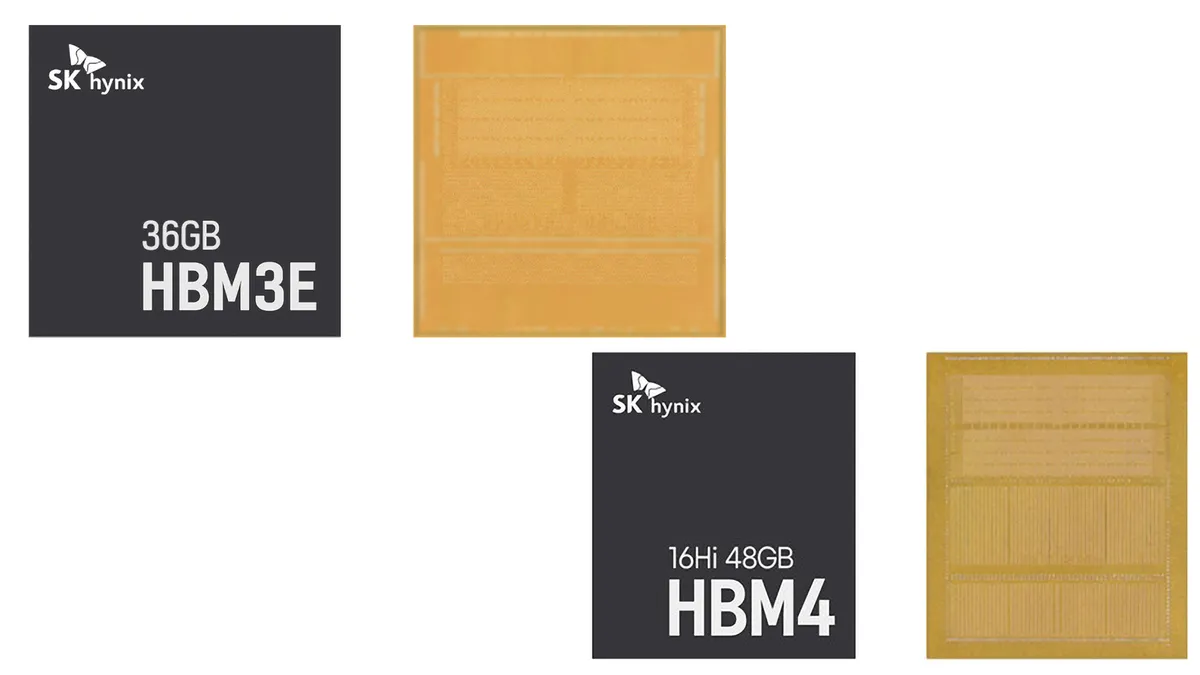
Back in July, memory maker SK Hynix’s CEO Kwak Noh-jung said that 2027 will be the "worst year" for the ongoing memory shortage and expects the memory crunch to last until 2030. For smaller manufacturers, however, simply paying more for memory isn't always enough. The situation is particularly difficult for budget-oriented phones and laptops, where memory makes up a much larger portion of the overall product cost.
According to Raymond van Eck, CEO of repairable-phone maker Fairphone, memory can account for almost 60% of the bill of materials in phones costing around $400. That itself is worrying, as a recent Counterpoint Research report expects global smartphone shipments to fall 13.9% this year to 1.08 billion units, marking the largest annual decline on record.
Finnish phone maker Jolla has designed two motherboard versions, allowing it to switch between combined packages for discrete chips depending on availability. The company is also testing samples from every batch it receives to ensure new memory isn't being sold as refurbished hardware.
Similarly, laptop manufacturer Framework has been able to rely on its highly modular approach where customers can install memory salvaged from older laptops or opt for second-hand units, giving the company and its users another way to deal with limited supply. The company is also placing non-cancellable orders well in advance, even when it doesn't know the final price or exact delivery volume.
Back in July, it nearly doubled memory pricing for 32GB and 64GB variants of the Framework Laptop 13 Pro after receiving a cost update from its LPCAMM2 supplier. However, after sourcing new inventory at a reduced cost, the company recently announced a price drop for the same, including retroactive orders that have already shipped.

Follow Tom's Hardware on Google News, or add us as a preferred source, to get our latest news, analysis, & reviews in your feeds.
Get Tom's Hardware's best news and in-depth reviews, straight to your inbox.

Kunal Khullar is a contributing writer at Tom’s Hardware. He is a long time technology journalist and reviewer specializing in PC components and peripherals, and welcomes any and every question around building a PC.
-
hotaru251 in the old days the path chosen would have been optimization of product to go further w/ less.Reply -
FiliusHesperiae If developers would actually take the time to learn optimization and stick to simple and extensible software we wouldn't be here right now. RAM costs double or even triple what it did 2 years ago because every device made needs 8 gigs to idle with the slop OS its running, and a further 8gb to run a handful of programs. 10-15 years ago a 16gb system could run literally anything, now 16gb is the bare minimum for a web browser. It's ridiculous. I have a laptop running linux that hosts 6 different personal use servers one of which is a media server. I can access something from my phone(Android) and play a 1440p movie from another laptop (linux) over the internet, and it's my Android phone that's using the most RAM because developers just utilize whats there instead of trying to optimize.Reply -
usertests Reply
Microsoft claims they're working to reduce Windows 11 memory usage, Google is supposedly forcing Android memory limits in 2027. You're far from the first person to make the observation, although it's exaggerated. I feel you can do fine with 4 GB on an Android phone or 8 GB for light Windows usage. You definitely want more but the penalty for using swap isn't that bad.FiliusHesperiae said:If developers would actually take the time to learn optimization and stick to simple and extensible software we wouldn't be here right now. RAM costs double or even triple what it did 2 years ago because every device made needs 8 gigs to idle with the slop OS its running, and a further 8gb to run a handful of programs. 10-15 years ago a 16gb system could run literally anything, now 16gb is the bare minimum for a web browser. It's ridiculous.
The lessons learned will probably be unlearned quickly. Say the RAM shortage ends in 2027-2028. With a return to normalcy, e.g. 32 GB DDR5 costing $200 (still way more than the lowest 2025 prices), the problem isn't really there anymore. People will pay the problem away.
As we move on into the future, there will be some minor density increases before a push to commercialize 3D DRAM in the 2030s, raising density by somewhere from 2-10x. If we enter a world where 64-128 GB becomes the equivalent of 8 GB today, it's hard to see all of that being wasted on anything other than local AI. So if you don't use AI, you'll probably be fine. -
benovite I'm going to make a bold statement:Reply
The AI bubble needs to burst, especially before we get too far down the road when, if it does all turn to pickle juice, we won't be completely helpless.
That said, the AI genie is already out of the bottle and manufacturers are firmly stuck in the YOU NEED MORE AI EVERYWHERE mode. If you read comments about new devices, and this is now going back several years mind you, a lot of people don't want more AI in their stuff. Most even claim to either not want the product because of its heavier reliance on AI or say they'll disable whatever AI features they can. Example; a new Samsung phone is coming out and naturally AI is front and center. Yet a lot of comments will says they don't want more AI or any AI at all, so they won't upgrade their Samsung for the newest.
I really really wish consumers had more power in the designing and making of these things. But no despite the fact that over the years a lot of features are taken away from our phones and such, like headphone jacks, IR blasters, SD cards, LED lights for notifications, kickstands(remember when some of the first phones had kickstands? And they were tiny by comparison!) I could go on(removable batteries) but you all know what you've lost and what you've been told you've gained over the years (AI! WOOHOO). Remember glass backs on phones or curved screens or diamond encrusted screens that makers shoved down our throats whether you wanted it or not. Remember when your dollar was a vote made by you telling makers what you want? Remember NFT's?
Sorry this diatribe is now going into its third hour, I apologize. But my point is we have the buying power and we need to leverage that into actually getting what WE want. Not what some Korean maker thinks you want. Phone companies would sell us a porcelain cellphone or tablet with no apps or features other than AI and we'd be like "That sucks, but I'll be getting it."
I love innovation and it's still happening at all these places that make all the devices we buy. But the divide between consumers and manufacturers is HUGE.
And I haven't even gotten into how the AI bubble will burst and why! But here's my take; it's all smoke & mirrors. Any kind of enhancement or upgrade made by AI so far is staggeringly underwhelming and borders on fraud. They're putting make-up on a pig and telling you it looks better.
I had a long, exhausting and thoroughly useless chat with chatgp the other day and it reminded me of how utterly useless this thing was, trying to placate me, making boasts about what it will do for me while denying actually doing something for me. All it wanted to do is brag and explain its own truth to legitimize its existence. And I was like wow I gotta go, keep the dream alive!
Incredible. Ok I'm done. If you've made it this far I thank you for your time. Wouldn't it be funny if all of the above was spat out by AI? HAHANO. It wasn't. But you knew that already. 😉 -
BROKEN 81 Reply
I don't agree with anything you said, however, I have to point out that android is designed to use max RAM. The fact you don't even know that and trying to compare it to Linux and Windows shows you don't know what you are talking about.FiliusHesperiae said:If developers would actually take the time to learn optimization and stick to simple and extensible software we wouldn't be here right now. RAM costs double or even triple what it did 2 years ago because every device made needs 8 gigs to idle with the slop OS its running, and a further 8gb to run a handful of programs. 10-15 years ago a 16gb system could run literally anything, now 16gb is the bare minimum for a web browser. It's ridiculous. I have a laptop running linux that hosts 6 different personal use servers one of which is a media server. I can access something from my phone(Android) and play a 1440p movie from another laptop (linux) over the internet, and it's my Android phone that's using the most RAM because developers just utilize whats there instead of trying to optimize. -
Conor Stewart There are two opposing mindsets for RAM usage, on one hand it is there to be used and you lose nothing by using as much as you can, on the other you try to reduce memory usage and make things as efficient as possible. Both mindsets are correct but it depends on where they are used.Reply
If you are making an OS then having low overhead for the OS but always staying near maximum ram utilisation is a good thing. As long as the OS has a good mechanism for getting rid of old, no longer needed data and moving things to swap.
Trying to use all the ram should be something the OS does, as long as it does it quickly and efficiently. The problem is when apps take the approach of ram is there to be used rather than trying to make things efficient.
My first smartphone had 256 MB of ram and 128 MB of storage, the 48x increase in ram to my current phone does not deliver anywhere near the performance boost you would expect. A simple game on the app store is not any better than it was back then but it uses hundreds of megabytes of storage and drains my phone's battery quickly. Why? Something has gone really wrong somewhere along the way and it was likely the opposite of what is happening now. Ram was too cheap. That meant developers didn't really care about how much RAM they used and even if it didn't run well at the time, then by the time they released it a newer phone would be out with more ram.
Companies also don't want your phone to be efficient. If it was efficient and had plenty of ram then you wouldn't upgrade as often. Just look at how older devices slow down with software updates when the software isn't doing much more. They want specs to sell you on, they want higher ram, they want a higher resolution camera, they want a processor that scores higher in synthetic benchmarks on a test stand, none of that actually matters to the average person though. The ram and processing power updates are really unnecessary. For the most part the only people actually using the full compute power of their phones are playing intensive mobile games. People wrongly equate ram and processing power with responsiveness, to an extent that may be true but not in the case of general phone users and they have been given that idea by phone manufacturers.
The problem is just mindset in general. Companies want to push updates and new features fast and rarely go back and make things more efficient.
I don't see it improving substantially but it should. People just need to focus more on actual quality rather than perceived quality. -
das_stig Might get push back from those that believe in free market, but maybe, laws need put in place to protect consumer supply of goods at sensible pricing to avoid this drive to rip people off by how manufacturing and distribution numbers are managed.Reply