









Thermal Grizzly launches PhaseSheet PTM Pro with improved thermal conductivity — new thermal pad promises easier installation and better cooling performance
Easier installation and improved thermal conductivity.
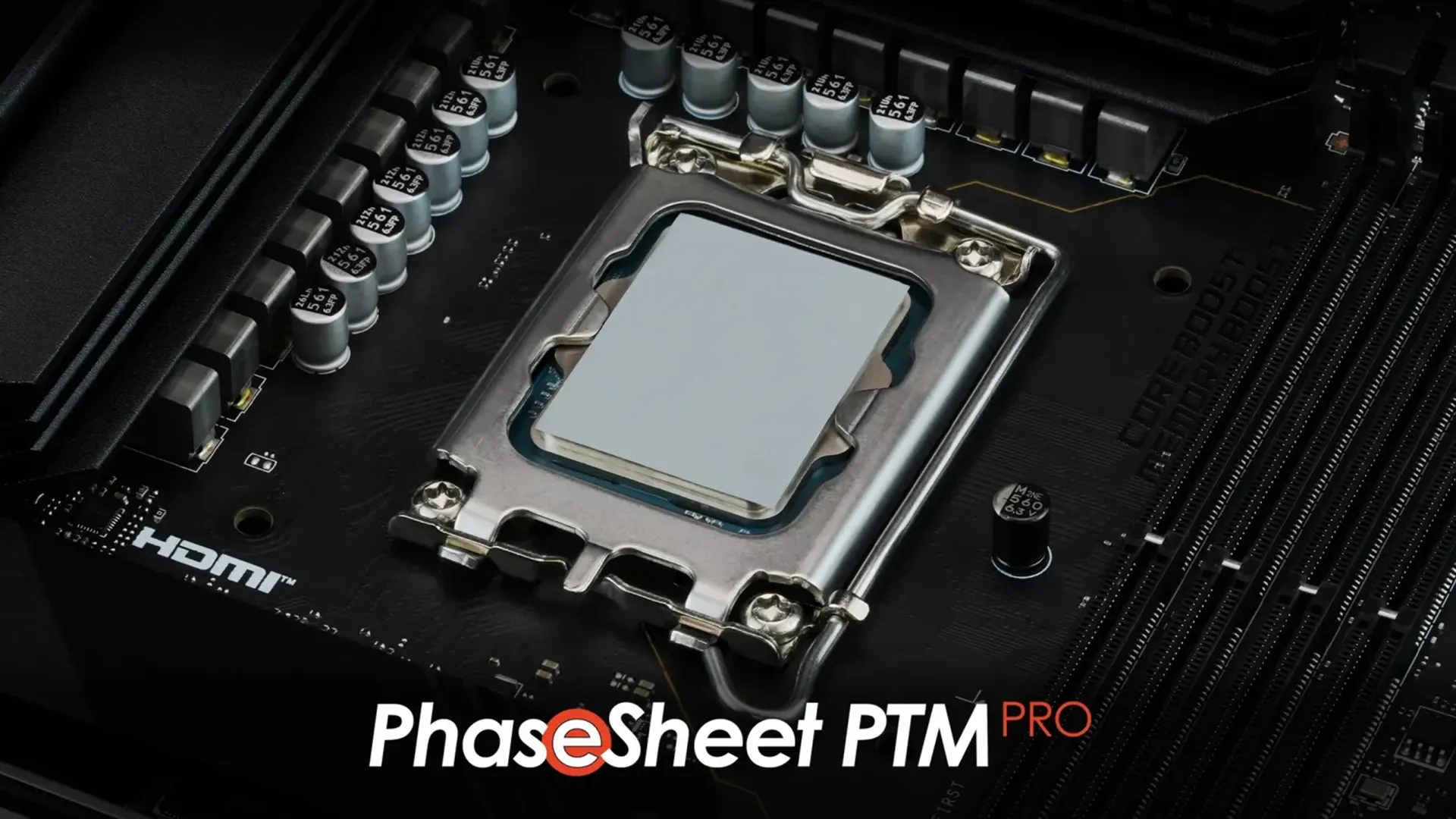
Thermal Grizzly has announced the PhaseSheet PTM Pro, an improved version of its popular phase-changing thermal pad. According to the manufacturer, the new thermal pad offers increased thermal conductivity alongside a redesigned carrier film that makes the PhaseSheet PTM Pro easier to handle and install. While this may seem like a relatively minor change, the new carrier film is designed to peel away more easily from both sides, reducing the risk of tearing the sheet during installation.
- Intel VP Robert Hallock sets Nova Lake expectations, teases return to Raptor Lake for DDR4 platforms
- CPU scaling with DLSS
- Intel's one-two punch plan in desktop CPUs is taking shape
- Benchmarking AMD's BC-250, offering Steam Machine-like performance at half the price
- AMD splits Zen 7 into three EPYC families for 2028 and starts selling server CPUs by the agent
Like the original PhaseSheet PTM, the Pro version uses a phase-changing material that alters its physical properties depending on the temperature. At room temperature, the sheet remains solid, much like a conventional thermal pad. However, at temperatures above 45°C, the material transitions into a very low-viscosity liquid that behaves similarly to thermal paste.
This phase-changing behavior helps minimize the pump-out effect commonly associated with traditional thermal paste. Pump-out occurs when thermal paste gradually moves out from between a heatsink and a GPU die or CPU IHS due to repeated thermal expansion and contraction of the contacting surfaces. Over time, this can reduce the amount of thermal paste covering the contact area and potentially degrade cooling performance.
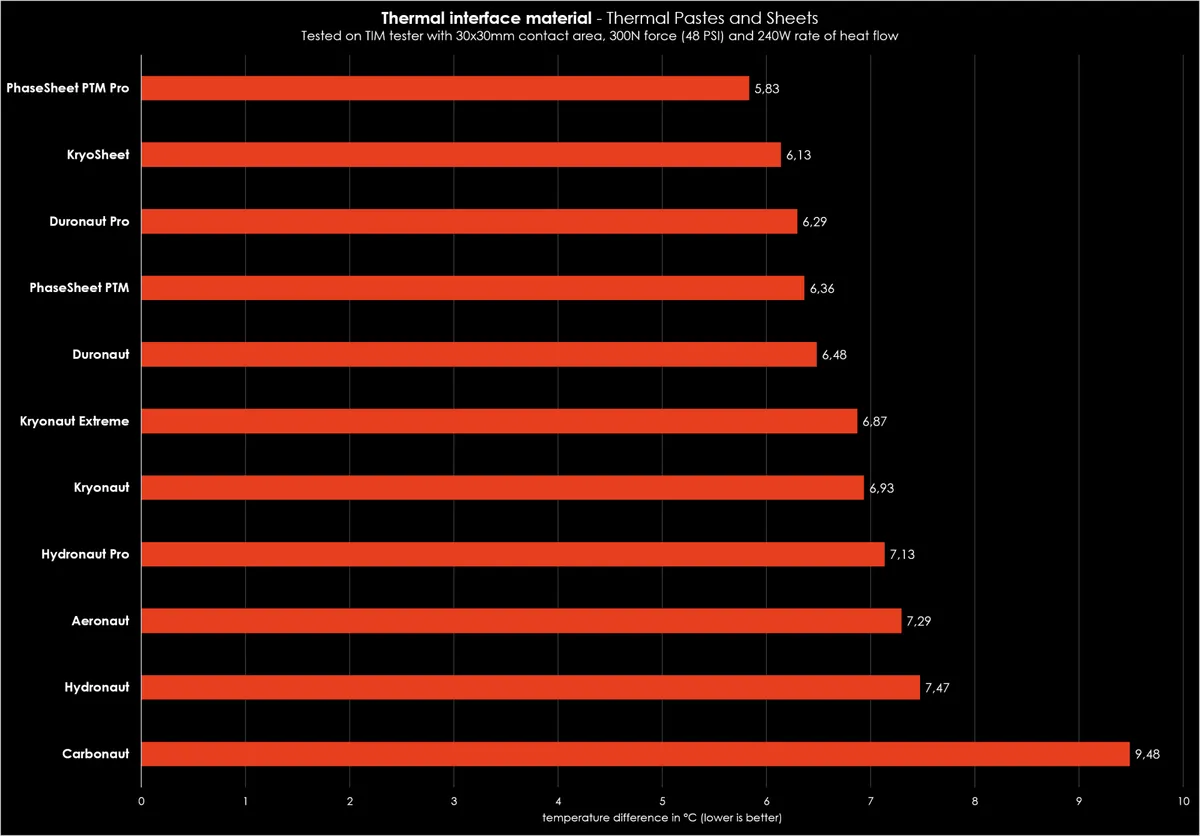
The PhaseSheet PTM Pro is also reusable and electrically non-conductive, meaning it can be safely used on components without an IHS, including mobile CPUs, GPUs, and other internal components such as memory and storage. According to a performance graph shared by Thermal Grizzly, the new PhaseSheet PTM Pro outperforms several popular thermal pastes and thermal pads in controlled testing. Using a 30 x 30mm contact area, 300N of mounting force (48 PSI), and a 240W heat load, the PhaseSheet PTM Pro recorded a temperature difference of 5.83°C, the lowest among all the tested materials. This puts it ahead of the KryoSheet (6.13°C), Duronaut Pro (6.29°C), and the original PhaseSheet PTM (6.36°C).
The PhaseSheet PTM Pro can be purchased through Thermal Grizzly's website for $23.28 per 40 x 40mm sheet. That's considerably more expensive than the original PhaseSheet PTM, which costs $13.92 for a larger 50 x 40mm sheet.

Follow Tom's Hardware on Google News, or add us as a preferred source, to get our latest news, analysis, & reviews in your feeds.
Get Tom's Hardware's best news and in-depth reviews, straight to your inbox.

Kunal Khullar is a contributing writer at Tom’s Hardware. He is a long time technology journalist and reviewer specializing in PC components and peripherals, and welcomes any and every question around building a PC.
-
Rand0m_Guy That's a very large improvement, too big that I dont trust it and going to wait for 3rd party tests.Reply -
gggplaya ReplyRand0m_Guy said:That's a very large improvement, too big that I dont trust it and going to wait for 3rd party tests.
These sheets work better than paste when the heatspreader and heatsink has not been perfectly lapped flat. I've fixed a few video cards with the original version.
I was so impressed that I stopped using thermal paste. I use these on my laptops and desktop cpu's now too.
I don't know if this chart is 100% true or biased, but these PTM sheets are the way to go with any build now. -
hotaru251 Reply
normally yes, however Roman generally doesn't lie about the products he makes and sells (as he knows they will get tested and wouldnt risk ruining the reputation of him and the company)Rand0m_Guy said:too big that I dont trust it and going to wait for 3rd party tests. -
thestryker Hopefully there will be some real world testing of this. I'm not sure that I'd spend the price premium for this one, but I've liked the phase change pads I've used to date. I've used them in my two machines that are on 24/7 as a way to minimize maintenance. I've tended to use longer lasting pastes, but these tend to have even better longevity and performance with the tradeoff being price.Reply
When Thermalright did a second variation of their pads they actually made them thicker. I noticed with this TG update the thickness seems to be the same, but the supported temperature range is lower. It will be interesting to see what else may have changed as the details were relatively sparse. -
bit_user Bigger image of the claimed results (click):Reply
I'm glad to hear about the ease-of-use improvements, as I was a little too careless in my first installation attempt and the sheet stretched & ripped in the attempt.
The claimed performance improvements are quite thrilling, but I'm going to wait and see how Igor's Lab rates both its performance and pump-out resistance.
BTW, a big downside of their first-gen product is how much work it takes to fully remove. Even when you think you've gotten it all, switching to a different solvent can reveal there's quite a bit more on there. I tried removing with isopropyl alcohol and the IHS seemed clean. Then, I switched to limonene and kept seeing more material transferring onto the cleaning cloths for a few more passes. -
bit_user Reply
Yeah, the published results were using a test rig and not an actual CPU or GPU. It'll be interesting to see what Igor's Lab makes of it.Rand0m_Guy said:That's a very large improvement, too big that I dont trust it and going to wait for 3rd party tests. -
bit_user Reply
That's not my experience. I found Artic MX-6 to slightly outperform the original TG PhaseSheet, when tested on a 5800X.gggplaya said:These sheets work better than paste when the heatspreader and heatsink has not been perfectly lapped flat. I've fixed a few video cards with the original version.
I think PTM-type TIM makes more sense when you're doing direct-die, which is probably why it's popular in GPUs and laptops. Not to say it's bad on desktop CPUs, but just not as good as the best pastes.gggplaya said:I was so impressed that I stopped using thermal paste. I use these on my laptops and desktop cpu's now too.
Nah, I used KryoSheet in a server build, since it has indefinite longevity. PTM might be very durable, but it's still susceptible to pump-out and degradation. If you want a truly maintenance-free TIM and KryoSheet works well enough for you, then it's a better option. However, it's not non-conductive and that can make it less suitable for direct-die cooling.gggplaya said:I don't know if this chart is 100% true or biased, but these PTM sheets are the way to go with any build now. -
PheckPhul ReplyAdmin said:Designed for CPUs, GPUs, and other components without an integrated heat spreader, the PhaseSheet PTM Pro is reusable, electrically non-conductive, and less susceptible to the pump-out effect associated with traditional thermal paste.
Exactly how is it "reusable" if it changes state with temperature? Is the thermal transfer material suspended in some sort of matrix? -
bit_user Reply
Yeah, it's a dubious claim. I guess you could scrape it off and re-apply the scraps, but my experience with the original PhaseSheet is that it's like putty when you first apply it, but then turns to a substance more like candle wax, when you go to remove it after it's been heat-cycled.PheckPhul said:Exactly how is it "reusable" if it changes state with temperature? Is the thermal transfer material suspended in some sort of matrix?
I wonder if they're confusing it with graphene-based KryoSheet? But, even that isn't supposed to be reused, since mounting the heatsink on it creates micro-fractures.