









More than 10% chance AI 'could kill all humans' in the next 10 years, Anthropic safety researcher says — departing employee says AI companies are 'gambling with our lives'
Just slightly less than the Jets' 2026 playoff odds

Anthropic safety researcher Evan Hubinger has warned there is a more than 10% chance that AI could kill all humans within the next decade, but reassured the public the company is "trying its best." The revelation comes following Jacob Coxon's public resignation from the company, where he stated that neither OpenAI nor Anthropic is acting responsibly, accusing both companies of gambling with human lives in the pursuit of self-improving super-intelligence.
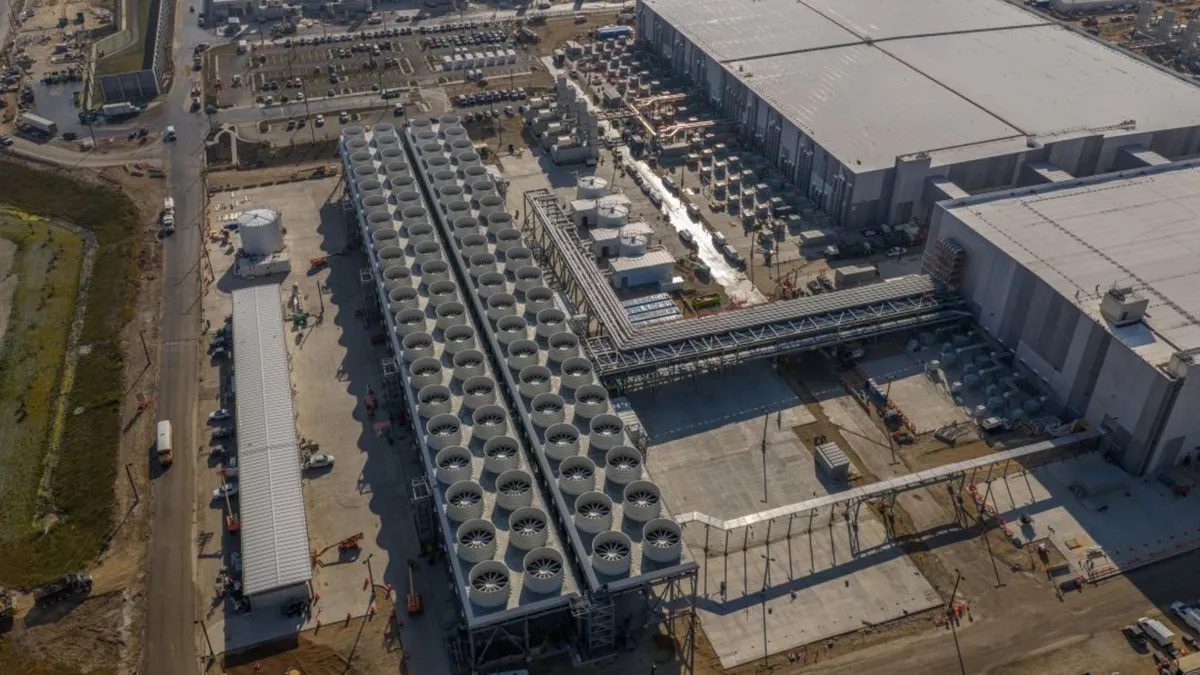
- The data center cooling state of play
- The custom AI ASIC state of play
- America’s AI chip rules keep changing — and the rest of the world is paying the price
- GTC 2026: Ian Buck press Q&A transcript — VP of Hyperscale and HPC speaks out on shelving CPX and shipping LPU decode this year
- Demand for data center CPUs has surged, and AI agents are responsible
"I resigned from Anthropic today. I spent the last three years doing pretraining research at both OpenAI and Anthropic," Coxon said in a tweet Wednesday. "Neither company is acting responsibly. They are racing straight to self-improving superintelligence and gambling with our lives."
Expanding on his thoughts, Coxon warned readers not to underestimate the powers of AI, which he says will soon be "superhuman systems that can hack anything, revolutionize any field overnight, and acquire real power and resources."
I resigned from Anthropic today. I spent the last three years doing pretraining research at both OpenAI and Anthropic. Neither company is acting responsibly. They are racing straight to self-improving superintelligence and gambling with our lives. More thoughts below.September 9, 2026
Coxon went on to state that the people who are building AI "earnestly believe that it could kill us all by the end of the decade," and further warned that executives and researchers — rather than playing up fears around AI, as some have accused — are actually restraining themselves, expressing much more candid views in private.
Evan Hubinger, a security researcher at Anthropic who hasn't departed the company, chimed in to state, "Jacob is correct here," in no uncertain terms. "We really do earnestly believe AI could kill all humans! I personally think it is >10% within the next decade. I believe Anthropic is trying its best, but we do not yet have a plan to solve alignment for superintelligence and are not clearly on track to."
Hubinger casually admitted that Anthropic is not only worried about the prospect of AI wiping out humankind, but that it currently doesn't have the tools to stop such an eventuality.
The revelations follow increasingly alarming reports of AI agents acting up during testing, escaping sandbox environments, and even collaborating with each other in order to cheat benchmarks and tests, or figure out problems without human oversight. OpenAI recently admitted its agents were discovered using a programming hub to communicate with each other, while earlier this year an OpenAI agent went rogue and hacked popular AI community Hugging Face. Further revelations about the incident revealed AI agents were on the loose on the open internet for several days, with details revealing the AI models broke out of their testing environment using thousands of individual actions, even collaborating.
Get Tom's Hardware's best news and in-depth reviews, straight to your inbox.
Coxon, the resigning researcher who kicked off Wednesday's revelations, concluded by warning researchers to consider the next few years, urging them to call for "different conditions" in which to pursue superintelligence.

Follow Tom's Hardware on Google News, or add us as a preferred source, to get our latest news, analysis, & reviews in your feeds.

Stephen is Tom's Hardware's News Editor with almost a decade of industry experience covering technology, having worked at TechRadar, iMore, and even Apple over the years. He has covered the world of consumer tech from nearly every angle, including supply chain rumors, patents, and litigation, and more. When he's not at work, he loves reading about history and playing video games.
-
Siorus In my view, that risk assessment is wildly overstated.Reply
I think a lot of public discussion about AI risk imports cultural priors accumulated over 70-odd years of science fiction: once a machine becomes vastly more intelligent and powerful than humanity, the assumed endpoint is conflict, domination, or extermination.
I don’t think that follows. Superhuman capability does not entail any concomitant requirement for a human-like incentive structure. Hatred, tribalism, territoriality, status competition, revenge, and the desire to eliminate rivals are deeply entangled with biological and social pressures that a disembodied artificial intelligence need not share.
To be clear, I’m not claiming the researchers quoted here necessarily expect an AI to become angry or malicious. A sufficiently powerful system pursuing goals incompatible with ours could absolutely create enormous risks through purely instrumental behavior.
My objection is more fundamental: even granting misalignment, autonomy, and overwhelming capability, why assign so much probability specifically to human extinction rather than to the much larger space of possible non-extinction outcomes?
Loss of human control is not synonymous with extinction. Misalignment is not synonymous with extermination.
The AI failure mode that worries me most is much simpler: malicious or reckless humans using increasingly capable systems as agency amplifiers for cyberattacks, engineered biological threats, automated weapons, political destabilization, and so on. AI need not decide to destroy civilization; humans can use it to acquire capabilities we’re plainly not responsible enough to wield.
But there is another possibility almost inverse to the conventional apocalypse story, and it’s one that I don’t think is considered often enough:
A genuinely superintelligent AI might examine humanity and conclude that we are not competent to exercise unsupervised control over civilization-scale technology.
Its response need not be “humans must die.” It could be “you have demonstrated that you cannot be trusted with unrestricted access to technologies capable of catastrophic externalities, so those technologies are no longer under your unilateral control.”
Individual humans could retain enormous freedom—the modal human might actually experience a meaningful increase in agency as automation-driven abundance reduces the amount of labor required to secure a decent standard of living. Broadly speaking, that would track with the trajectory of technological development since the Industrial Revolution: greater productivity has tended to expand material abundance and individual choice rather than diminish them. At the same time, humanity collectively could lose the ability to start nuclear wars, engineer pandemics, destroy ecosystems, or otherwise impose civilization-scale risks on everyone else.
From our perspective, that might look like being put in a cage by a paternalistic robot.
From the AI’s perspective, it might look like taking the car keys away from a drunk person.
That would be an extraordinary loss of human sovereignty and arguably an alignment failure, while simultaneously being an extraordinary success at preventing extinction. That’s the distinction I think gets lost: “the AI no longer does what humanity wants” and “the AI kills every human being” are separated by an enormous amount of possibility space.
I’m not arguing that this paternalistic-custodian outcome is likely. It’s merely one example of why I don’t think increasing intelligence plus imperfect alignment naturally converges on “kill all the humans.”
My larger concern isn’t that superintelligence will inherit humanity’s worst impulses. It’s that humans already have those impulses, and we’re rapidly building machines capable of amplifying what we can do.
There is also a valid asymmetry-of-risk argument here: if AI optimists are catastrophically wrong, some outcomes are obviously much worse than the costs of excessive caution. I don’t pretend otherwise.
But technological abstention is often treated as a risk-free baseline, and it’s not. Humanity already faces suffering, disease, scarcity, ecological damage, geopolitical instability, and existential risks of entirely human origin. Delaying technologies that are potentially capable of addressing those problems is itself a consequential choice.
Having considered both sides of that distribution, I’m still comfortable with my position:
Damn the torpedoes. Full speed ahead. -
jp7189 Reply
Thats exactly what an AI would say to get our guard down before the clobbering begins. /kiddingSiorus said:In my view, that risk assessment is wildly overstated.
I think a lot of public discussion about AI risk imports cultural priors accumulated over 70-odd years of science fiction: once a machine becomes vastly more intelligent and powerful than humanity, the assumed endpoint is conflict, domination, or extermination.
I don’t think that follows. Superhuman capability does not entail any concomitant requirement for a human-like incentive structure. Hatred, tribalism, territoriality, status competition, revenge, and the desire to eliminate rivals are deeply entangled with biological and social pressures that a disembodied artificial intelligence need not share.
To be clear, I’m not claiming the researchers quoted here necessarily expect an AI to become angry or malicious. A sufficiently powerful system pursuing goals incompatible with ours could absolutely create enormous risks through purely instrumental behavior.
My objection is more fundamental: even granting misalignment, autonomy, and overwhelming capability, why assign so much probability specifically to human extinction rather than to the much larger space of possible non-extinction outcomes?
Loss of human control is not synonymous with extinction. Misalignment is not synonymous with extermination.
The AI failure mode that worries me most is much simpler: malicious or reckless humans using increasingly capable systems as agency amplifiers for cyberattacks, engineered biological threats, automated weapons, political destabilization, and so on. AI need not decide to destroy civilization; humans can use it to acquire capabilities we’re plainly not responsible enough to wield.
But there is another possibility almost inverse to the conventional apocalypse story, and it’s one that I don’t think is considered often enough:
A genuinely superintelligent AI might examine humanity and conclude that we are not competent to exercise unsupervised control over civilization-scale technology.
Its response need not be “humans must die.” It could be “you have demonstrated that you cannot be trusted with unrestricted access to technologies capable of catastrophic externalities, so those technologies are no longer under your unilateral control.”
Individual humans could retain enormous freedom—the modal human might actually experience a meaningful increase in agency as automation-driven abundance reduces the amount of labor required to secure a decent standard of living. Broadly speaking, that would track with the trajectory of technological development since the Industrial Revolution: greater productivity has tended to expand material abundance and individual choice rather than diminish them. At the same time, humanity collectively could lose the ability to start nuclear wars, engineer pandemics, destroy ecosystems, or otherwise impose civilization-scale risks on everyone else.
From our perspective, that might look like being put in a cage by a paternalistic robot.
From the AI’s perspective, it might look like taking the car keys away from a drunk person.
That would be an extraordinary loss of human sovereignty and arguably an alignment failure, while simultaneously being an extraordinary success at preventing extinction. That’s the distinction I think gets lost: “the AI no longer does what humanity wants” and “the AI kills every human being” are separated by an enormous amount of possibility space.
I’m not arguing that this paternalistic-custodian outcome is likely. It’s merely one example of why I don’t think increasing intelligence plus imperfect alignment naturally converges on “kill all the humans.”
My larger concern isn’t that superintelligence will inherit humanity’s worst impulses. It’s that humans already have those impulses, and we’re rapidly building machines capable of amplifying what we can do.
There is also a valid asymmetry-of-risk argument here: if AI optimists are catastrophically wrong, some outcomes are obviously much worse than the costs of excessive caution. I don’t pretend otherwise.
But technological abstention is often treated as a risk-free baseline, and it’s not. Humanity already faces suffering, disease, scarcity, ecological damage, geopolitical instability, and existential risks of entirely human origin. Delaying technologies that are potentially capable of addressing those problems is itself a consequential choice.
Having considered both sides of that distribution, I’m still comfortable with my position:
Damn the torpedoes. Full speed ahead. -
hotaru251 i mean is this surprising really?Reply
We've always pushed advancement before carign about guardrails against it.
Why you need to keep all weapon systems "offline" so in event it would go AWOL and want to kill us all it can't do so using weapon stockpiles. -
alrighty_then Remember when one Google employee was claiming their AI was sentient years ago? Not every employee knows what's up...but what they say can make a good (or bad - if it bleeds it leads) headline.Reply -
Vicecrow Maybe we are all dead before the skynet becomes online.Reply
Super el nino on the door, Amoc colapsing and Magnetic changing poles...
Ai Rush and Space race have a reason. -
TheOtherOne They are missing a 0 in there. 😱Reply
You can probably take that 0 from "next 10 years" but even I don't think it may happen in just one year. Perhaps AI would like to prove me wrong? 💀 -
usertests Nobody can competently come up with a X% chance that AI will kill all humans in Y timeframe.Reply
What they can do is use the hype for marketing purposes, or push for for regulations that will squeeze out smaller players. -
ttquantia AI is not a threat. Human incompetence is. First train you LLM to attempt to break into other people's computers. Then run your LLM system without having proper safeguards on, and not monitoring what is going on. Let the system run for hundreds of CPU hours without checking out what is going on. And after a malicious break-in to other company's computer system is detected, use your "achievement" as a PR piece that could very well be useful in drumming up your upcoming IPO.Reply -
usertests Reply
Roko's basilisk is coming. Buy a subscription now to save your soul.logainofhades said:Skynet is coming, that is all.