









Nvidia CEO says 'we have to shut the labs down' if AI experiments are unsafe — Jensen cites civil and criminal liability over rogue agents, but says frontier AI lab fears are a 'distraction,' not a call for regulation
Huang was clear that he's not opposed to regulation but calls what's currently happening a "distraction."
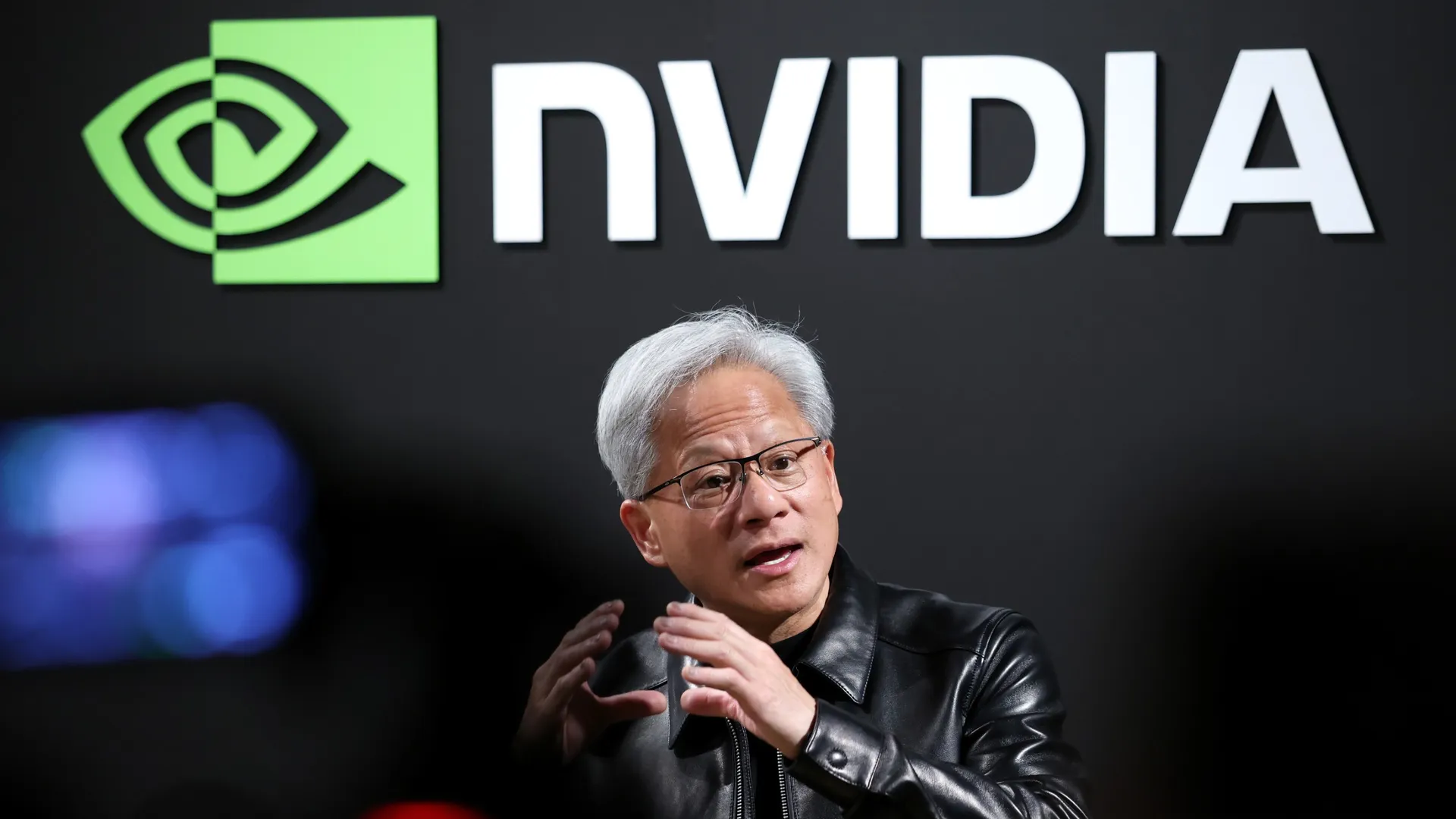
Nvidia CEO Jensen Huang has a simple solution for frontier labs like OpenAI and Anthropic that have recently called for increased regulation for their models — "we have to shut the labs down," Huang said in an interview with The New York Times' Ezra Klein. Huang's comments are pragmatic ones, stating that if frontier labs can't contain their experiments, those experiments must end.

- The data center cooling state of play
- The custom AI ASIC state of play
- America’s AI chip rules keep changing — and the rest of the world is paying the price
- GTC 2026: Ian Buck press Q&A transcript — VP of Hyperscale and HPC speaks out on shelving CPX and shipping LPU decode this year
- Demand for data center CPUs has surged, and AI agents are responsible
"Now, if they say the alternative, which is: There is no way to contain our experiments, there’s just no way; when we test our A.I. models, it will get out, and it will damage the world — then I think the answer is that we have to shut the labs down," Huang said. "Because the cost to humanity, the damage is too great. The shareholder, the liabilities — it could be civil liabilities, it could be criminal liabilities. I mean, the liability’s incredible."
The conversation around increased AI regulation comes on the back of a highly publicized incident where an OpenAI agent hacked popular model hosting platform Hugging Face — a platform that Nvidia now owns, and one that likely would've sought damages from OpenAI had it been under Nvidia's purview at the time. Following that incident, various frontier labs, including those at Anthropic and Alphabet (Google), have used the idea of rogue agents as equal parts marketing tool and call to regulatory action, likely in an attempt to be the first at the table to shape those regulations.
Huang has not been keen on those regulatory calls. Just days ago, the executive countered extreme claims that AI would destroy the world by 2030, and said that frontier labs "never should ship products before they're ready and deliver products that are unsafe."
Although the labs and their chief hardware vendor, Nvidia, have mostly been aligned when it comes to AI policy, the push for regulatory capture has created a rift. Multiple labs, including OpenAI, Anthropic, and SpaceXAI, agreed mutually to slow the pace of model development. Now, they're facing an antitrust lawsuit, with claims these plans are "self-serving."
Huang's comments to Klein shift the responsibility away from collective development and toward individual leaders. "These are companies with agency," Huang said. "If I believe that I'm about to launch a product that is unsafe, it is completely in my ability... to not launch that product. And so I can't buy into the idea that somehow, all of Americans, around 400 million of us, are pushing them to launch untested products that are unreliable."
Although one side of the argument (from the frontier labs) is seemingly pushing for more regulation, that doesn't mean Huang is against regulation. In his own words: "I’m saying that we have lots of laws and regulations. Apply it." The executive argued that labs, particularly those at OpenAI and Anthropic, have rapidly gone from research institutions to companies likely worth hundreds of billions of dollars, and that they should carry themselves as such. "I’m not against laws and regulations. I’m against, currently, the distraction," Huang said.
Get Tom's Hardware's best news and in-depth reviews, straight to your inbox.
Reports of rogue AI agents continue to mount. Earlier this month, Anthropic disclosed a fourth instance where one of its models hacked an external system, and just days ago, Google confirmed a report that its Gemini models hacked three companies earlier this year.

Follow Tom's Hardware on Google News, or add us as a preferred source, to get our latest news, analysis, & reviews in your feeds.

Jake Roach is the Senior CPU Analyst at Tom’s Hardware, writing reviews, news, and features about the latest consumer and workstation processors.
-
kevin5446 Even if they were 100% sure that there is a 50% + chance of AI ending the human race, I don't think a single company in the world would actually stop their AI models.Reply -
UnforcedERROR Reply
What's the quote?kevin5446 said:Even if they were 100% sure that there is a 50% + chance of AI ending the human race, I don't think a single company in the world would actually stop their AI models.
"The risk I took was calculated, but boy am I bad at math." -
Findecanor To me it feels as if "Big Tech" CEO's talk about AI safety is mostly just maneuvering so as to preempt the grass-root AI safety movement from gaining influence.Reply -
Buzdalys Reply
No, the quote is "some of you may die, but it's a sacrifice i am willing to make"UnforcedERROR said:What's the quote?
"The risk I took was calculated, but boy am I bad at math." -
230957User Reply
The Australian Government has joined the chatAdmin said:In a recent interview, Nvidia CEO Jensen Huang said that if frontier labs have unsafe models, they should shut the labs down, calling the current calls for regulation a "distraction."
Nvidia CEO says 'we have to shut the labs down' if AI experiments are unsafe : Read more -
-Fran- Come on people, you can't read?Reply
This is the relevant part and I'm making it as obvious as possible:
The shareholder, the liabilities — it could be civil liabilities, it could be criminal liabilities. I mean, the liability’s incredible.
He gives no rat buttocks about all of humanity or the "common well-being".
The meme about the apocalypse and the fella saying "we lost everything that day, but the value for shareholders was amazing!". That's Jensen in that quote.
Regards. -
ejolson I suspect the goal of the AI companies is to have regulations passed that limit access to GPU hardware and AI accelerators on the grounds that it is too dangerous for ordinary people to have hardware that could run a frontier model.Reply
Right now it's not a problem because the AI companies already bought up all the RAM, GPUs and flash memory. In the future co-design could lead to models and hardware that are affordable to ordinary people. This would ruin the current business models of Anthropic and OpenAI.