Stay On the Cutting Edge: Get the Tom's Hardware Newsletter
Get Tom's Hardware's best news and in-depth reviews, straight to your inbox.
You are now subscribed
Your newsletter sign-up was successful
Join the club
Get full access to premium articles, exclusive features and a growing list of member rewards.
An account already exists for this email address, please log in.
Chinese survey ship loitering near undersea cable ignores Philippine demands to withdraw — evasive action point to growing PRC threats to data lines in the Pacific
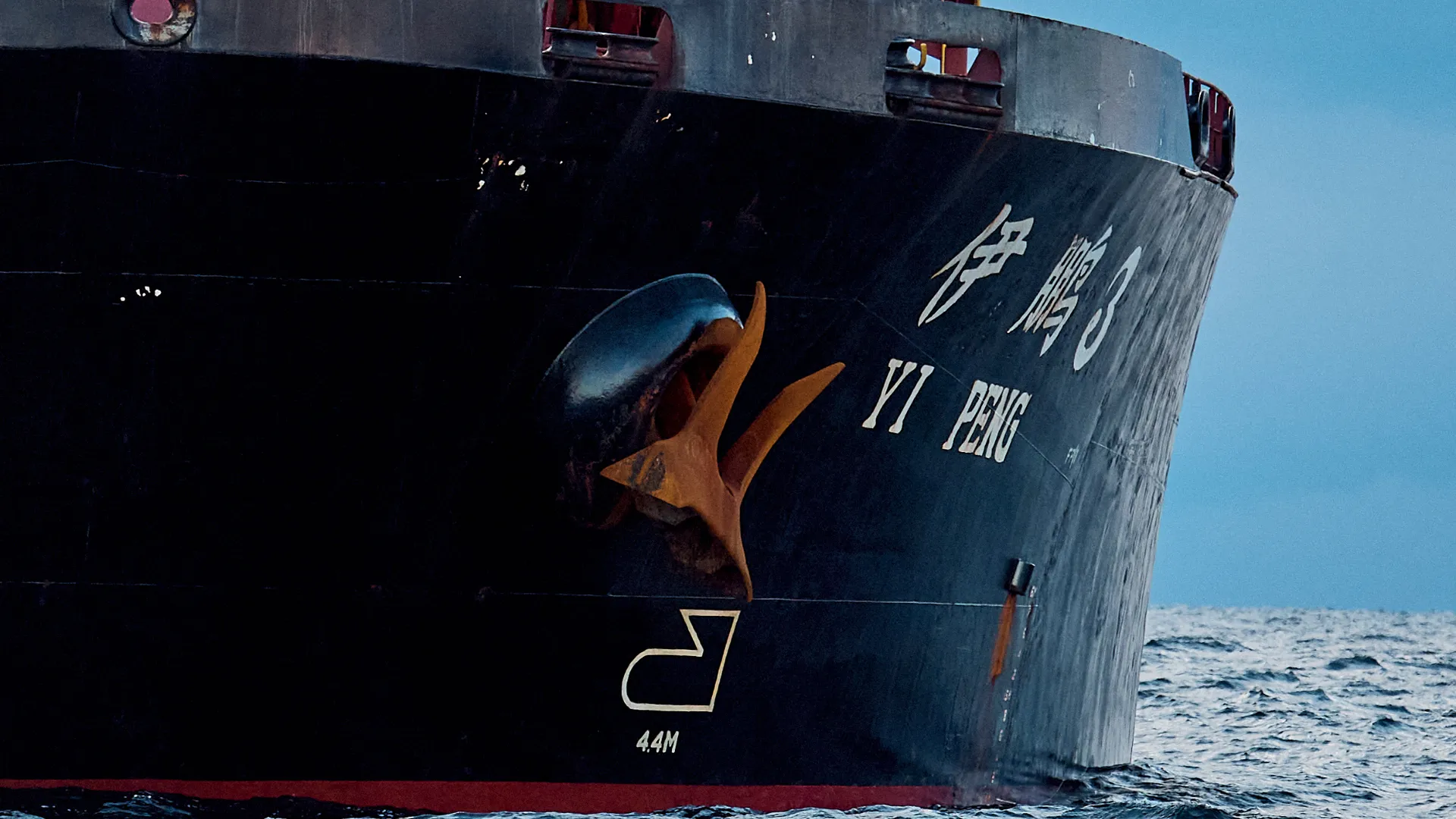
China is loitering over undersea cables in “gray-zone” warfare against neighboring countries, as well as the U.S. and its allies, as it seeks to dominate the South China Sea. Several incidents, reported by Nikkei Asia, suggest the PRC is actively mapping the seafloor for vulnerabilities and using civilian research vessels to do so.
A serious incident in September, for instance, saw the Philippine Coast Guard respond to a Chinese research vessel close to an undersea cable. The vessel reportedly ignored radio contact while broadcasting a false ID before manoeuvring to evade capture. The Philippines, in response, sent its largest vessel to respond. That vessel was spotted 37 nautical miles away from the Batanes province, officially part of the Philippines but claimed by China. The incident also saw a Chinese coastguard ship intervene, with Beijing complaining of harassment afterward, according to the South China Morning Post.
There have been no confirmed reports of Chinese attacks on undersea cables, but it isn’t the first report of Chinese attempts to map the region’s undersea infrastructure. A report by the Center for Strategic and International Studies, a U.S.-based think tank in Washington, DC, found that Chinese research ships were spending more time loitering near cables than any other nation. Their purpose for doing so is unclear, but the report made clear that the efforts were “disproportionate.”
One thing that the U.S. is certain about, however, is that China has the capability. A U.S. congressional report from 2025 highlighted that China is actively developing techniques to cut cables, pointing out that Chinese research teams had already publicly disclosed the details of electric cutting devices that could sever armored cables as deep as 13,000ft underwater.
Ryan Claffey, a research assistant for the Center for a New American Security, a think tank that specializes in U.S. national security, believes that a coordinated response is required to stop Chinese actions in the region. Writing in the report, Claffey warns that “subsea cables are digital lifelines,” arguing that “the U.S. and its allies must protect them in peacetime to stay connected in crisis.”
The People’s Republic of China has maritime disputes with several countries in the region. It continues to hold a claim over Taiwan, which it views as a breakaway province. It also has disputes with the Philippines, as mentioned earlier, along with Vietnam, Malaysia, and Brunei in the South China Sea, as well as Japan in the East China Sea.
Authoritarian nations like Russia, China and Iran have all stepped up operations against undersea infrastructure in Europe, Asia and the Middle East. Russia, for instance, has used fishing trawlers for nearly five years to loiter over communication cables in Europe. Iran, meanwhile, has threatened to attack undersea cables in the Strait of Hormuz if the U.S. attacks it again, describing them as legitimate targets during war.
Stay On the Cutting Edge: Get the Tom's Hardware Newsletter
Get Tom's Hardware's best news and in-depth reviews, straight to your inbox.
Ben Stockton is a deals writer at Tom’s Hardware. He's been writing about technology since 2018, with bylines at PCGamesN, How-To Geek, and Tom’s Guide, among others. When he’s not hunting down the best bargains, he’s busy tinkering with his homelab or watching old Star Trek episodes.
So, I guess they're using sonar to map these? If so, then perhaps an effective countermeasure might be an underwater drone that blasts interfering frequencies up towards the surveying ship.
So, I guess they're using sonar to map these? If so, then perhaps an effective countermeasure might be an underwater drone that blasts interfering frequencies up towards the surveying ship.
Yeah noise is usually effective. That's the whole idea of counter-intelligence.
Why not re-purpose old telecom cables as bait? Hard to see the difference from the surface. Heck, when the mud is all over - it's even practically impossible to distinguish a 2005'ish cable from a 1950'ish cable.
I suspect a drone hit will stop this criminal activity.
I was just thinking about the same. There should have been some unrecognized, unclaimed USV dealing with these problems. china, russia, iran, north korea don't understand any other word, but the word of strength. The longer common folk thinks that a talk is enough, the closer we are all to a full blown WW3.
I miss those times when Tech was about hobby only. Tech bros and modern war made tech about politics, sovereignty, propaganda and war.