









Supermarket freezers across Europe struck in second crippling cyberattack — hackers raise temperatures to 50 degrees Celsius in Belgium and Sweden, destroying food stocks
"We've been working all night and morning to disconnect the affected units from the network"
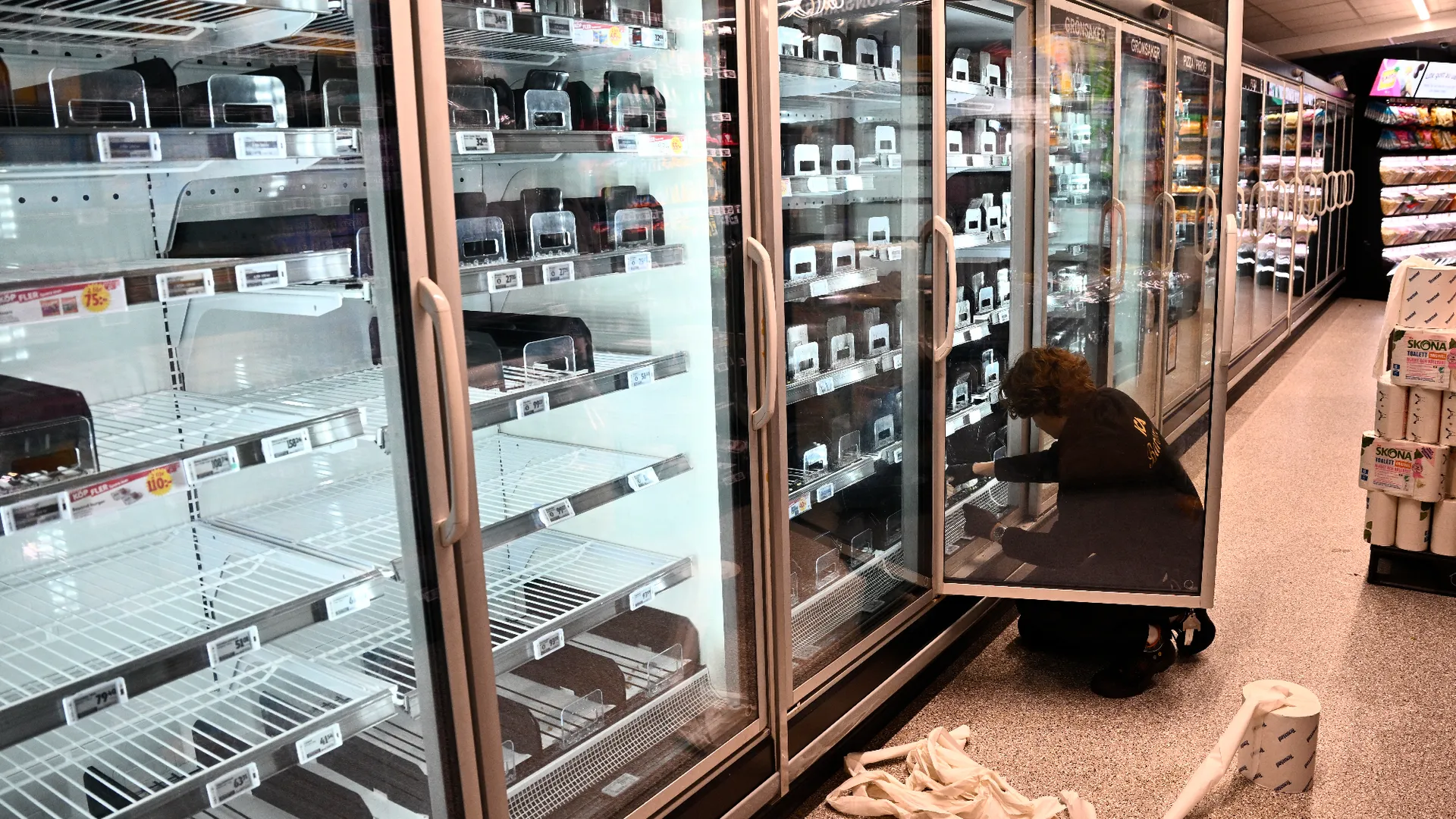
Update, Mon 2 Nov, 7 am ET: Reports are now emerging that supermarkets in Ireland, Estonia, and the Netherlands have also been affected by today's cyberattack. The rest of the story remains below as first published.
Just weeks after an 'unprecedented' cyberattack struck supermarket fridges in France, destroying foodstuffs, a similar hack has crippled supermarket chains in Belgium and Sweden, Bloomberg reports. Hackers targeted supermarkets owned by Dutch outfit Ahold Delhaize, as well as ICA and Coop locations in Sweden. As with the previous attack, hackers remotely raised temperatures in these online-controlled freezers to 50 degrees Celsius, rapidly defrosting their contents and likely destroying millions of dollars worth of items.
Belga News Agency reports that a cyberattack targeting refrigeration units at Belgian supermarkets started on Sunday night at around midnight. Sabcobel, a refrigeration fitter in the region, estimates that at least twenty units are affected across Belgium. The report says that affected supermarket chains include Delhaize, Carrefour, and Spar. As mentioned, and reflecting the previous attack, hackers remotely activated the freezer's built-in defrost mode, overriding the temperature and time spent defrosting, the exact same method as the France attack.
CEO Stephan Moelans said that while the company has been working "very hard" to protect its fridges against the vulnerability, physical modifications to its units are required. The company says switching units to a secure internet connection is the simplest solution in the meantime, a measure carried out by most of its customers in the wake of the France attack.
Elsewhere, supermarkets ICA and Coop are reporting similar disturbances in Sweden. Aftonbladet reports refrigerators and freezers have been struck "in several ICA and Coop stores." Pictures on the ground show staff throwing out shopping carts full of goods. "We are extremely sad and working hard to get everything back up and running," Ica Kvantum wrote on Facebook.
The attack, which is the second such instance in just a few short weeks, is a worrying reminder that many of society's most basic functions and infrastructure are heavily reliant on internet connectivity, making them vulnerable to cyberattacks. The increase in cyber intrusions into the physical world also seems to be commensurate with the proliferation of AI agents, which continues to heavily impact global cybersecurity. In October, a hacker suspected of using AI agents stole the data of 25,000 customers from banks in South Korea. Officials at the time commented that AI models mean actors can "hack with ease even without specialized skills."

Follow Tom's Hardware on Google News, or add us as a preferred source, to get our latest news, analysis, & reviews in your feeds.
Get Tom's Hardware's best news and in-depth reviews, straight to your inbox.

Stephen is Tom's Hardware's News Editor with almost a decade of industry experience covering technology, having worked at TechRadar, iMore, and even Apple over the years. He has covered the world of consumer tech from nearly every angle, including supply chain rumors, patents, and litigation, and more. When he's not at work, he loves reading about history and playing video games.
-
TheOtherOne Make your home appliances "Smart" and connect them to Internet they said, it will be futuristic they said...Reply
This just shows we DON'T need to connect every single part of our lives to Internet that (in)directly makes us slaves to the system. -
T3Kgamer Wild that after the first attack they didn’t update or fix any vulnerabilities.Reply
Honestly why do refrigeration units even need to be connected to the internet? Like we’ve been using basic reliable refrigeration equipment for decades, if anything it should be a local network similar to UART or CAN that isn't connected to the actual internet. -
Samlebon2306 "The company says switching units to a secure internet connection is the simplest solution in the meantime"Reply
Why they did not think about it when architecting the system before it goes online? Is SSL a 2026 tech? Or are VPNs a luxury?
And how on earth could a freezer go up to 50 Celsius? -
Samlebon2306 Reply
Exactly. They should not allow commands over the Internet. only allow telemetry and notifications to be sent to the cloud. In other words make the freezer read-only.T3Kgamer said:Wild that after the first attack they didn’t update or fix any vulnerabilities.
Honestly why do refrigeration units even need to be connected to the internet? Like we’ve been using basic reliable refrigeration equipment for decades, if anything it should be a local network similar to UART or CAN that isn't connected to the actual internet. -
warezme Can't help but shake my head. It used to be you plugged your freezer in and it would get really cold and you kept you food in there. It had a thermostat and temperature setting dial. The end. Why it would need to be connected to the internet is beyond me.Reply -
Roland Of Gilead Reply
On a side note, I like your name! Reminds me of the heady fun days of the mid to late 90's on the scene! :)warezme said:Can't help but shake my head. It used to be you plugged your freezer in and it would get really cold and you kept you food in there. It had a thermostat and temperature setting dial. The end. Why it would need to be connected to the internet is beyond me. -
Sippincider Reply
Exactly. I can understand remote temperature monitoring, for food safety compliance and to alert of developing refrigeration problems. But no reason any remote settings changes should be allowed.Samlebon2306 said:In other words make the freezer read-only. -
Samlebon2306 Reply
I want to clarify that by read-only I did not mean a remote request; I meant a push notification from the freezer to the cloud. That way any attempt to access the system remotely is denied.Sippincider said:Exactly. I can understand remote temperature monitoring, for food safety compliance and to alert of developing refrigeration problems. But no reason any remote settings changes should be allowed. -
DS426 Reply"We've been working all night and morning to disconnect the affected units from the network"
I'll give you hint: unplug the network cable. -
DS426 They have heaters in them as well? That seems odd to me.Reply
If they are connected to the internet, then they should be pretty easy to update. Looks like the French victims had a combination of running old, out-of-support fridge controllers and didn't apply security patches that were released a few weeks prior by their vendors. So yes, at least some of the fridge vendors had already released updates that not only fixed some vulns but also added some security hardening.