Join for quick access. Enter your email below and we'll send confirmation plus sign you up to our newsletter.
By submitting your information, you confirm you are aged 16 or over,
have read our
Privacy Policy
and agree to the
Terms & Conditions. Geographical rules apply.
Stay On the Cutting Edge: Get the Tom's Hardware Newsletter
Get Tom's Hardware's best news and in-depth reviews, straight to your inbox.
You are now subscribed
Your newsletter sign-up was successful
Join the club
Get full access to premium articles, exclusive features and a growing list of member rewards.
An account already exists for this email address, please log in.
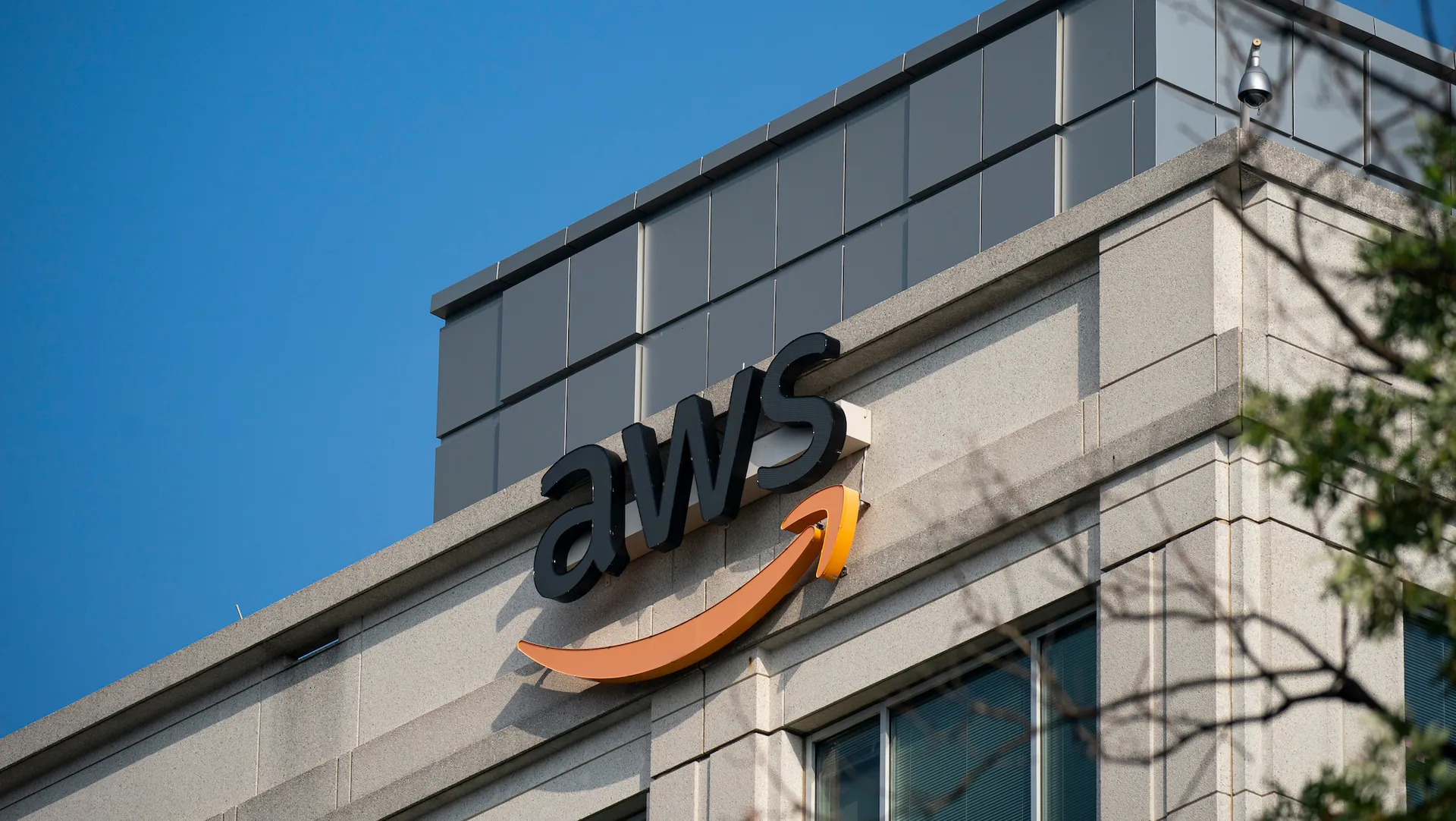
AWS tells clients to quit Middle East data centers six months after Iranian drone strikes — Amazon offers no recovery timeline as UAE mulls underground data centers [Updated]
Update Wed 16 Sept 11 am ET: This article has been updated to clarify that AWS is undergoing partial recovery operations on its data center in the UAE. In an update to its dashboard, AWS says, "After a thorough assessment, we have determined that we are unable to restore access to the resources and data hosted exclusively in the mec1-az2 Availability Zone. We continue to work on recovering regional resources, as well as zonal resources hosted in the other affected Availability Zones (mec1-az1 and mec1-az3). Since the disruption began in March, most customers have been able to re-establish their operations in other Regions by restoring backups or copying data that remained accessible. AWS Support remains available to help customers who need assistance moving their applications to alternate Regions. We remain committed to supporting our customers in the UAE. We are working on replacing the affected infrastructure and will provide an update on the restoration of our services in the coming months. We have notified the relevant authorities and continue to work with them toward that goal."
More than six months after Amazon Web Services (AWS) data centers in Abu Dhabi and Bahrain were attacked by drones, the company has now had to tell customers to move their data to facilities in other regions. The Wall Street Journal reports that AWS has admitted that it's time for customers to jump ship to data centers located elsewhere in the world. In its AWS dashboard update, AWS confirmed "most customers have been able to re-establish their operations in other Regions by restoring backups or copying data that remained accessible. AWS Support remains available to help customers who need assistance moving their applications to alternate Regions."
The move comes as AWS continues repairs on the damaged data centers, but it stopped short of offering a timeline as to when customers can expect either location to be back online. AWS says that it remains committed to supporting its customers in Bahrain, but only said it would provide a further update early next year. It did not offer any specific recovery time frame for the restoration of services. Regarding the UAE, AWS says that it is working to replace affected infrastructure, but again only said it would provide an update on the restoration of services in the coming months.
The move is bad news for the United Arab Emirates. The U.A.E. has spent years trying to become a world leader in data processing, a pitch that led it to lobby U.S. officials to allow it to buy AI chips for its data centers.
Having made plenty of noise about OpenAI's decision to take a spot in a 5-gigawatt data center complex in May 2025, U.A.E. officials have since seen those plans stall. The WSJ points out that no lease has been signed well over a year later. OpenAI was expected to take 20% of the data center's total capacity, the kind of loss that is sure to sting officials if plans don't get back on track.
For its part, the U.A.E. is clearly well aware of the threat that the ongoing regional instability poses to its ambitions, and it's looking for ways to address the fears of potential partners. Officials have already hinted at the potential for underground data centers. While the move would make an already costly endeavor even more expensive, it could help defend new data centers from drone attacks. Building drone defense systems near data centers is another option.
Drone attacks can be catastrophic for any building, and data centers are no different. The data centers operated by AWS suffered fires and damaged infrastructure as a result of the strikes. In their efforts to fight the fires caused by drone strikes, emergency workers used water, causing further damage.
Stay On the Cutting Edge: Get the Tom's Hardware Newsletter
Get Tom's Hardware's best news and in-depth reviews, straight to your inbox.
The Abu Dhabi and Bahrain data centers are relied upon by a variety of businesses in the banking and financial sectors. Those businesses cannot tolerate downtime, especially of the protracted variety. There's little sign of data centers slipping from the crosshairs of drone operators any time soon, either, and AWS is far from unique in finding its data centers under attack.
Iran's Islamic Revolutionary Guard Corps (IRGC) claimed in April that it had hit a data center linked to Oracle in Dubai. That unit further threatened American tech companies, including Microsoft, Oracle, Alphabet, and Nvidia, this spring. It accused the companies of contributing to attacks on Iran. With that in mind, and with tensions in the Middle East looking unlikely to ease any time soon, it's perhaps unsurprising that AWS has asked customers to move data to safer data centers around the world.
Oliver Haslam has written about technology of all shapes and sizes for over 15 years, both online and in print. He's fascinated by how personal computing continues to change as tower PCs give way to foldable phones and beyond.
Current situation considered, Bahrain could be the worst place to locate a football field sized building with a billion dollars of hardware inside. Iran basically destroyed the US military assets sited in the country, and is unlikely to return.
Likewise, U.A.E. and Saudi Arabia pose significant risks, have over-extended their finances, and seem to be in a weak position to recover with yet more expensive and elaborate infrastructure to fortify IT/AI datacenters.
Underground in the desert? Seriously? Send me the plans and I will take a look. Or maybe I can just use Google Earth to track the construction progress.
You'd think by now that Bezos would have felt a slight pang of regret for signing up for this whole circus, but in reality, he's still going to be one of the richest men in the world after the attacks on his data centers.
Heck, he'll probably get bailed out with our money for the damaged sites through some kind of government program.