









Big Tech eyes glacier-strewn Patagonia for building mega AI data centers — region offers 17,300 glaciers, coldness, and cheap energy, but fiber lines are scarce
Major hyperscalers such as OpenAI, Amazon, and Google are developing or scouting this chilly region of Argentina.

Patagonia, a region of Argentina with 17,300 glaciers, has the potential to turn into a data center hotspot. The cool climate and abundant energy resources there are drawing interest from the likes of Amazon, Google, and OpenAI, according to Reuters. However, there needs to be more work on tapping into the resources and equipping high-speed networking, like fiber, to make the place irresistible. There’s also the question of political stability with a presidential election next year.
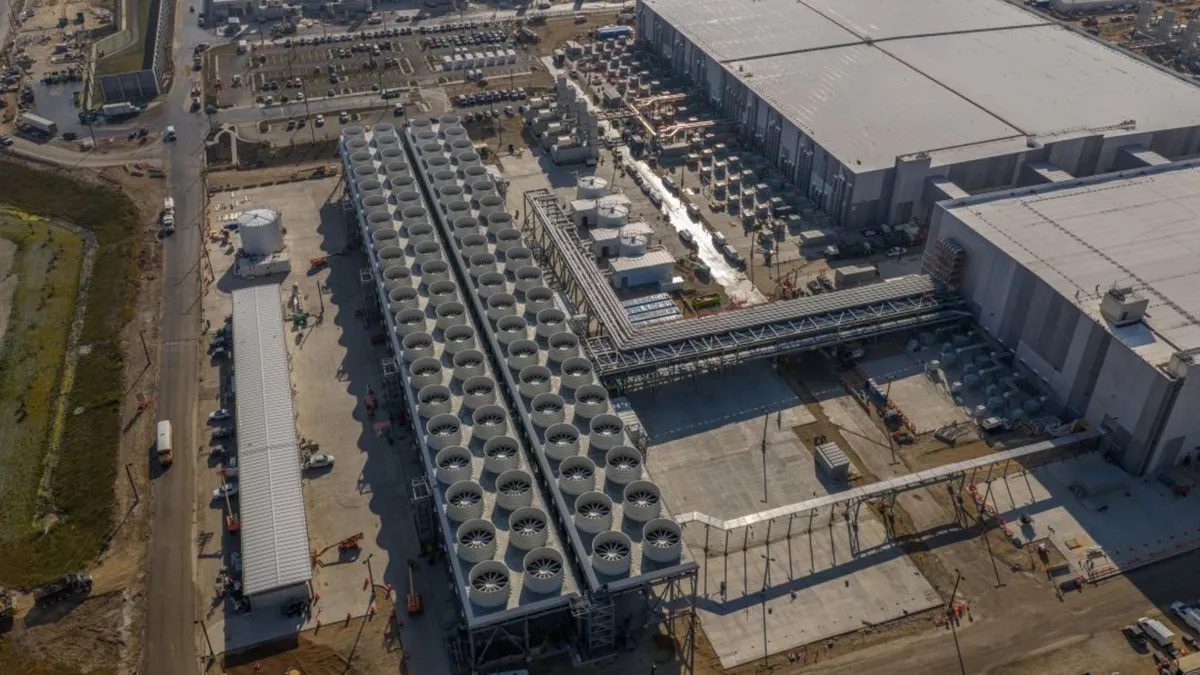
- The data center cooling state of play
- The custom AI ASIC state of play
- America’s AI chip rules keep changing — and the rest of the world is paying the price
- GTC 2026: Ian Buck press Q&A transcript — VP of Hyperscale and HPC speaks out on shelving CPX and shipping LPU decode this year
- Demand for data center CPUs has surged, and AI agents are responsible
Argentina, and Patagonia in particular, has some juicy lures for potential hyperscale data center operators, and the cold climate is a bonus. That environment helps keep data centers cool and use less power while maintaining agreeable thermals. Patagonia has tens of thousands of glaciers across the Northern Patagonian Ice Field and the Southern Patagonian Ice Field combined.
Another bonus to would-be Patagonian data center operators are the range of energy sources there. Reuters mentions hydroelectric power, wind, and shale gas, but some operators who are already established are also adding solar.
Then, the social and political climate looks good for data centers in Argentina. According to the source, the populace doesn't hate data centers yet. At least there seems to be no campaign groups or public backlash. It is also reported that President Javier Milei has been making changes to court Big Tech. That’s a positive, and may be a negative. Positive in that the Argentines are now being accommodating to the needs of huge AI data centers. Negative, as there’s a presidential election next year, where things could take a dramatic turn, or not. There are also some regions in Patagonia where data center expansions may be complicated by the wishes and needs of indigenous communities. Businesses offering sizable, long-term investments aren’t keen on uncertainty.
With the pretty good environment for hyperscale buildouts established, it isn’t that surprising to see Reuters say OpenAI has confirmed a $25B and 500MW clean energy data center in the country. Lesser-known (to us) companies like Poland's Green Capital also plan a $3B and 300MW data center in Patagonia. It is also reported that FlexDomes, a U.S.-based green data center company, is planning the first stage of a 120MW facility.
Meanwhile, in neighboring South American countries, there are large developments from the likes of Amazon, Google, and others. Argentina must have these data center whales in its sights, as they are known to be scouting for expansion into new locations.
As well as political / business risk, Argentina has some structural weaknesses that need to be addressed by those developing in the country. It is said to have connectivity and power grid infrastructure deficiencies, for example. In other locations, we have seen these addressed on almost a per-project basis, with some state intervention, but it adds some high costs to setting up.
Get Tom's Hardware's best news and in-depth reviews, straight to your inbox.

Follow Tom's Hardware on Google News, or add us as a preferred source, to get our latest news, analysis, & reviews in your feeds.

Mark Tyson is a news editor at Tom's Hardware. He enjoys covering the full breadth of PC tech; from business and semiconductor design to products approaching the edge of reason.
-
jp7189 Keep 'em close and keep an eye on 'em, or make it such a pain to build in the US that the logistics costs of remote locations don't look so bad anymore.Reply -
hotaru251 Reply
already been here for a long time.TerryLaze said:Global warming, here I come.....
this will ofc speed up glacial melting in area (even if minute amount...heat does speed up melting even if its only increase of 0.01c) -
warezme I hate to be supportive of data centers but why would they need fiber cabling at least not at onset. Infrared line of sight laser repeating stations could handle the bandwidth at least temporarily while cable is laid.Reply -
RodroX Yeah, the heck with nature, glaciers, wild life and protected areas, AI is more important.Reply
Come destroy the south of my beloved country.
They will destroy everything, president Milei wont give a shirt. He, as most politics, only care about money.
We don't need AI, we need roads, water, gas an electricity supplies all over out country... but politics only think about money and selling what shouldn't -
Eximo Reply
Yeah, not sure those kinds of systems are just laying around to be temporarily used. More like a multi-million dollar investment, or, just paying for the cable run in the first place.warezme said:I hate to be supportive of data centers but why would they need fiber cabling at least not at onset. Infrared line of sight laser repeating stations could handle the bandwidth at least temporarily while cable is laid.
Also depends on what the datacenter will be doing. Handling live user traffic or just sitting there running compute jobs. Theoretically, a large compute job could just be physical media in and out when you need something processed. -
Misgar ",,, some operators who are already established are also adding solar."Reply
Solar is fine in the middle of summer, but the sun rises at 9:59am in Ushuaia and sets at 17:11 mid winter. -
Tanakoi Reply
That's what CCP China wants, certainly.jp7189 said:Keep 'em close and keep an eye on 'em, or make it such a pain to build in the US that the logistics costs of remote locations don't look so bad anymore.
These sorts of absurd claims are not only counterproductive, but outright dangerous: the idea that "nature" is pure and unspoiled, and anything man builds is inherently destructive. I do wonder, though: was your post made from underneath a tree in the wilderness, or within a "nature-destroying" building somewhere? And how did a copy of that post arrive on my own PC, without using a long nature-destroying series of 5G towers and fiberoptic cables, with a monstrously evil datacenter somewhere in the middle, storing and repeating the message?RodroX said:Yeah, the heck with nature, glaciers, wild life and protected areas, AI is more important.
Come destroy the south of my beloved country. -
Tanakoi Reply
In my country at least, roads connect every place I wish to drive, and when I turn on a tap I get all the water I need, and when I flip a switch, I get all the electricity I desire. Those nations who lack this luxury all have one thing in common: a lack of prosperity to build that infrastructure. If AI brings that prosperity, then it's a double benefit.RodroX said:We don't need AI, we need roads, water, gas an electricity supplies all over out country...
I'll also note that the use of AI is already, in fields from agriculture to shipping to construction, dramatically *reducing* the use of water, gas, electricity, and other natural resources. -
jp7189 Reply
Starlink v3 are 1Tbps down/160Gbps up. Pull tons of training data down, chug on it, send back the (smaller) results.warezme said:I hate to be supportive of data centers but why would they need fiber cabling at least not at onset. Infrared line of sight laser repeating stations could handle the bandwidth at least temporarily while cable is laid.