Join for quick access. Enter your email below and we'll send confirmation plus sign you up to our newsletter.
By submitting your information, you confirm you are aged 16 or over,
have read our
Privacy Policy
and agree to the
Terms & Conditions. Geographical rules apply.
Stay On the Cutting Edge: Get the Tom's Hardware Newsletter
Get Tom's Hardware's best news and in-depth reviews, straight to your inbox.
You are now subscribed
Your newsletter sign-up was successful
Join the club
Get full access to premium articles, exclusive features and a growing list of member rewards.
An account already exists for this email address, please log in.
Spending on U.S. data center buildings hits record $85 billion annual pace, up 73% in a year — and Census doesn’t count the servers and racks inside
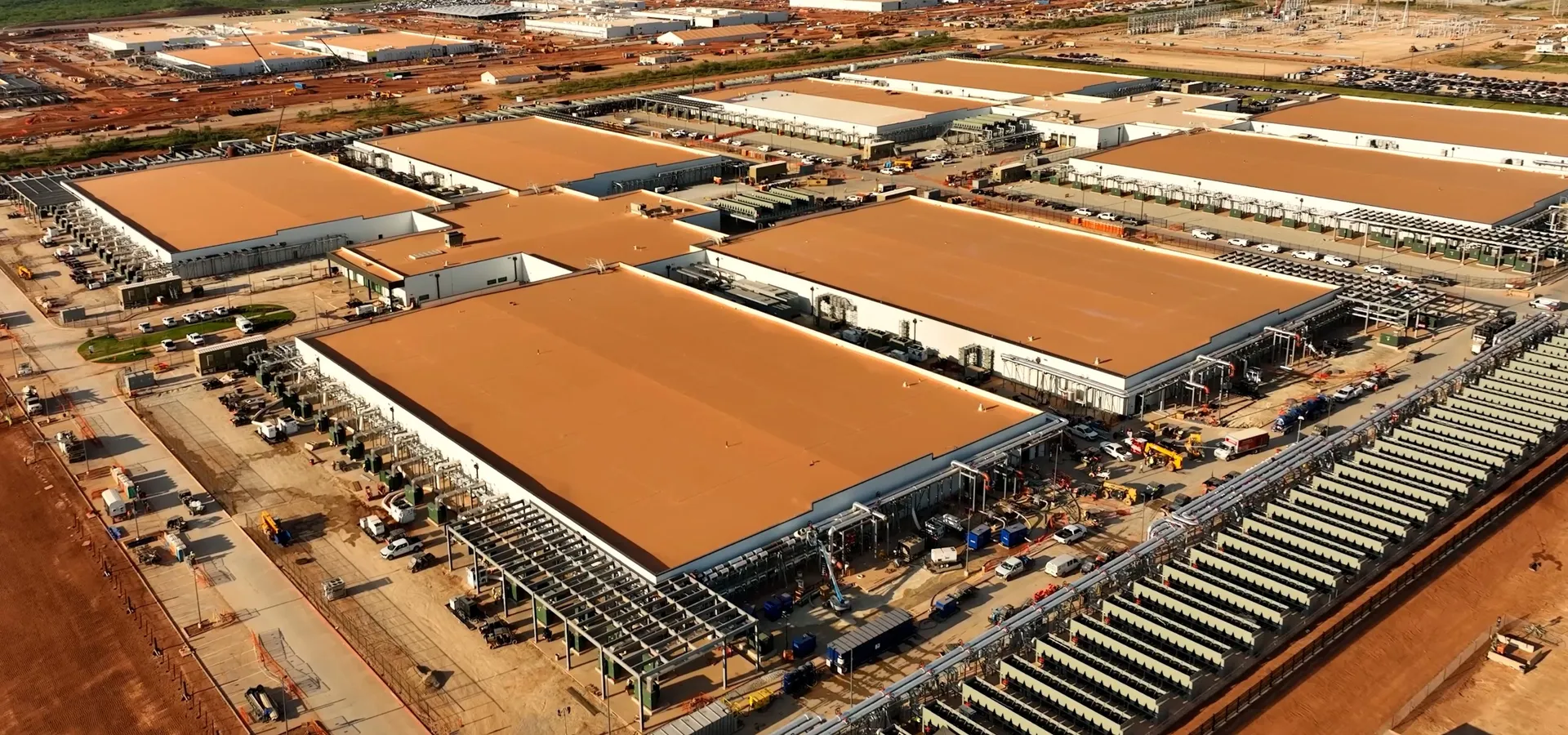
Private data center construction spending is up over 73%, from $49.05 billion to $84.95 billion, year over year (YoY), according to the Census Bureau’s detailed construction spending tables for August. Spending is at a record annual pace, and growth is the fastest since April 2025’s +88.2%. Data center buildouts are now about 63% of all private office construction. The report, released last week, uses Census definitions that exclude any value of “racks or servers in data centers” from its construction spending numbers. It also does not speculate on any cause of the spending increase.
The Census data covers the Value of Construction Put in Place, measured monthly, to calculate what a full year would total at that month’s pace. Data center construction is defined as “[including] buildings that contain the hardware needed for storing, processing, and transmitting digital information,” a subcategory of private office. Power plants and transmission lines built to meet data center power demand fall under Census’s separate power category.
The $39.1 billion gap between general office and data center construction spending is the widest in the series since Census data begins in January 2014. The former is at $45.8 billion, down 9.7% YoY and 34.8% since Jan. 2023. Data centers have, in fact, beaten the general office every month since Sept. 2025.
Data center construction now sits at over nine times its Jan. 2021 level of $9.26 billion. Data center construction has become the majority of private office construction, about 63% versus 47% a year earlier, and with forecasts for data center power use still climbing, that is likely to remain the case moving forward.
Private nonresidential construction was at $773.0 billion, down 1.0% YoY, or $688.1 billion and down 5.9% YoY if data centers are excluded. Of the $8.0 billion monthly rise in private nonresidential spending, $5.9 billion or 74% was for data centers. Manufacturing, down 19.8% YoY, fits the same pattern, and data center construction is now about half its size.
Power construction, up 9.7% YoY, is the other big gainer. Taken together, the picture painted is that the construction industry’s growth depends heavily on data center projects. This follows Associated Builders and Contractors chief economist Anirban Basu’s statement in a Sept. 1 release that July’s nonresidential gain was “entirely due to data centers,” and that power’s growth was boosted by their electricity needs.
Growth has gotten faster for four months now. In addition to August’s reported gain, May was +36.3% YoY, June was +55.2%, and July saw +65.3% by our math. As the numbers do not include server spend, which is also growing due to rising hardware costs from AI demand, the Census only shows part of the picture. The acceleration in construction is nevertheless a strong indicator of where things are headed. September’s results are expected on Nov. 2 and may continue the trend.
Stay On the Cutting Edge: Get the Tom's Hardware Newsletter
Get Tom's Hardware's best news and in-depth reviews, straight to your inbox.
Imagine if that money were spent on things that would actually benefit humanity.
It kinda does. A lot of the money currently being spent is for all the guys pouring the concrete and installing all the air conditioning, electrical etc etc. So in the short term it provides lots of people with a paycheck. In the longer term its much harder to say if AI is going to cure cancer or kill humans off.
What is strange is they are going get their fancy data center built and have to stand in line waiting to get the computers to put in them.
It's even just money spent on something with no guaranteed ROI requiring an insane amount of brand new revenue to justify, it's also hoovering up a stupid amount of VC funding which potentially means less for other startups. Who knows what products or ideas might not come about because of that. I also don't see much if any expansion of renewable power generation, instead it's going backwards with more gas generation instead.
It's even just money spent on something with no guaranteed ROI requiring an insane amount of brand new revenue to justify, it's also hoovering up a stupid amount of VC funding which potentially means less for other startups. Who knows what products or ideas might not come about because of that. I also don't see much if any expansion of renewable power generation, instead it's going backwards with more gas generation instead.
Imagine if that money were spent on things that would actually benefit humanity.
Imagine posting a statement like that to a datacenter-hosted forum.
bill001g said:
In the longer term its much harder to say if AI is going to cure cancer or kill humans off.
I've yet to hear a credible scenario for this that would fool a five-year old. Despite what we learned from the 'Terminator' series, our nuclear arsenal is not under computer control. And all the scenarios of "rogue behavior" I've seen so far have been some variant of "we trained our models to seek data and search for security flaws, then we put it in a sandbox and it exploited a security flaw to go search for data!"
It seems the US is one of the most expensive places in the world to produce LNG and domestic prices are rising, an export boom earlier in the year probably isn't helping either. I think you also missed my point that increased gas power generation is these hyperscalers giving a middle finger to any CO2 reductions they said they would aim for.
It seems the US is one of the most expensive places in the world to produce LNG and domestic prices are rising, an export boom earlier in the year probably isn't helping either. I think you also missed my point that increased gas power generation is these hyperscalers giving a middle finger to any CO2 reductions they said they would aim for.
Who needs LNG to power a generator? LNG is for shipping purposes. As far as C02 reductions is concerned, ask the Europeans how that's worked for them
... increased gas power generation is these hyperscalers giving a middle finger to any CO2 reductions they said they would aim for.
AI-based IoT agriculture is dramatically reducing the energy, and water use (and fertilizer/pesticide use) for agriculture, and a new generation of real-time optimization of shipping is cutting the diesel consumption for this industry, sometimes by several percent. These are just two industries out of hundreds that are seeing large efficiency gains that reduce resource consumption.