Microsoft Research Shows Transparent 3D OLED With Kinect
Microsoft researchers have developed a 3D display technology that creates a virtual room with that can be controlled with hand movements via Kinect integration.
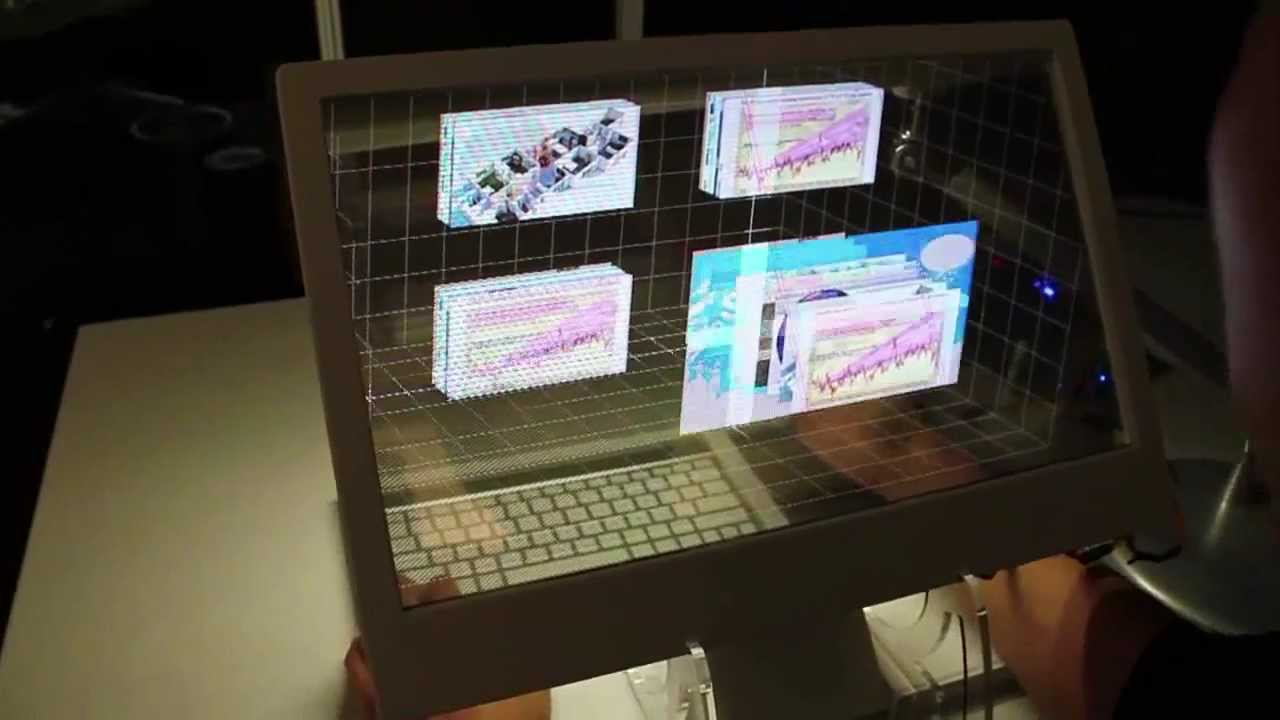
The foundation of Microsoft's interactive display is a transparent 3D OLED supplied by Samsung. Other than traditional Kinect interactions, however, the display creates a 3D scenario behind the screen. The user reaches to the back of the screen to interact with the shown objects. This may not be the most convenient 3D technology and reminiscent of an environment similar to a biology research lab, but it is the most impressive demonstration of a transparent OLED we have seen to date.
To achieve a naked eye 3D effect, the technology directs the light emitted by the two stereo images to the user's left and right eye. Microsoft integrated eye-tracking to compensate for head movements and keeps the 3D effect alive even if the user slightly changes her or his location. There were few technical details, but the demo video shows that the display cannot quite achieve complete transparency and it appears that this technology works only with high contrast objects.
of tasks as long as there's little to no lag in the response times.
See what I did there.
The possibilities of this thing in CAD/CAM, medical(like DNA string manipulation), etc are endless...
gg
They are young indeed. But with us old school guys comes experience and the know how of what works good and what doesn't.
if you want a mor practical version of this, you need 2 kinects minimum, and a head mount display that can track motion, possibly also have a kinect on it. that way you have a 360 degree orb, you can look around for the window you want, and point to it, or possibly ever look it, it zooms in a bit, and a double blink would mean that is what you select.
now the 3d motions for gestures, though interesting, are impractical, as a mouse can do it better more acuratly.
what this could do with several connects, would be something along the lines of making virtual clay in a 3d program... so you can rough out a 3d object,
No offense, but you knock this idea ... and your solution is to have the user where a head mount and blink to control interactions? That would be annoying after about 2 seconds of use. And your eyes would certainly get sore from constant "double blinking".
People aren't going to go from a traditional screen to wearing some helmet to use their computer. It'll have to be a subtle transition. I could see this technology slowly evolving computing into something awesome, but it will take some time. This (or something similar) is a logical next step.
*That* would be cool, and it sounds like they have the basic technology to do it now.