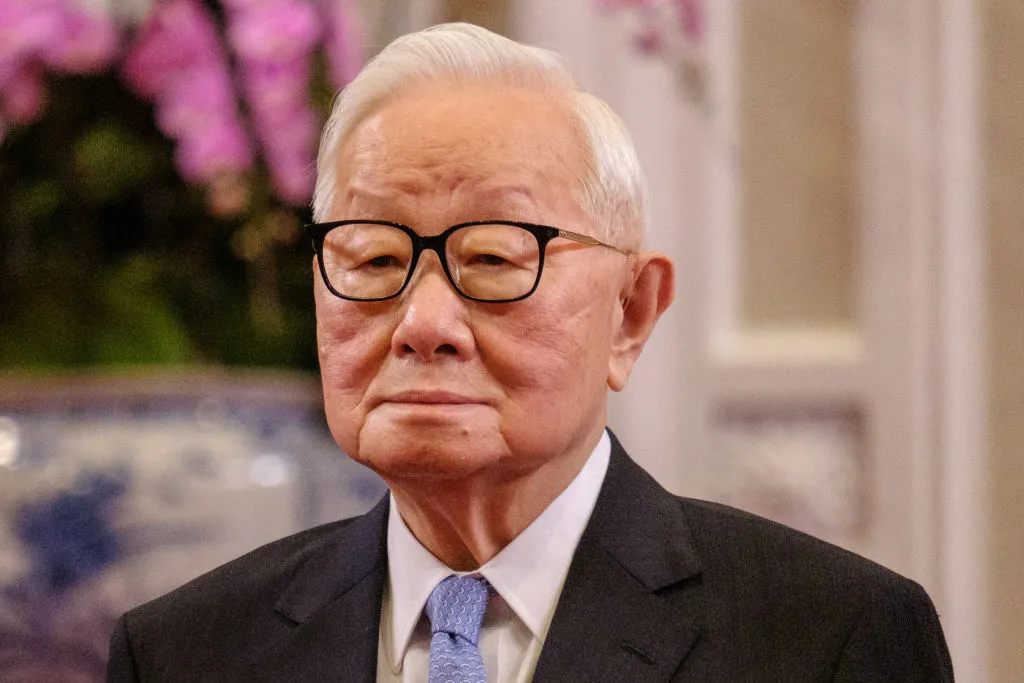
It's still arguably too early to confidently state how successful Intel's 18A process technology (1.8nm-class) will be. But in about a year, we should know if Pat Gelsinger's five nodes in four years plan was a success. That said, Intel's failure to offer a competitive AI processor is evident even today, which gives Morris Chang, the founder of TSMC, reason to claim that Intel should have focused on the development of AI processors rather than on making chips using leading-edge nodes. The TSMC icon also said that Intel had neither a strategy nor a new CEO, and that finding both will be difficult.
"I do not know why Pat resigned," said Chang at a press conference dedicated to the publication of his biography, Reuters reports. "I do not know if his strategy was bad or if he did not execute it well." [...] "Compared with AI, he seemed to focus more on becoming a foundry. Of course, now it seems that (Gelsinger) should have focused on AI."
Chang's criticism is understandable. Nvidia earns tens of billions of dollars per year selling AI processors, considerably more than TSMC earns on fabbing those chips. If Intel had competitive AI processors, it could make more money than it would on making chips for others, so it's easy to argue that an AI strategy should have been prioritized years ago.
Latest Videos FromTom's Hardware
When Gelsinger took the reigns in 2021, his main strategy was focused on IDM 2.0, which involved developing five leading-edge process technologies in four years and becoming the world's second-largest contract maker of chips by 2030. While Intel clearly had a product strategy as well, the world has yet to see major products developed under Pat Gelsinger as the CEO.
Last month, Intel announced it would miss its $500 million sales target for the Gaudi 3 AI accelerators this year due to software issues. It usually takes over three years to develop, implement, and mass-produce a chip. Gaudi 3 was at least partially defined before Gelsinger became the CEO of Intel, so it is impossible to say that he is responsible for this product's hardware. Nonetheless, insufficient focus on AI software seems evident.
Chang's biography, released recently, provides a deeper context to his remarks. The memoir chronicles his life from 1964 to 2018 and sheds light on TSMC's key partnerships with companies like Apple and Qualcomm. It also recalls Intel's decision in the 1980s to decline an invitation to invest in TSMC, another move that, at this point, is easy to see in hindsight as a missed opportunity.
Intel's current situation is marked by uncertainty. With no immediate successor for Gelsinger, its strategic direction seems the same for now — develop competitive products and retain manufacturing operations — and that means facing the same challenges. And although Gelsinger is out, the Board of Directors has yet to say whether the company has defined its revamped strategy for AI.
"They currently have neither a new strategy nor a new CEO," Chang added. "Finding both is very difficult."