



China's rare earth export restrictions threaten global chipmaking supply chains
Scandium and Dysprosium are just the latest materials added to the list.

China has introduced new export restrictions on materials containing key materials for RF and storage applications — scandium and dysprosium — which may hurt key players in these industries, including Broadcom, GF, Qualcomm, TSMC, Samsung, Seagate, and Western Digital. China's new restrictions follow two prior rounds of rare earth export rules that are slowly tightening the supply of these critical minerals, especially those used in several chipmaking applications.
Scandium is widely used for RF front-end modules found in smartphones, Wi-Fi modules, and base stations, whereas dysprosium is used for HDD heads and electric vehicles.
This is not the first time China's Ministry of Economy has restricted exports of rare-earth materials. The restriction on rare earth materials export has been made in response to the 54% tariffs imposed on goods produced in China by the Trump administration, complemented by a 34% import duty on all products made in the U.S.
Effective immediately, exporters of products containing Scandium, Dysprosium, Gadolinium, Terbium, Lutetium, Samarium, and Yttrium must apply for an export license from the China Ministry of Economy. The application requires customers to detail the final use of the material.
The new rules cover various products containing the previously listed rare earth metals, including raw ore, metal, compounds, and finished goods. While not an outright ban, this is the third round of China's export restrictions that raises supply concerns among manufacturers worldwide and deepens tensions between the U.S. and China.
These export restrictions reflect a calculated escalation strategy that targets the entire supply chain of high-tech manufacturing, from foundational wafer-level materials to fabrication-critical metals, in addition to rare earth materials used in other use-cases.
But is the third round of export restrictions from China more impactful on the industry than the first two?

The third round of China's rare earth restrictions explained
As the image above illustrates, two of the key materials restricted in this round are Scandium and Dysprosium, both of which hold significant importance for the telecom and storage industries, which are difficult to overstate.
Scandium is primarily used in RF applications through its role in Scandium Aluminum Nitride (ScAlN). This material is used for high-performance wave filters like BAW (Bulk Acoustic Wave) and SAW (Surface Acoustic Wave).
By introducing (doping) Scandium to Aluminum Nitride at levels of around 10% to 40%, ScAlN achieves higher piezoelectric response and electromechanical coupling (compared to AlN alone), which is critical for improving signal strength, bandwidth, and power efficiency in high-frequency telecom applications.
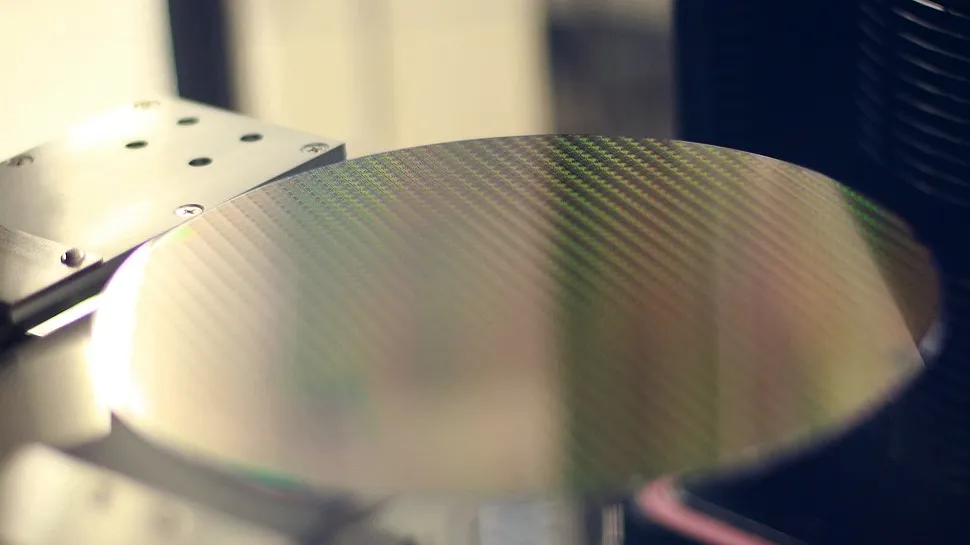
These filters are essential components in the front-end modules of 5G smartphones and base stations and Wi-Fi 6 and Wi-Fi 7 modules. While scandium is ubiquitous, one 200-mm or 300-mm wafer with chips featuring ScAlN only needs a few grams of Scandium.
Dysprosium is an even more widely used material as it is used for storage, electric vehicles, and even radiation-hardened applications. In HDDs, dysprosium is added to permanent neodymium-iron-boron (NdFeB) magnets used in voice coil motors, which control the read/write head as it improves the magnet's coercivity under high temperatures. NdFeB magnets are also used for motors in electric vehicles, so dysprosium is used for the same purpose.
In MRAM (Magnetoresistive Random Access Memory), Dysprosium is used in the free or pinned magnetic layers of GMR (Giant Magnetoresistance) or TMR (Tunneling Magnetoresistance) stacks to maintain stability of magnetic orientation. In addition, radiation-shielding components, such as those used in nuclear reactors, spacecraft, and satellites, also use Dysprosium.
Other materials in the list, namely Gadolinium, Terbium, Yttrium, Lutetium, and Aamarium, are also widely used and cannot be substituted without tradeoffs and at enhanced costs (including those associated with changes of production flows), characteristics, and risks.
But there is good news, too. While rare earth metals are called 'rare' and China supplies the lion's share of the world's rare earth materials, these elements are actually not rare. In fact, these metals are pretty widespread well beyond China.
They are hard to get; as in many cases, rare earth metals are obtained by mining other materials and subsequent separation of rare earths. The key reason why China is the dominant supplier of these materials and products on their base is because Chinese companies have managed to build an efficient ecosystem to mine, extract, and refine rare earth elements.
Some say China subsidizes its rare earth industry to control the supply of critical materials by making it unprofitable to produce them in other parts of the world. However, once China began to 'weaponize' its rare earth prowess, companies in other countries rejoiced, as their potential to supply rare earth materials in volume just became a real business opportunity. Few companies would try to save on strategically important items, such as rare earth materials, so companies would likely be willing to switch suppliers following the restrictions.
This isn't the first time we've seen restrictions
As noted above, this isn't the first round of China's restrictions of rare earth supplies. Moreover, this is not the most 'impressive' one, either. China's rare earth export curbs escalate from foundational materials (Antimony, Gallium, and Germanium) to fabrication-critical metals, then to rare earths used in RF, storage, and precision components.

In the initial round, China restricted Antimony, Gallium, and Germanium. Germanium is crucial for producing wafers featuring strained silicon and the most high-performance chips made by Intel, TSMC, and Samsung. These companies have used strained silicon for a couple of decades. Meanwhile, a 300-mm wafer uses around a gram of Germanium.
Antimony is used as a dopant to make n-type regions in transistors, so again, requirements per wafer are limited. As for Gallium, it is a key element to power semiconductors, RF electronics, infrared sensing, and compound semiconductors (such as ScAlN/AlGaN/GaN). However, when it comes to usage in applications like radars and telecommunications, Gallium and Germanium are inseparable.
Without any doubt, these materials support industries ranging from telecommunications to defense and data centers. That makes the restrictions highly disruptive at the early stage of the semiconductor value and manufacturing chain.
The second round expanded pressure to include Tungsten, Indium, Molybdenum, Bismuth, and Tellurium, materials tied directly to semiconductor fabrication. Tungsten and Molybdenum are used in transistor contacts, gates, and interconnects in advanced nodes where extreme thermal and electrical reliability are necessary. Indium is crucial for 5G mmWave front-end modules, satellite communications, and photonic chips.
Restricting these materials strikes at the core of modern semiconductor production, though we have yet to see any actual disruption of chip supply due to China's export curbs.
What's next?
With its export restrictions, China leverages its dominance not only in resource extraction, but also in processing and material science. Thus, creating widespread uncertainty across the global semiconductor ecosystem, which now spans from smartphones, to PCs, self-driving vehicles, and sophisticated defense systems.

On one hand, this means that China's approach to export curbs indicates a deliberate, phased control strategy, targeting the entire vertical stack of semiconductor and high-tech production, including niche but irreplaceable elements. On the other hand, it means that the impact of China's curbs could decrease over time as the industry adapts its supply chains to the new reality.
Will there be further rounds? Without a doubt. We can only wonder what materials they will target, but keep in mind that China does not want to ruin the whole semiconductor or high-tech supply chain and instead wants to thrive on it. Stay tuned, as it's unlikely that this will be the last time we'll hear from the country about rare earth export restrictions.

Anton Shilov is a contributing writer at Tom’s Hardware. Over the past couple of decades, he has covered everything from CPUs and GPUs to supercomputers and from modern process technologies and latest fab tools to high-tech industry trends.
-
Mindstab Thrull So Elon...Reply
How long until we get Star Trek-like replicators so we can create these elements without worrying about where to "harvest" them?
Sincerely
A member of the Terran population. -
Dr3ams China is going to force other countries to start digging in their own backyards...or to make deals with someone else who is more friendly.Reply -
Captain Awesome ReplyDr3ams said:China is going to force other countries to start digging in their own backyards...or to make deals with someone else who is more friendly.
But how many years will it take miners in friendly countries to complete all of their environmental assessments, regulatory approvals, and defeat legal challenges from locals upset about increased traffic? 🤔 -
waltc3 Don't know if you guys have heard the latest from Taiwan, yet, but it's good news: Taiwan has adopted the Trump Zero-tariffs deal, which is we don't put tariffs on their computer products, and they've agreed to drop their tariffs on American-made products. So looks as if there won't be any tariffs on imports from Taiwan.Reply
People may not realize that Trump has provided two ways out of tariffs for any country that wishes to do one or the other. No tariffs if you manufacture your products in America; no tariffs if you agree to drop your tariffs on American products sold in your country. Several countries have already jumped on increasing American product production or dropping their tariffs on American goods. Some are doing both. Anyway, I was going to post this to the article here about Foxconn and Taiwan, but for some reason the thread has been locked. -
bit_user Reply
Mines take a long time to establish, but mining isn't the only (or even the main) problem. It's actually the processing of these minerals where it seems that China poses the biggest global bottleneck.Dr3ams said:China is going to force other countries to start digging in their own backyards...or to make deals with someone else who is more friendly.
The easiest thing to do is to restart existing mines that were closed for being unprofitable.Captain Awesome said:But how many years will it take miners in friendly countries to complete all of their environmental assessments, regulatory approvals, and defeat legal challenges from locals upset about increased traffic? 🤔
Starting new mines also requires new infrastructure. -
bit_user Reply
From what I've read, the US has not (yet) agreed to drop tariffs on Taiwanese products. What Taiwan did was to make an offer, in hopes that it would be reciprocated.waltc3 said:Don't know if you guys have heard the latest from Taiwan, yet, but it's good news: Taiwan has adopted the Trump Zero-tariffs deal, which is we don't put tariffs on their computer products, and they've agreed to drop their tariffs on American-made products. So looks as if there won't be any tariffs on imports from Taiwan.
Source?waltc3 said:no tariffs if you agree to drop your tariffs on American products sold in your country.
The formulation they used to set the tariff rates are based on each country's trade deficit. Even dropping tariff and non-tariff barriers wouldn't necessarily cancel out the trade deficit, in which case I wouldn't expect the US tariffs to go to zero on those countries.
As far as I understand, those countries are ones in a weak bargaining position that are hoping to win some good will by making a generous opening bid. Cumulatively, they don't account for much of the US trade deficit. The countries in a stronger position, comprising the bulk of our trade deficit, are all looking at countermeasures. So, those countries making immediate concessions shouldn't be taken as an indication of where the main players will go.waltc3 said:Several countries have already jumped on increasing American product production or dropping their tariffs on American goods. -
nbsp Electrodialysis has been demonstrated for both, so it's probably a good time to drag that out of the lab and into the field.Reply -
wwenze1 More tariffs and material restrictionsReply
Good, good, please do labor next, and maybe the world can finally reset back to when goods and services are actually worth something compared to rent. -
Heiro78 Reply
Seems like china was friendly enough before thisDr3ams said:China is going to force other countries to start digging in their own backyards...or to make deals with someone else who is more friendly.