









Intel Unleashes NVMe SSD 750 Series For Consumer PCs
The PC storage world was undeniably boring, and spinning, before SSDs came along. SSDs were expensive and somewhat exotic at first, but still worth every penny. SSDs deliver revolutionary speed that unlocks the true potential of the CPU, and you cannot seriously claim to have a performance PC today if it doesn't have a slab of flash attached to the SATA port.
Therein lies the problem. The SATA connection was designed for old spinning HDDs and not optimized to provide the ultra-low latency and blistering speed that SSDs crave. SSDs outstripped the limitations of the trusty old SATA port over the last few years, and prices have dropped to the point of commoditization. New SSDs are only making small incremental gains with each release, and it seems the days of big performance boosts are over.

...until NVMe came to save the day. NVMe is a refined interface designed from the ground up for non-volatile memories, which includes DRAM and future PCM/MRAM, and it runs over the inherently faster PCIe bus. In other words, it's more than fast enough for a bunch of NAND chips packed onto a PCB. Unfortunately, NVMe made its debut in the enterprise space. Salivating enthusiasts the world over had to live vicariously through enterprise hardware reviews, impatiently waiting for the day NVMe finally made its way to the desktop.
Intel has ended the waiting with the new NVMe Intel SSD 750 Series, designed for enthusiasts and gamers alike, that lays claim to the title of the fastest storage hardware available to consumers.
The 750 Series comes in two capacities of 400 GB and 1.2 TB and leverages a PCIe 3.0 x4 connection to blast out up to 2,400 MBps of sequential read speed and 1,200 MBps of sequential write speed (1.2 TB model). For IOPS, the 750 offers up to 440,000 read and 290,000 write. That is nearly quadruple the IOPS performance of anything else on the market, including the latest m.2 models.

The Intel 750 Series SSDs certainly aren't going to fit in your laptop, but Intel is turning the storage world on its ear by also offering 2.5" versions. These still communicate via PCIe 3.0 x4 and offer the same exceptional performance as the larger Add-In Cards (AIC). Most 2.5" SSDs are 7 mm thick, but the 750 Series are 15 mm and will leverage an SFF-8639-compatible connector to connect to special connectors on motherboards. The cable will connect to an SFF-8643 connector, and motherboard manufacturers already have embedded connectors coming to market. ASUS also has an m.2-to-8643 connector, and we expect others will use this approach as well.
The 750s are bootable with the UEFI stack, but Intel is only guaranteeing compatibility with Z97 and X99 platforms with Windows 7 64-bit (and up) at this time. This doesn't mean the drives will not work with all prior chipsets, just that compatibility (particularly for booting) will be spotty. Intel is compiling a compatibility matrix for older hardware that will be available to the public. There is the chance that motherboard vendors will update older UEFI stacks to be compatible with the new cards, but that remains to be seen.
Get Tom's Hardware's best news and in-depth reviews, straight to your inbox.

The 750 Series is a re-purposed and slightly modified version of the Intel P3x00 DC (Data Center) Series. The 750 features Intel L85C 20 nm MLC NAND connected to a monstrous 18-channel controller, and 9 percent overprovisioning provides 70 GB of write endurance per day for the five-year warrantied period. This will be more than enough for the average consumer, and even enough for some prosumer applications.

What else could one possibly want? Well, a reasonable price is going to be at the top of the list for most. The 750 Series features an MSRP of $389 for the 400 GB model and $1,029 for the 1.2 TB. Perhaps the only oddity is the lack of an 800 GB model. With the amazingly low cost, especially when compared to the price of other PCIe SSDs with a fraction of the performance, Intel should have a winner on its hands.
There really is no other storage hardware on the market to even compare to the Intel 750; it simply doesn't get faster for consumers. Did I say fire-breathing? The 750 Series is available now, and at less than $1 per GB we hope Intel has a few million of these in stock. Look to these pages soon for our full review with real-word testing.
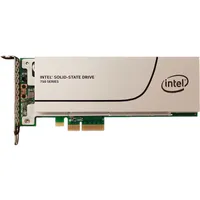
Intel SSD 750 (1.2TB)
Follow us @tomshardware, on Facebook and on Google+.
UPDATE: 4/2/2015 4:15: Corrected Z77 to Z97

Paul Alcorn is the Editor-in-Chief for Tom's Hardware US. He also writes news and reviews on CPUs, storage, and enterprise hardware.
-
firefoxx04 I have yet to buy an SSD for my desktop. Laptop has 840 pro. I guess the wait has come to an end :)Reply -
josejones Intel really needed to also release the 240g version too as these 400G and 1.2T versions are still out of the price range of most consumers. But, hopefully other NVMe SSD makers will fill that gap. C'mon Samsung.Reply -
BulkZerker Otacon... I mean larrylitman, it shouldn't matter long as you aren't running a multi GPU setup.Reply -
sea monkey The performance increase is commendable but not worth the premium over a SATA SSD for most users. Given the tiny size of the actual chips, I wish prices would drop and capacities would increase enough to abandon mechanical storage altogether. Give me a 100TB slab of 3D NAND that I can chuck in my backpack and take with me.Reply -
Haravikk Could this article be more gushy? There is hardware already on the market, just take a look at some of the built-in SSDs newer laptops (Apple's especially) or even the current Mac Pro.Reply
The only difference with this is that it can go into standard desktops, which is great, but it's bound to be followed by similar products shortly so it doesn't seem worthy of the rave-review. -
crystaldragon141 ReplyDon't motherboards have only one PCIE 3.0 that is used mostly for GPU.
No they have a pool of lanes that they divy up between the actual slots. Graphics cards are designed for x16 (read as: by 16, it means 16 lanes) this SSD only requires x4 or 4 lanes. Many motherboard chipsets provide between 28 and 40 lanes. So even if you are rocking crossfirex at a cost of 32 lanes (in crossfirex cards are usually limited to x8 this is a chipset limitation) you should still have room for two of these bad boys assuming you have a high end chipset with 40 lanes. I believe that x99 does. I'm to lazy to look it up :P