Join for quick access. Enter your email below and we'll send confirmation plus sign you up to our newsletter.
By submitting your information, you confirm you are aged 16 or over,
have read our
Privacy Policy
and agree to the
Terms & Conditions. Geographical rules apply.
Join for quick access. Enter your email below and we'll send confirmation plus sign you up to our newsletter.
By submitting your information, you confirm you are aged 16 or over,
have read our
Privacy Policy
and agree to the
Terms & Conditions. Geographical rules apply.
Stay On the Cutting Edge: Get the Tom's Hardware Newsletter
Get Tom's Hardware's best news and in-depth reviews, straight to your inbox.
You are now subscribed
Your newsletter sign-up was successful
Join the club
Get full access to premium articles, exclusive features and a growing list of member rewards.
An account already exists for this email address, please log in.
Moore Threads MTT S80 gets DX12 support in beta driver, two years after launch — but 3D performance still lags the GTX 1650
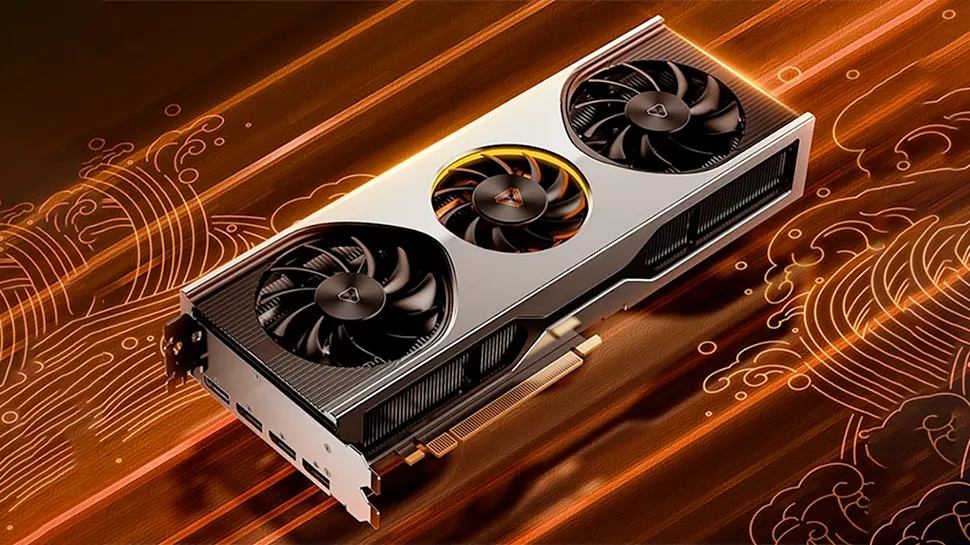
Launching a beta driver supporting DirectX 12 is a rather big deal for Moore Threads. Its graphics boards have consistently lagged behind the best graphics cards from AMD and Nvidia both in terms of performance and features. For now, Moore Threads's MTT S80 can support numerous DirectX 12 capabilities (not all of them, of course, as the Chunxiao architecture does not support ray tracing, mesh shaders, VRS, etc.). Testing shows it can now run the 3DMark Time Spy benchmark, the Steel Nomad benchmark, and some Chinese games that require DX12.
Sadly, the performance of the Moore Thread MTT S80 graphics card does not really impress, according to preliminary tests conducted by @Loeschzwerg_3DC. The board scores 3,783 points in 3DMark Time Spy (3,452 graphics score, 8,315 CPU score), which is lower than the performance of Nvidia's GeForce GTX 1650 (around 4,400 points) when used with Intel's six-core Core i5-11400 CPU. Over time, Moore Threads can probably increase the performance of its MTT S80 when running DirectX 12 workloads, though this will unlikely make this graphics card competitive in terms of performance with modern add-in-boards from AMD, Intel, and Nvidia.
When tested with the DirectX API Overhead Feature Test (designed to test the overhead of DX11, DX12, and Mantle APIs), the MTT S80 scored 398,246 draw calls per second in multi-thread mode and 403,078 draw calls per second in single-thread mode. Such results are lower than those of Nvidia's GeForce GTX 1650 and look worse than those of 10-year old GPUs, which pretty much indicates the quality of Moore Threads's drivers in their present form.
Of course, we cannot draw solid conclusions about the quality of Moore Threads's DirectX 12 drivers based on a single report. However, considering that drivers have plagued the performance of the MTT S80 for two years, we really cannot expect the company's DX12 drivers to be perfect from day one.
Stay On the Cutting Edge: Get the Tom's Hardware Newsletter
Get Tom's Hardware's best news and in-depth reviews, straight to your inbox.
Anton Shilov is a contributing writer at Tom’s Hardware. Over the past couple of decades, he has covered everything from CPUs and GPUs to supercomputers and from modern process technologies and latest fab tools to high-tech industry trends.
With China pushing towards its chips and Linux, whose to say what level of performance can be achieved in the next 10 years and the new x86S group have to invite Chinese companies to the table.
With China pushing towards its chips and Linux, whose to say what level of performance can be achieved in the next 10 years and the new x86S group have to invite Chinese companies to the table.
The performance is quite poor from what is described, and it overall seems like a company rushed to create a GPU in response to various trade embargos.
The performance is quite poor from what is described, and it overall seems like a company rushed to create a GPU in response to various trade embargos.
Very likely. Still, not many company could even get that far - so, it is an accomplishment in itself.
I mean, look at Intel and its multi million dollars investments in GPUs - considering they already had integrated GPUs and poached head honchos from AMD, which company looks worse? The one starting with complete testing suites, cash and know-how, or the one starting from scratch?
With China pushing towards its chips and Linux, whose to say what level of performance can be achieved in the next 10 years and the new x86S group have to invite Chinese companies to the table.
There's no way they get down to 4-5nm in the next 10 years, and 10 years from now the rest of the world will have moved on from that. The Russians are also trying because of the sanctions, but I think they can't do better than 28nm, and even at that, their yields aren't good. Realistically, 32nm, or somewhere around there, is probably the best they can do without outside help, without wasting tons of silicon.
Very likely. Still, not many company could even get that far - so, it is an accomplishment in itself.
I mean, look at Intel and its multi million dollars investments in GPUs - considering they already had integrated GPUs and poached head honchos from AMD, which company looks worse? The one starting with complete testing suites, cash and know-how, or the one starting from scratch?
They didn’t start from scratch they are use the power VR architecture, the same thing that apple is using under the hood of their “in house graphics”