Apple iPad mini: S-IPS Subpixels
The iPad mini and iPad 2 both offer 1024x768 resolutions. However, the mini's screen is naturally smaller, which means its pixels are packed more tightly together. In fact, we know that the iPad Mini's LCD sports 163 pixels per inch (PPI), while the iPad 2 fits 132 PPI. As mentioned, both of those numbers are too low to qualify for Retina Display branding.

Rendering 48% of the AdobeRGB 1998 and 69% of the sRGB gamut, the iPad mini's color saturation is the same as the iPad 2.

If you map out the gamuts in 2D, the iPad mini basically overlaps the iPad 2. We're not necessarily bothered that Apple's display quality isn't any better on the mini than it was almost two years ago. The issue is that Apple's competition stepped up its game. The Nexus 7 and Kindle Fire HD both deliver more color saturation, the former by just 2%, but the latter by 11.

Two percent doesn't sound like much, but don't underestimate Google's Nexus.
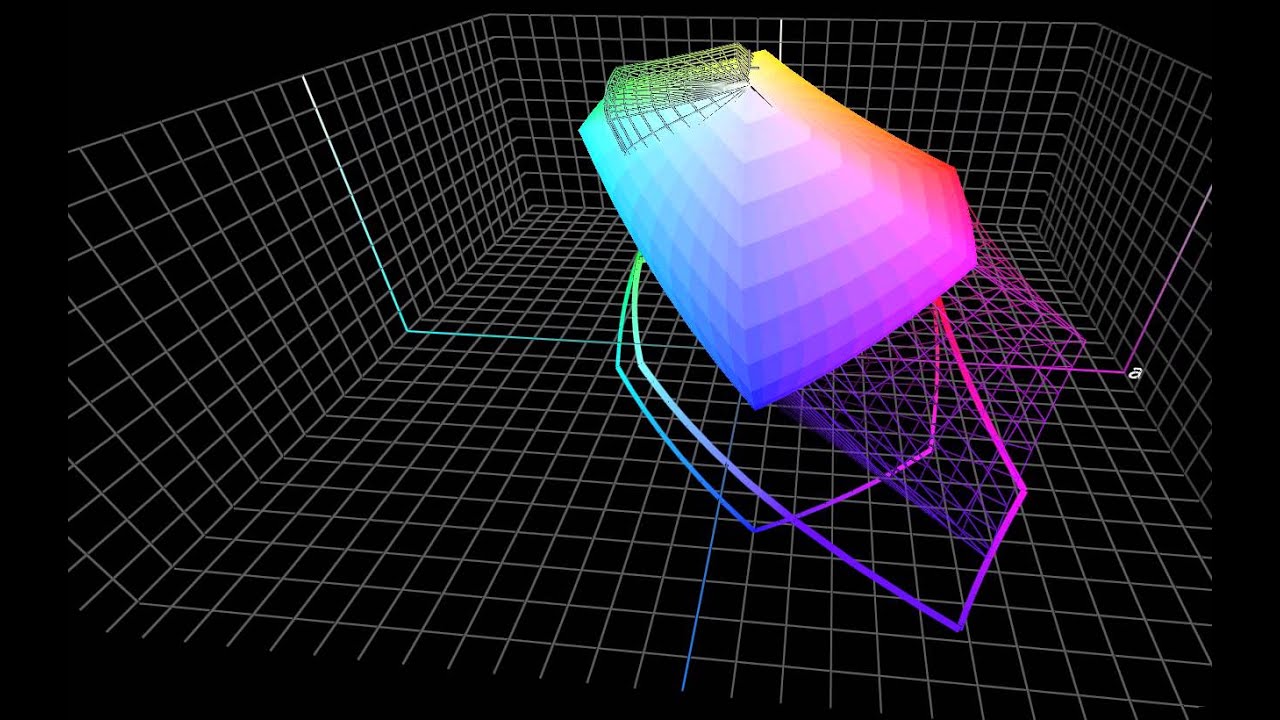
In the video above, we've modeled the Nexus 7's (wire-frame) and iPad mini's (solid) gamuts in the Lab color space. It works like this: the top colors are highlights, or bright hues. As you go move down the vertical axis, the colors get darker. The gamut volume represents all the colors that a device can render.
We see that the iPad mini is able to render brighter reds, magentas, and a wider range of greens and cyans. The Nexus 7 sacrifices some range in green and yellow for brighter hues. The real difference is in the dark blue and magenta region. The Nexus 7 simply displays a huge range of hues that the iPad mini cannot.
Interestingly, the iPad mini reaches a somewhat higher brightness than the iPad 2, but suffers from slightly poorer contrast, since it struggles to render a true black. Yet, we can applaud Apple for getting color temperature much closer to the 6500 K standard. Gamma is still a bit high, but it's not terrible at 2.42.
Amazon's Kindle Fire HD comes across amazingly well. It scores a really high gamut volume and comes close to the professionally-calibrated 6500 K and a 2.2 gamma standards.


...And the price. I'm not going to give a second thought when I see a $200 tablet with removable storage versus $330 for 16GB of internal storage and no expansion options.
If the device was closer to say $260 for the 32GB version, or just included an option for removable storage... Then I would certainly see the iPad mini as being a viable option even for someone used to Android.
The main factors (in my opinion) for a great device are,
1: A good quality screen, it needs to have vibrant, accurate colours.
2: Even if during benchmarks the device is slow, if it FEELS snappy and quick, that's all that counts.
3: Removable storage for god sake, I know by practice apple enjoys their closed system, but COME ON!
4: It doesn't need to have some amazing 15 hour battery life, but I certainly don't want it to die on a full charge after a movie and a few youtube videos.
...And the price. I'm not going to give a second thought when I see a $200 tablet with removable storage versus $330 for 16GB of internal storage and no expansion options.
If the device was closer to say $260 for the 32GB version, or just included an option for removable storage... Then I would certainly see the iPad mini as being a viable option even for someone used to Android.
The main factors (in my opinion) for a great device are,
1: A good quality screen, it needs to have vibrant, accurate colours.
2: Even if during benchmarks the device is slow, if it FEELS snappy and quick, that's all that counts.
3: Removable storage for god sake, I know by practice apple enjoys their closed system, but COME ON!
4: It doesn't need to have some amazing 15 hour battery life, but I certainly don't want it to die on a full charge after a movie and a few youtube videos.
you're right
I'm glad that i bought the Nexus7. 16GB is enough, and rootet i can plug in external device. And as for all my techy stuff, i doubt i've to send it in before the 2y warranty expires
You mean, the Galaxy Tab 7.7. But yes, they should sue Apple fir design infringement.
The apps are phenomenal and far more abundant than any competitor as well.
But as I've said, the problems are:
1) Price is way to high
2) Screen quality (Would NOT be an issue if the price wasn't stupidly high. If we're paying $130 more for a tablet, we atl east want retinta.)
3) No storage expansion. I understand that storage is being used to "tier" these things like consoles are doing, but its pretty silly not to all for a simple SD expansion.
Unlike a lot of younger techies, I don't feel that the closed environment or the lack of "customization" is really a flaw. Most individuals don't want to spend a lot of time tinkering around with their tablet. They just want to use it or accomplish a task with it. To most adults, its more of a tool to get a job done that a toy to be tinkered with constantly. I'm ok with leaving the device alone and simply reading, listening to music or watching movies on a plane.
its got almost the same specs as the kindle, an sd card slot, and a better screen(1440x900). similar price too.