









Intel Itanium gets a new lease on life, sort of — GCC 15 "un-deprecates" Linux compiler support
Support extends precisely to the GCC 15 compiler, not the Linux kernel.
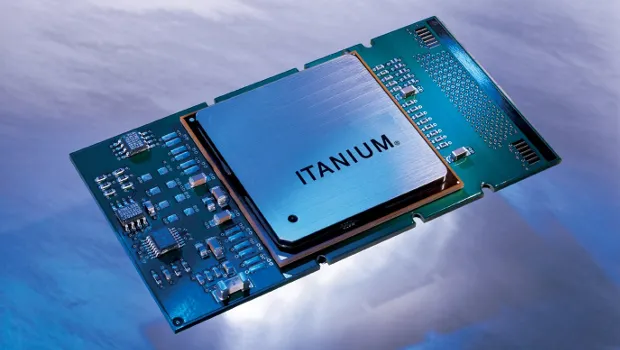
In a strange twist of fate, the depreciated Itanium IA-64 architecture is getting a new lease on life, at least sort of. Phoronix reports that the upcoming GCC 15 compiler for Linux will support Itanium processors.
Initially, the plan was to remove Itanium IA-64 support from the GCC 15 compiler; however, an open-source developer named René Rebe purportedly stepped in to keep Itanium compiler support alive. The developer notes, "The following un-deprecates ia64*-*-linux for GCC 15. Since we plan to support this for some years to come."
It is a mystery why there are still users in the open-source community who want to keep Itanium support alive, but apparently, there is a large enough user base to warrant additional support.
Remember that this "un-deprecation" only involves the GCC 15 compiler and nothing more. Itanium IA-64 support was dropped with Linux 6.7 last year so these niche chips won't run on the latest Linux kernels. This compiler update only affects the compiler as the name suggests and is optimal for users running on older supported Linux kernels but want improvements that the GCC 15 compiler might provide over previous compiler versions.
Itanium was one of the most exotic CPU architectures Intel ever built. Built in conjunction with HP, it was Intel's first 64-bit CPU architecture. Itanium came out before AMD's x86-64 instruction set and, thus, did not rely on the x86 instruction set. Itanium relied on what's known as the IA-64 architecture, a Very Long Instruction Word (VLIW) architecture that took advantage of a software compiler to calculate instructions that were to be executed in parallel in advance of when those instructions needed to be executed.
This was a unique way of scheduling instructions to the CPU cores. x86 CPUs use a hardware-based scheduler to schedule instructions to the cores (or execution units).
Unfortunately for Intel and HP, IA-64 struggled to be adopted by the broader market primarily due to its incompatibility with native x86 applications. When AMD released the x86-64 instruction set a few years after IA-64 was first released, the whole market immediately gravitated toward AMD's implementation due to its native support for x86 apps — since AMD's 64-bit implementation was built on top of the x86 instruction set.
Get Tom's Hardware's best news and in-depth reviews, straight to your inbox.
Intel officially discontinued Itanium in 2021, the year the last batch of Itanium-designed 9700-series Kittson CPUs was shipped. HP Enterprise is now the last Itanium customer left and is expected to support its Itanium-based servers until late 2025.

Aaron Klotz is a contributing writer for Tom’s Hardware, covering news related to computer hardware such as CPUs, and graphics cards.
-
bit_user Reply
It's a relative of VLIW, but they're not the same. Intel coined the term EPIC (Explicitly-Parallel Instruction Computer) for it, specifically in contrast VLIW, RISC, or CISC. The difference is that the compiler only computes the data dependencies (hence the "Explicitly Parallel" part), whereas VLIW is also scheduled at compile time.The article said:Itanium relied on what's known as the IA-64 architecture, a Very Long Instruction Word (VLIW) architecture that took advantage of a software compiler to calculate instructions that were to be executed in parallel in advance of when those instructions needed to be executed.
It's not a trivial difference, since VLIW binaries are usually tied to one specific generation of a CPU and must be recompiled when you want to run them on a newer one. This is one of the factors that limited VLIW to embedded computing applications, although it also doesn't do well on very branchy code or with difficult-to-predict data dependencies.
EPIC binaries are forward-compatible with newer CPUs, which can also dispatch their instructions across a greater number of execution units, in order to provide higher IPC without recompilation.
I don't know why you kept "cores" in there, but it's wrong. Just "execution units".The article said:x86 CPUs use a hardware-based scheduler to schedule instructions to the cores (or execution units)
BTW, the guy who stepped up to maintain GCC's IA-64 support is the same one targeted in this swatting incident:
https://www.tomshardware.com/software/linux/linux-dev-swatted-live-during-a-development-video-stream -
bit_user Reply
While committed slots are no longer something you find in modern ISAs, I think SPARC also pioneered register windows. I believe Loongson adopted those.Deleted member 2824971 said:when they designed the very first SPARC CPUs, they knew that a control transfer (branch or call) would require some extra time where the ALUs would idle and thus if the code had anything useful to do independent of the control transfer, it could exploit that single instruction slot to "run in parallel" after the branch instruction, otherwise it would insert a NOP.
Didn't ARM also have branch committed slots, at one point?
Imagination ended up with MIPS, but they couldn't make a go of it and switched to designing RISC-V cores.Deleted member 2824971 said:MIPS might do as well as ARM (and actually still survives in China).
Well, SPARC went royalty-free several years before RISC-V gained critical mass. That wasn't enough to save it, nor does it seem to be enough to save OpenPOWER. When companies finally do something right, it's usually much too late.Deleted member 2824971 said:With SPARC I'm less sure, it's primitive enough, but the register windows seem far to close to metal. -
Findecanor Reply
One interesting thing with The Mill's Belt is that it does not actually exist. It is mostly an abstraction used for instruction encoding.Deleted member 2824971 said:I'd love to see a lecture where someone in the know would extoll how some of these early architectures could have technically fared, had they been given the kind of resources x86 got. Ivan Goddard might be able to do that, but he's a little too focussed on the Belt architecture currently, which isn't moving forward as fas as I can tell.
Each result is stored in each execution unit's output latches, and when there is a new instruction then the old output gets lost. The length of the belt is the issue-width of the machine.
Itanium was supposedly based on work by Bob Rau, who died prematurely.
Ivan Goddard (who is Mill Computing's main compiler guy and public face) has likened The Mill to being close to what Intel might have come up with had Bob Rau's vision been kept intact and they had iterated a few times before release.
There are still a few similarities with Itanium and The MIll:
- Both have a separate hidden "safe stack" for temporaries and return addresses
- The Mill's spiller vs. the Register Stack Engine (that Itanium was supposed to have but never got AFAIK), works in the background shuffling the hidden stack between core and memory during spare bus cycles.
- The belt encoding vs. rotating registers in loops
- The Mill is also a type of VLIW, but flipped to the temporal axis, which supposedly is easier to pipeline.
- explicitly scheduled by the compiler, like EPIC.
The latest I read on their forum is that they are supposedly running compiled code in simulation, with simulated timing,
and thus have proven (to themselves) that the concept works.
Some people would call the z/architecture an incarnation of the IBM 360. The latest CPU: z17 "Telum II" was released this year.Deleted member 2824971 said:I see no reason why technically VAX and the IBM 360 couldn't do just as well as X86, both seem at similar levels of abstraction and simplicity.
LoongArch does not have delay slots, and didn't adopt register windows. It omitted more quirks of MIPS, making it 64-bit (ready) from the start, but the MIPS legacy still shows in some off its behaviour and specification.bit_user said:While committed slots are no longer something you find in modern ISAs, I think SPARC also pioneered register windows. I believe Loongson adopted those.
Imagination sold MIPS. Then it was resold, and the new owner was restructured and adopted the name MIPS.bit_user said:Imagination ended up with MIPS, but they couldn't make a go of it and switched to designing RISC-V cores.
But yes, that company ditched the MIPS architecture to design RISC-V cores. -
Findecanor Reply
I wouldn't reduce the value of The Mill to just number of transistors and issue-width. There are unorthodox solutions on multiple fronts to be able to be faster than conventional processors on general-purpose code.Deleted member 2824971 said:The Belt is all about doing general purpose compute with far fewer transistors. But unfortunately there is no longer any scarcity of transistors, unlike in the DSP days where he grew his mindset. In fact CPU designers gain so many transistors with every shrink, they really struggle to turn them into any kind of value.
Personally I don't really care about that at all. I think that general-purpose processors have been fast enough for a decade.
What I like the most about The Mill are its features for OS and user-space programs, especially when it comes to security.
It is not vulnerable to most speculation-based attacks, including Spectre and Meltdown. Return-oriented programming is not possible with a hidden safe stack. Inter-procedure call can be done in one clock cycle, and you can pass a region of memory (at byte-granularity) with access rights rescinded afterwards.
When you enter a procedure the stack frame reads zero without having to clear physical RAM, and when you leave the old frame gets scrubbed.
I have a hobby project to develop a virtual machine with ahead-of-time compiler to emulate some of those properties on conventional processors: ARM, x86 and RISC-V. (At some performance cost of course.)
I did originally want to support The Mill as well (of course) but because its future seems uncertain and the team is holding important details secret, I don't see how I can.