









AMD Fluid Motion Frames 2 lowers latency by 28% — low-latency frame generation comes to RX 6000 and RX 7000 GPUs
AFMF 2 works with RX 6000 and RX 7000 series desktop GPUs. However, borderless windowed mode is only unlocked for RX 7000 cards.
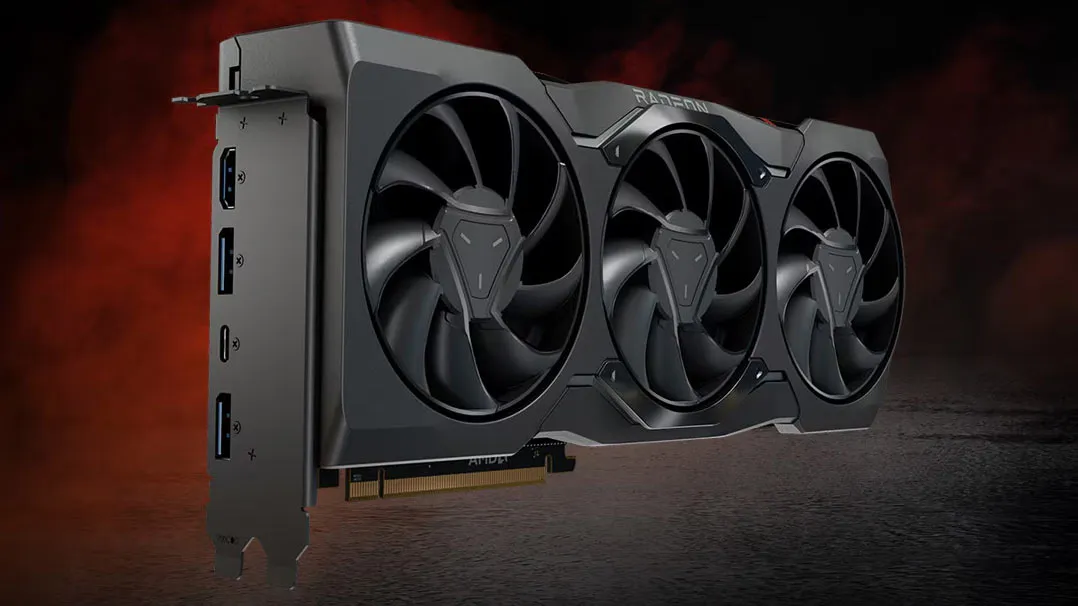
AMD has announced its next iteration of AMD Fluid Motion Frames (AFMF)—AFMF 2—which features many upgrades, including up to 28% lower latency and multiple modes aimed at specific resolutions. Driver-based frame generation technology is now available for RDNA 2 and RDNA 3 GPU owners to try out.
The most impactful update is the latency improvements AMD has brought. AMD Fluid Motion Frames 2 delivers up to 28% lower latency on average compared to AFMF 1 in AMD's testing. In Cyberpunk 2077 at 4K RT ultra, powered by a RX 7900 XTX, AMD recorded a 28% latency reduction with AFMF 2. Integrated graphics saw up to 12% lower latency with AFMF 2 in Counter-Strike 2 powered by a Ryzen 7 8700G featuring Radeon 780M integrated graphics.
AMD has added a significant amount of additional support and features to AFMF 2. Search mode is a new setting that controls frame generation smoothness by improving AFMF 2's "fallback" behavior (i.e., disabling frame generation in high-motions scenes to preserve image quality and smoothness). The "Standard" search mode is designed for 1080p gameplay, while the "High" mode is aimed at 1440p and greater. Each mode changes the aggression of the fallback functionality, with the "High" mode having reduced fallback compared to "Standard." Auto mode automatically selects the "High" preset if the user runs 1440p resolution or higher.


View Original
View Original
Performance mode is another new setting that helps improve performance on lower-end devices. Performance mode reduces AFMF 2's overhead to achieve higher frame rates in a broader range of devices, such as AMD's integrated graphics units. Performance mode can be activated in the Adrenalin control panel alongside the Quality and Auto modes. Quality provides the same overhead as AFMF 1. At the same time, Auto will automatically select Quality or Performance mode depending on the user's GPU hardware. Performance mode is automatically enabled on Ryzen processors with a Radeon iGPU.
Fluid Motion Frames 2 now supports borderless fullscreen mode, specifically with RX 7000 and Radeon 700M GPUs. API support has also been improved beyond DirectX, with AFMF 2 now supporting Vulkan and OpenGL-powered titles. Interoperability with Radeon Chill has also been added, allowing users to set a frame rate cap with frame generation enabled.
By default, Radeon Chill will (when enabled) apply a frame rate cap half that of the user's refresh rate, allowing frame generation to fill in the rest of the frame rate "gap" to get up to the user's maximum refresh rate. This configuration will ensure that AFMF 2 does not boost frame rates beyond the user's maximum refresh rate, prioritizing image quality and preventing screen tearing.
AMD Fluid Motion Frames 2 is available to download right now as a technical preview. The preview driver supports all of AMD's current Radeon RX 7000 and 6000 desktop GPUs as well as the Radeon RX 7900M series, RX 6800M series, RX 6700M series, RX 6600M series, RX 6500M series, and RX 6300M series of mobile AMD GPUs.
Get Tom's Hardware's best news and in-depth reviews, straight to your inbox.

Aaron Klotz is a contributing writer for Tom’s Hardware, covering news related to computer hardware such as CPUs, and graphics cards.
-
OneMoreUser Reply
You can't have frame generation with no lag, just as you can't have normal frames without lag.Amdlova said:have tried this tech... but it's super lag 28% of lag still lag!
By its very nature a generated frame is not directly linked to your input, but more like an estimation of what is to come and this of course means more lag. -
OneMoreUser Reply
Likely in the next release, so could be less than a month.phxrider said:When is this hitting the production driver? -
King_V Reply
I find it particularly unlikely that a user with a history of just about always looking for an opportunity to say something negative about AMD has already tried the newest version of an AMD technology.Amdlova said:have tried this tech... but it's super lag 28% of lag still lag! -
kealii123 Reply
Yes, but theres lag and then theres lag. On the steamdeck, HFB, turning on current gen AMD frame generation gives it at least 500ms latency. Its unplayable.OneMoreUser said:You can't have frame generation with no lag, just as you can't have normal frames without lag.
By its very nature a generated frame is not directly linked to your input, but more like an estimation of what is to come and this of course means more lag. -
husker Reply
Just a thought, but perhaps the Steam Deck itself is partly to blame for this. I'm not an expert but imagine the capabilities of the client play some kind of a role.kealii123 said:Yes, but theres lag and then theres lag. On the steamdeck, HFB, turning on current gen AMD frame generation gives it at least 500ms latency. Its unplayable. -
Amdlova Reply
Don't worry if you like jet lag, turbo lag or amd lag.King_V said:I find it particularly unlikely that a user with a history of just about always looking for an opportunity to say something negative about AMD has already tried the newest version of an AMD technology.
Lag is lag :) -
phxrider Reply
I can promise you it's not this way on a 7900xtx, 7900xt or 780M APU GPU. It's quite playable. Keep in mind, AMD says this tech isn't for twitch games.kealii123 said:Yes, but theres lag and then theres lag. On the steamdeck, HFB, turning on current gen AMD frame generation gives it at least 500ms latency. Its unplayable. -
renz496 Reply
And yet it is the genre that want the most frame rate to reduce the latency as much as possible.phxrider said:I can promise you it's not this way on a 7900xtx, 7900xt or 780M APU GPU. It's quite playable. Keep in mind, AMD says this tech isn't for twitch games.