







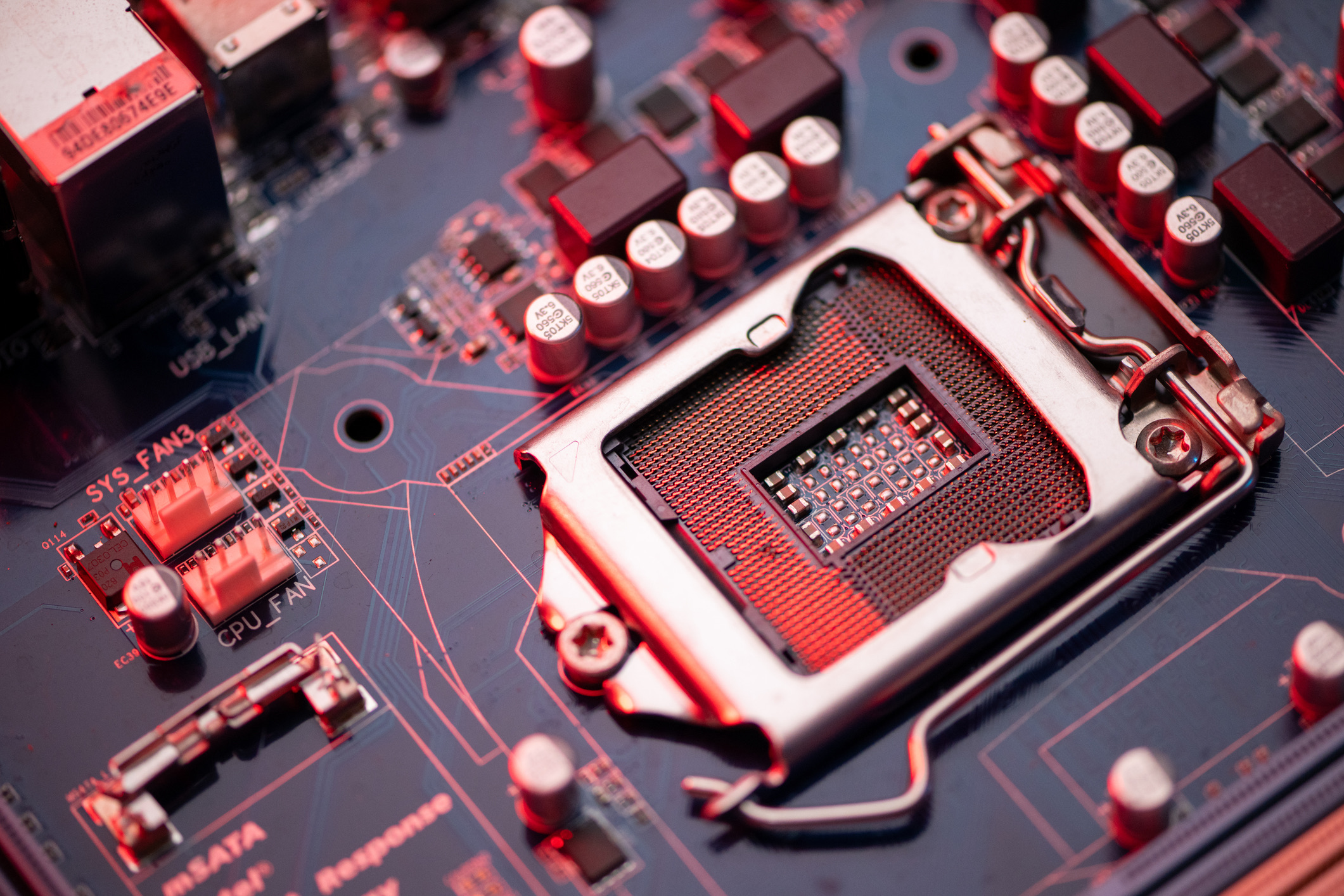


Intel Core i7 920
http://www.intel.com/
$299
By: Chris Angelini
Motherboards sporting Intel’s X58 chipset are very expensive right now, and there’s no way around it. If you’re willing to give up a third x16 PCIe slot and much of your accessory bundle, MSI’s entry-level X58 Platinum sells for just north of $200. A more enthusiast-oriented offering runs closer to $300.
So why compound the problem by buying a Core i7 965 Extreme for $1,000 when it’s already possible to enjoy the fruits of Intel’s 45nm manufacturing prowess at a much lower price point? If you want the Nehalem micro-architecture before the end of 2008, Core i7 920 is going to be your best bet.

At its stock speed, the 920 runs a cool 2.66 GHz. And while it’s fast at that frequency, it isn’t going to set any records. We certainly wouldn’t recommend the chip to power users who already have fairly modern machines, especially given the price you’d end up paying for the entire platform. But paired to a reasonably-priced motherboard, complemented by 6 GB of triple-channel memory, and conservatively overclocked, the 920 is the foundation for an aggressive gaming machine or video workstation. As mentioned in our little write-up of MSI’s X58 Eclipse, you can drop in the CPU, set a 166 MHz Bclk using onboard DIP switches, and reasonably expect 3.33 GHz at its stock voltage, yielding more performance than that flagship 965 Extreme chip. Of course, you’ll void your warranty in the process, but if you can make the jump without cranking up your Vcore, there’s a good chance that an early death won’t be in the cards for a massaged Core i7 920.
What warrants the recommendation in the face of a market loaded with inexpensive quad-core Phenoms and high-performance Core 2 Quads? Two things: CrossFire and SLI. Our X58-based motherboard recommendation supports both multi-card rendering technologies. The implication is that if you’re using either CrossFire or SLI, though, then you need a beefy processor able to deliver enough horsepower to let multiple GPUs realize their full scaling potential. At 3.33 GHz, an overclocked Core i7 920 is in the position to do just that.
Although Intel originally tempered our expectations of the i7’s impact on gaming, our feature Core i7: 4-Way CrossFire, 3-Way SLI, Paradise? showed that you can in fact get serious performance gains if you use i7 to let your high-end graphics hardware breathe. And that’s before getting into the architecture’s handling of multimedia applications. An integrated memory controller, the QuickPath Interconnect, and resurgence of Hyper-Threading make the i7 a real winner closing out 2008.
