









AMD vs. Intel: Which PC Build is Better for Under $500
AMD Raven Ridge Build: Ryzen 5 2400G & B350M
Building a gaming PC on a tight budget always involves some compromise. To see just what we could accomplish for under $500, we priced out, built and tested two budget systems: one based on an Intel Pentium Gold chip and the other powered by an AMD Ryzen 5 2400G. We were pleasantly surprised at the level of performance and build quality from both systems, but each was better at different use cases.
Aside from hitting the $500 price point, we had two other stipulations. First, the boot drive needed to be an SSD, because solid-state drives deliver such a better user experience (faster boot and program/game-level load times and just snappier performance overall) that it’s increasingly tough for us to recommend a spinning-platter hard drive as a boot option to anyone at this point.
Second, the chassis could not look cheap. So, we chose a couple of Cooler Master cases that, despite their low price, give these machines some aesthetic edginess.

We’ll tackle testing and performance results after we discuss our builds and why we chose all the particular parts. Note that prices for the parts will likely have changed between when we ordered them and now, that we didn’t factor any rebates into our budget because they tend to come and go, and that we did not include a Windows license in our build budget. If you don’t have a key to carry over from a previous build, we’d suggest perusing our feature How to Get Windows 10 for Free (or Under $30). We also did not include the cost of peripherals such as keyboards, mice or monitors.
AMD Raven Ridge Build: Ryzen 5 2400G & B350M

We’ll start with the AMD build because it’s likely the more controversial of the two. We know several of you are probably screaming about the very idea of building a “gaming” rig without a dedicated graphics card. But, that’s pretty much what AMD’s “Raven Ridge” Ryzen 5 2400G was built for. And as we saw when we tested the APU, the 2400G is plenty capable of serious gaming--so long as you keep expectations in check. Plus, as we’ll see, the money saved on graphics left us more to spend on key areas like storage. Let’s delve into the parts list.

AMD Ryzen 5 2400G ($159.99)
With four cores and eight threads and a top stock Turbo speed of 3.9GHz, the “Raven Ridge” Ryzen 5 2400G is a surprisingly capable CPU in its own right. But its on-chip Vega RX 11 Graphics means it can also compete with low-end dedicated graphics cards when it comes to frame rates. We’ll see how well it competes with our Intel build and its Nvidia GeForce GTX 1050 later (hint: the dedicated card is unquestionably faster). But the savings of combining the CPU and graphics into one $160 part was tough to pass up. Plus, both the CPU and graphics silicon can be overclocked!

AMD Ryzen 5 2400G
ASRock AB350M-HDV ($59.99)
Newer B450 motherboards were just starting to trickle out when we chose our parts, and they’re still pricier than B350 models. And you don't really lose anything essential by opting for a B350 board over a new B450 model, unless you're after a license for StoreMI, which pairs an SSD up to 256GB with a traditional hard drive for quick access to your frequently used files and programs.
Get Tom's Hardware's best news and in-depth reviews, straight to your inbox.
We like the ASRock AB350M-HDV for its low price, inclusion of an M.2 connector (that supports both x4 PCIe and SATA drives), and for the fact that its “Ryzen 2000 ready” badge means we can drop in our Raven Ridge chip without having to try and find a first-gen Ryzen CPU first to drop in and perform a BIOS update. This board ran flawlessly out of the box with our Ryzen 5 2400G.
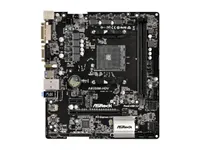
ASRock AB350M-HDV
TeamGroup 8GB (2x 4GB) 288-Pin DDR4 SDRAM DDR4 3200 ($89.99)
We splurged a bit on the RAM for a 3200MHz kit, because we know from testing that graphics performance on AMD’s chips increases dramatically with memory speed. Plus, the red trim fits with the AMD theme, as well as our case choice, which we’ll get to soon.
We ran our tests with the TeamGroup RAM running at 2933MHz, as it’s the top officially supported speed, as well as the fastest we could clock the RAM without digging deep into manual settings. You could also spend more on faster RAM and likely eke out a few more frames per second. But that will also put you in a higher price bracket where you could have just bought a dedicated graphics card and achieved better frame rates than you’d ever get with current-generation on-chip graphics.
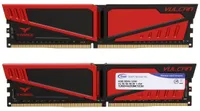
TeamGroup 2x4GB DDR4-3200
500GB Crucial MX500 ($99.99)
Our cost-cutting on the graphics front allowed us to get a fairly roomy SSD--and one that’s not a bargain-basement model, either. Down the road, you may want to add a secondary storage drive or a second SSD to this system. But the 500GB here will let you install Windows and at least a few games before you run out of room. This ASRock board has connectors for three more SATA drives and an M.2 slot, so there are storage expansion options aplenty.
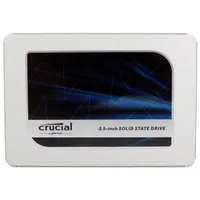
Crucial MX500 (500GB)
Corsair CX-M Series CX450 ($49.99)
Corsair’s 450-watt CX-M PSU gives us more than enough wattage to work with (the Ryzen chip is the main power draw, and rated to just 65 watts), and its semi-modular nature means we don’t have to hide a massive group of unneeded cables behind the motherboard. It was a bit expensive when we bought it, but this model often goes on sale, and is sometimes accompanied by rebates that can take the final price down even more. We’ve seen it as low as $20 after rebates.
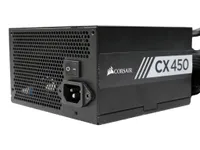
Corsair CX450
Cooler Master MasterBox Q300L mATX Case ($39.99)
This $40 case from Cooler Master brings a lot of style and substance for the price. Its side panel is plastic rather than glass, and the magnetic dust filters which cover the front and top tend to slide around a bit when moving your PC. But the case just looks great for the price, there was plenty of room to work in with our modest build, and things aren’t too cramped for future upgrades.
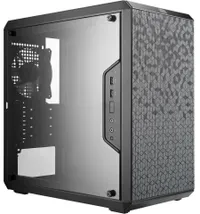
Cooler Master MasterBox Q300L
MORE: Best PC Builds
MORE: How To Build A PC
MORE: All PC Builds Content
Current page: AMD Raven Ridge Build: Ryzen 5 2400G & B350M
Next Page Intel/Nvidia Build: Pentium Gold G5400 & Nvidia GTX 1050
After a rough start with the Mattel Aquarius as a child, Matt built his first PC in the late 1990s and ventured into mild PC modding in the early 2000s. He’s spent the last 15 years covering emerging technology for Smithsonian, Popular Science, and Consumer Reports, while testing components and PCs for Computer Shopper, PCMag and Digital Trends.
-
ikaz I think most people who frequent this site already knew the answer igpu vs gpu. I think what would be an interesting would be to see how cheap you can make AMD vs Intel. Trying to keep them as close as possible with cost, maybe a 2200G vs pentium+1030 GT (though probably still faster) and what the cost difference would be. Then say put in a high end card to see which one bottlenecks quicker. That way if some one is building a PC now but doesn't have the money for say 1060/580 but plan to add one later they can see which is a better long term CPU build or if it even matters if they plan on upgrading the CPU long with the GPU.Reply -
Math Geek very interesting article.Reply
i like the extra space of the AMD build for sure over the intel build. but i also know that an ssd is not essential to me at lower budgets and i'd easily drop a large hdd in place of it to stay on budget with the intel build. little bit of load time loss would be well worth fixing the anemic amount of storage space currently in there. dropping 1-2 tb hdd in there for the same money makes the system much more viable. the ssd can come later when some extra cash is on hand to add the upgrade :)
also like to see about the future upgrade path when better gpu is added in down the line. perhaps something like a 1060 or so would be interesting to see how it performs with the budget cpu's for that person thinking down the line but also wants to get started now.
but the rest seems like good choices made for the low budget builder. -
tikal Such a useless and biased article. And to have the never to write INTEL vs AMD on the chart, when INTEL based PC and dedicated GPU. Are you paid for this kind of reporting?Reply -
WildCard999 Why go with a 500gb SSD anyways when you can easily go 240/250gb with a 1TB HDD for the same price? Most of your games won't benefit from being on a SSD.Reply
https://pcpartpicker.com/list/KGtLfH -
Math Geek Reply21369691 said:Such a useless and biased article. And to have the never to write INTEL vs AMD on the chart, when INTEL based PC and dedicated GPU. Are you paid for this kind of reporting?
care to elaborate on how it is biased? budget was set, parts were picked within that budget and compromises were made on both systems to stay on budget. so how exactly is it biased? i prefer AMD myself but can't find fault other than storage choice for the intel build, which is more a personal preference than anything. -
Krazie_Ivan Reply
the smaller SSD+HDD argument makes even more sense with the AMD platform due to StoreMI... it uses so little SSD space, while making games & apps stored on the HDD load at about the same speed they would if stored on the SSD alone. huge value in that software, but not often noted by the tech press.21369700 said:Why go with a 500gb SSD anyways when you can easily go 240/250gb with a 1TB HDD for the same price? -
SkyBill40 Good lord, Matt. Who proofed this before it was published?Reply
That said, naturally the machine with the discrete graphics solution is going to win out against an iGPU even as good as the one on the 2400G. Unless you're comparing like for like, this doesn't make much sense to me. Come on, man. You guys can and should do better than this. -
Paul Alcorn Reply21369746 said:Good lord, Matt. Who proofed this before it was published?
That said, naturally the machine with the discrete graphics solution is going to win out against an iGPU even as good as the one on the 2400G. Unless you're comparing like for like, this doesn't make much sense to me. Come on, man. You guys can and should do better than this.
I think quantifying the difference between the two builds is important. How much do you give up with integrated graphics, but also, what do you gain if you use them?
Do these tests answer a question that directly impacts the readers' purchasing decision? I think they do. -
SkyBill40 Reply21369766 said:21369746 said:Good lord, Matt. Who proofed this before it was published?
That said, naturally the machine with the discrete graphics solution is going to win out against an iGPU even as good as the one on the 2400G. Unless you're comparing like for like, this doesn't make much sense to me. Come on, man. You guys can and should do better than this.
I think quantifying the difference between the two builds is important. How much do you give up by using integrated graphics, but also, what do you gain? Are these tests useful and answer a question that directly impacts the readers' purchasing decision? I think they do.
I get that, Paul. If that is the case, then why not build four systems? Two each using integrated solutions and two using discrete cards. That seems a more fair and complete test in my opinion. Meh, what do I know. :/ -
Paul Alcorn Reply21369785 said:21369766 said:21369746 said:Good lord, Matt. Who proofed this before it was published?
That said, naturally the machine with the discrete graphics solution is going to win out against an iGPU even as good as the one on the 2400G. Unless you're comparing like for like, this doesn't make much sense to me. Come on, man. You guys can and should do better than this.
I think quantifying the difference between the two builds is important. How much do you give up by using integrated graphics, but also, what do you gain? Are these tests useful and answer a question that directly impacts the readers' purchasing decision? I think they do.
I get that, Paul. If that is the case, then why not build four systems? Two each using integrated solutions and two using discrete cards. That seems a more fair and complete test in my opinion. Meh, what do I know. :/
You know a lot, eight badges! You make a fair point about testing multiple systems. I am working on the Athlon review, though. It has pretty decent Vega graphics for its price point, so you know we'll be testing them. Also, I'll test it with a GPU so we can see how it fares against the rest of our recommended cheap chips. The 2400G, 2200G, and Pentiums are in the test pool. We'll be testing both integrated and discrete there, too, so maybe that will help.