Prescott Up To 4.17 GHz, Northwood With 4 GHz Maximum
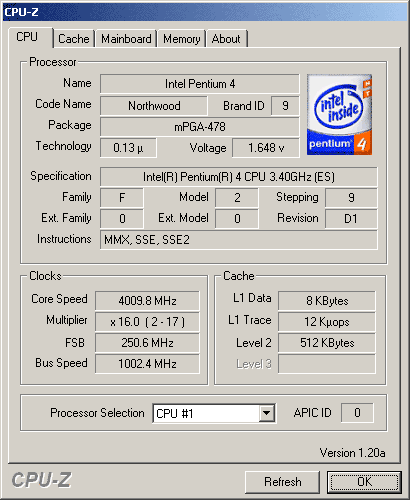
The following table shows the all configurations we benchmarked and tested:
Swipe to scroll horizontally
| Header Cell - Column 0 | CPU Clock | FSB Clock | CPU Voltage |
|---|---|---|---|
| P4 Northwood | 3,207 MHz | 200.5 MHz | 1.55 V |
| P4 Northwood | 3,535 MHz | 220.9 MHz | 1.55 V |
| P4 Northwood | 3,695 MHz | 230.9 MHz | 1.55 V |
| P4 Northwood | 3,866 MHz | 241.7 MHz | 1.575 V |
| P4 Northwood | 4,009 MHz | 250.6 MHz | 1.625 V |
| P4 Prescott | 3,207 MHz | 200.5 MHz | 1.375 V |
| P4 Prescott | 3,535 MHz | 220.9 MHz | 1.375 V |
| P4 Prescott | 3,695 MHz | 230.9 MHz | 1.375 V |
| P4 Prescott | 3,866 MHz | 241.7 MHz | 1.40 V |
| P4 Prescott | 4,009 MHz | 250.6 MHz | 1.425 V |
| P4 Prescott | 4,149 MHz | 259.4 MHz | 1.50 V |
In order for the processors to remain stable at 3.8 GHz and higher clock speeds, a compressor cooling system was required. The processor cores' voltages, which increased drastically at 4 GHz, produced a clear rise in thermal power - without the VapoChill the processor could not have handled the thermal power of well over 100 watts.
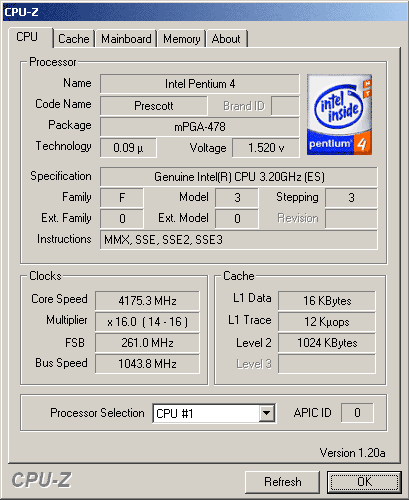
The P4 Prescott gained an edge over the Northwood with a somewhat higher maximum speed: 4.175 MHz, which indicates its potential.
TOPICS
