Single CPU in Dual Operation: P4 3.06 GHz with Hyper-Threading Technology
Low-Cost Dual Processing: P4 At 3.06 GHz
Let's imagine for a minute that we were to ask you to predict the outcome of this processor head-to-head. How would you, our well-informed reader, vote? Here are some key parameters to help you decide. We are comparing two identical platforms. The only difference is the processors: Intel P4 3.06 GHz versus P4 3.60 GHz. Can the Hyper-Threading technology of the 3.06 GHz P4 make up for the P4/3600's 15 percent speed advantage? Previous performance measurements have always been taken with reference to specific applications running independently on an optimized platform. But most users don't work like that. They generally have at least three applications open at the same time, and switch back and forth between them. For example: while a text editor is carrying out a spell-check in the foreground, there might well be numerous other applications - such as a defragger, communications tools and a CD burner - working away in the background.
It is not difficult to use 100 percent of the processor's capacity in this way. This kind of scenario can make it difficult, or even impossible, to access all of the applications in use. A worst-case scenario would be when your machine tries to access data on a difficult to read CD. This might result in empty windows appearing on your screen, and make you feel like taking a coffee break to soothe your nerves. Workaholics working under time and deadline constraints are the worst affected. They may even feel the need to reach for the Valium when this happens. The only solution to this problem used to be a dual CPU system. However, with the new 3.0 GHz P4, Intel introduces the concept of Hyper-Threading - the virtual dual processor.
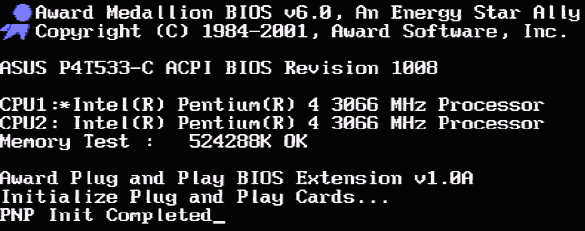
With Hyper-Threading activated, the bios shows two P4 processors at start up.

Get Tom's Hardware's best news and in-depth reviews, straight to your inbox.
Current page: Low-Cost Dual Processing: P4 At 3.06 GHz
Next Page Low-Cost Dual Processing: P4 At 3.06 GHz, Continued