





Your Walmart might be 3D printed — firm building more than a dozen 3D-printed Walmart expansions with concrete-printing robots

3D Concrete Printing
(Image credit: Tom's Hardware)

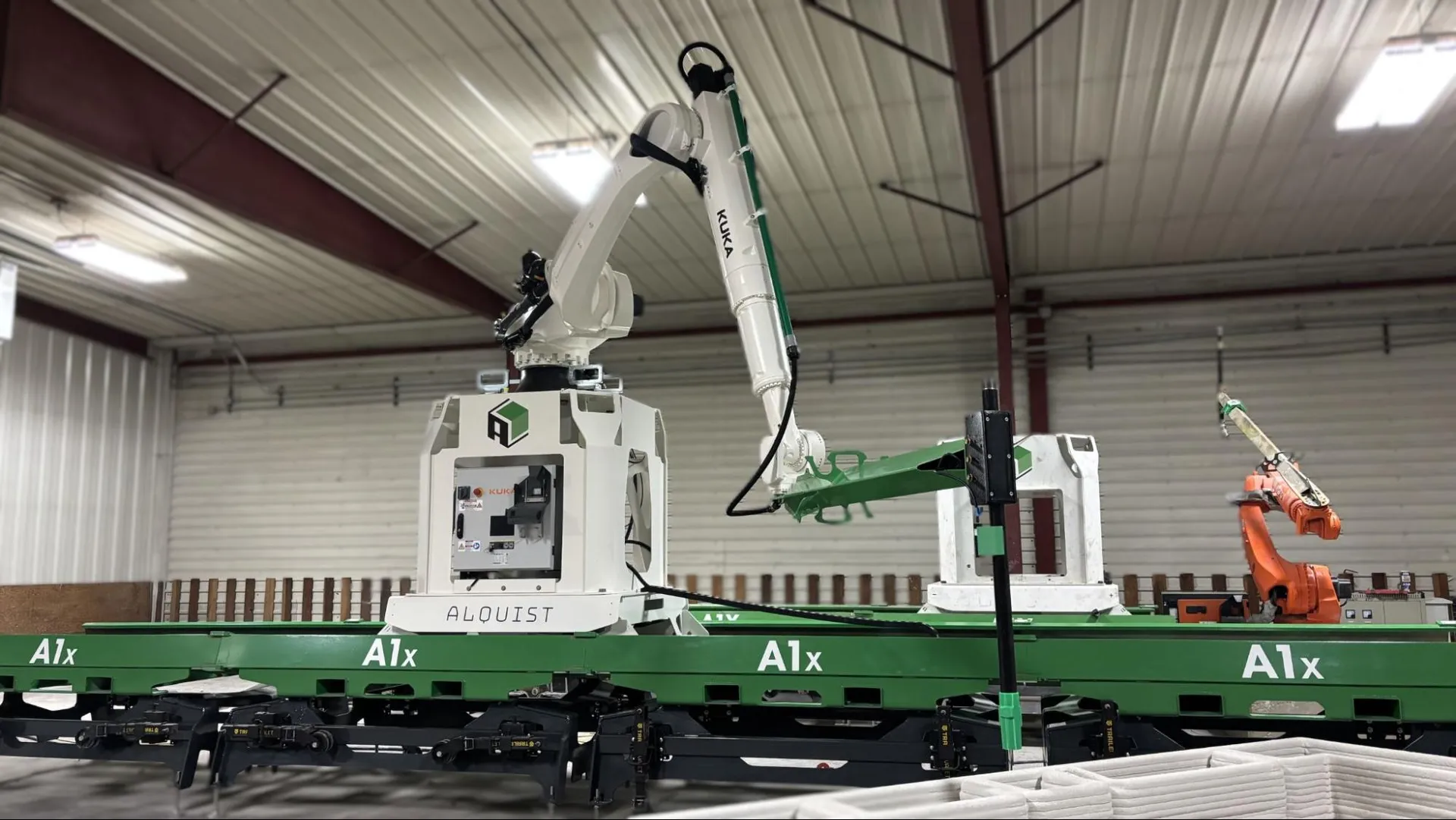
For years, 3D Concrete Printing (3DCP) has been an experimental novelty. Alquist 3D, based in Greeley, CO, is pushing the technology past the demonstration phase with their A1X, a robotic arm printer that lays down inch-thick layers at a whopping 200mm/s. This new approach to construction cuts down on time and wasted material, while also requiring fewer people. Alquist 3D is partnering with construction firm FMGI to build more than a dozen expansions on Walmart locations across the country using the new tech.

Alquist’s most ambitious build isn’t 30 new Walmarts or the first 3D printed house in Virginia. It’s the ecosystem the company is setting up to take 3D printing from the lab to the construction site. By teaming up with equipment distributors Hugg & Hall and general contractors like FMGI, they are solving the scalability problem that previously held back the technology and labor shortages that plague construction in general. Alquist recently sold 14 A1 Series systems, in what is believed to be the largest U.S. deployment of 3DCP.

Concrete printers are surprisingly similar to FDM 3D printers, though they don’t need a heated nozzle and cooling fans. They extrude a thick paste of special concrete packed with fibers to control cracks that could form during curing, much like FDM machines might use glass fiber in nylon to control warping. Alquist’s machines run materials by Sika, which utilize recycled fibers mixed with Portland cement.

Latest Videos From

3D Concrete Printing

(Image credit: Tom's Hardware)

We spoke to Andrew Lycas, Alquist’s CTO, about the machines and technology his company is developing. He told us that 3DCP is superior to traditional CMU block construction, AKA cinder block construction, because it’s much faster and requires a smaller team of skilled workers. However, the material costs more, which eats away at the savings.

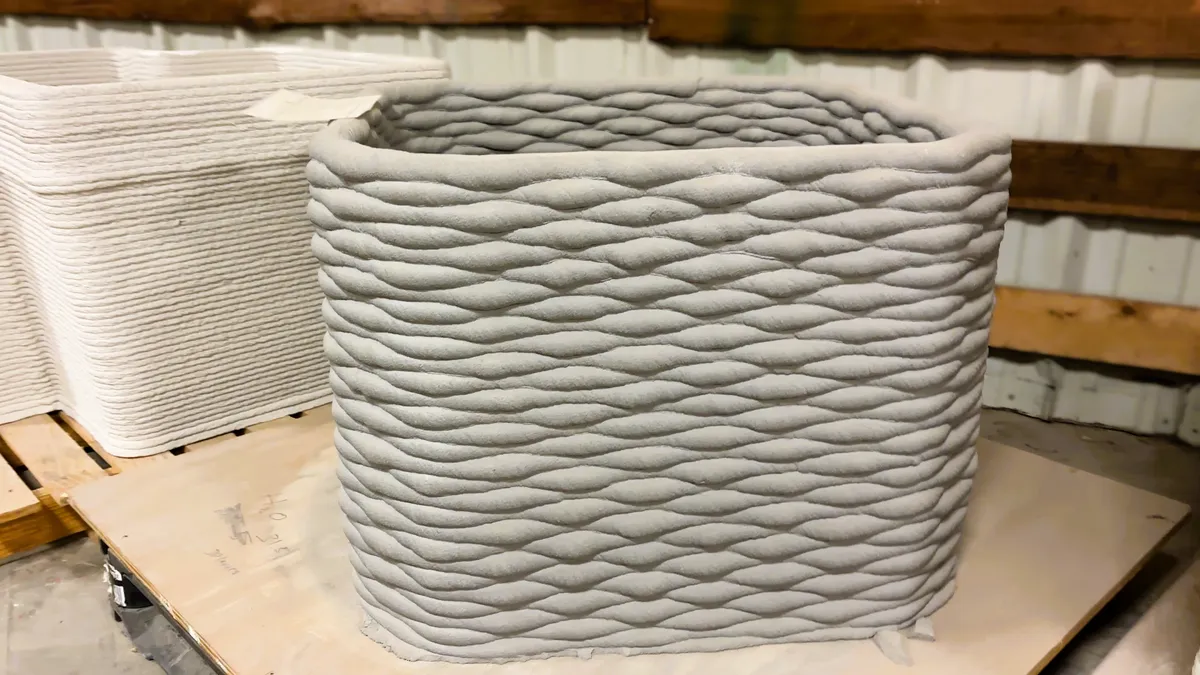
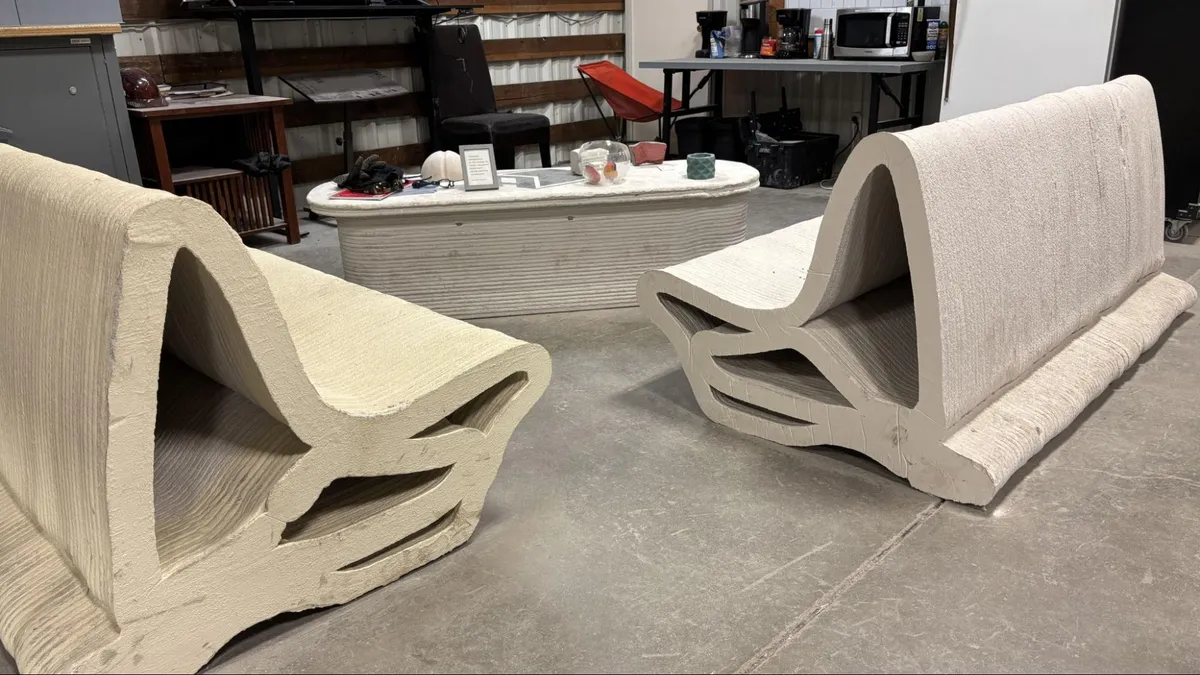
Alquist 3D recently launched its A1 Series, featuring two units: the A1 and A1X. Both machines are built on a KUKA robotic arm fitted with a 1.25-inch nozzle. The standard A1 sits on a pedestal and is made for producing “smaller” items like planters and park benches. It's also perfect for educational settings to train modern construction crews on large-scale 3D printing. Alquist co-developed a curriculum with nearby Aims Community College to introduce students to 3DCP technology.
3D Concrete Printing

(Image credit: Tom's Hardware)

The A1X has the same robotic system, but rides on a modular rail, allowing the printer to construct buildings with basically an unlimited X and Y dimension. On the job site, the A1X has successfully constructed walls up to 20 feet high.

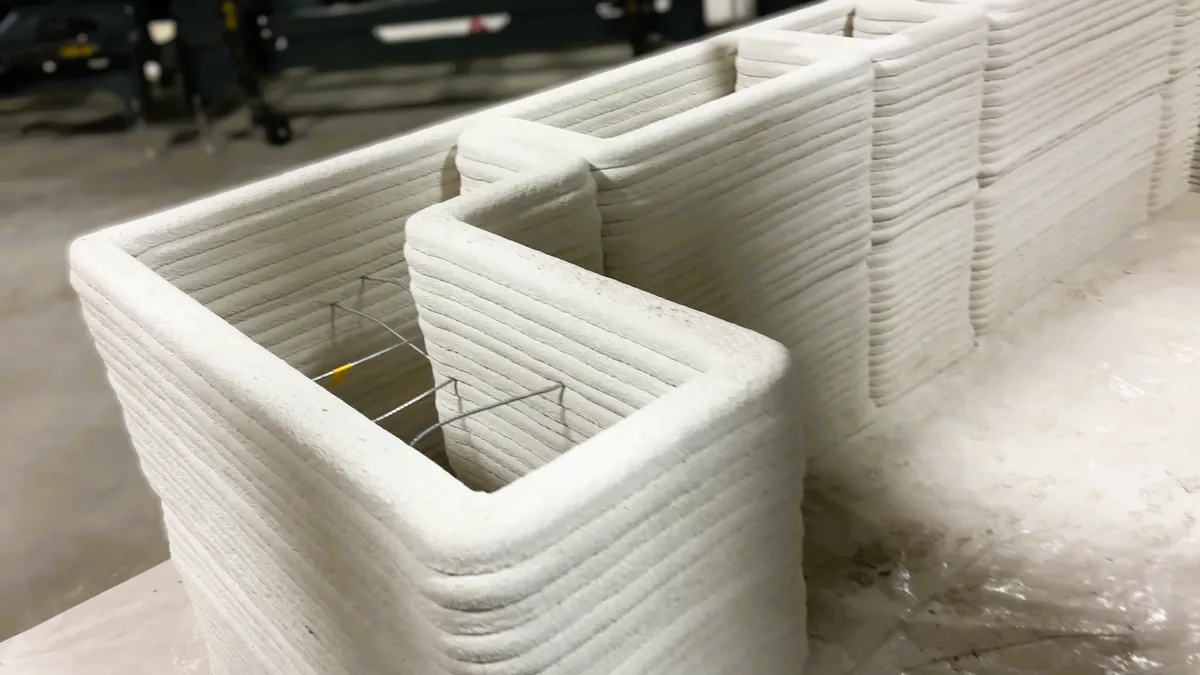
Printing in concrete does have its limitations. Unlike desktop 3D printers, there’s no compatible support material, meaning the A1X can print walls but not the roof. However, its super chonky line width enables a “vase mode” style geometry that can smoothly print walls in one pass. “Infill” is applied manually, in the form of heavy wire supports inserted while the concrete is soft. The wall spaces can be backfilled with insulation after electricians and plumbers insert conduit or pipe. Commercial buildings can skip this step and simply bolt utilities to the interior walls.
3D Concrete Printing

(Image credit: Tom's Hardware)

Early concrete printers used massive gantry systems that looked strikingly like desktop machines. These printers were difficult to transport and set up, and put severe limits on the size of the build. The A1X is a more nimble machine that can be hauled by a pickup truck in a standard trailer and set up in about an hour. Large jobs can make use of several printers working in concert to cut down on job time.

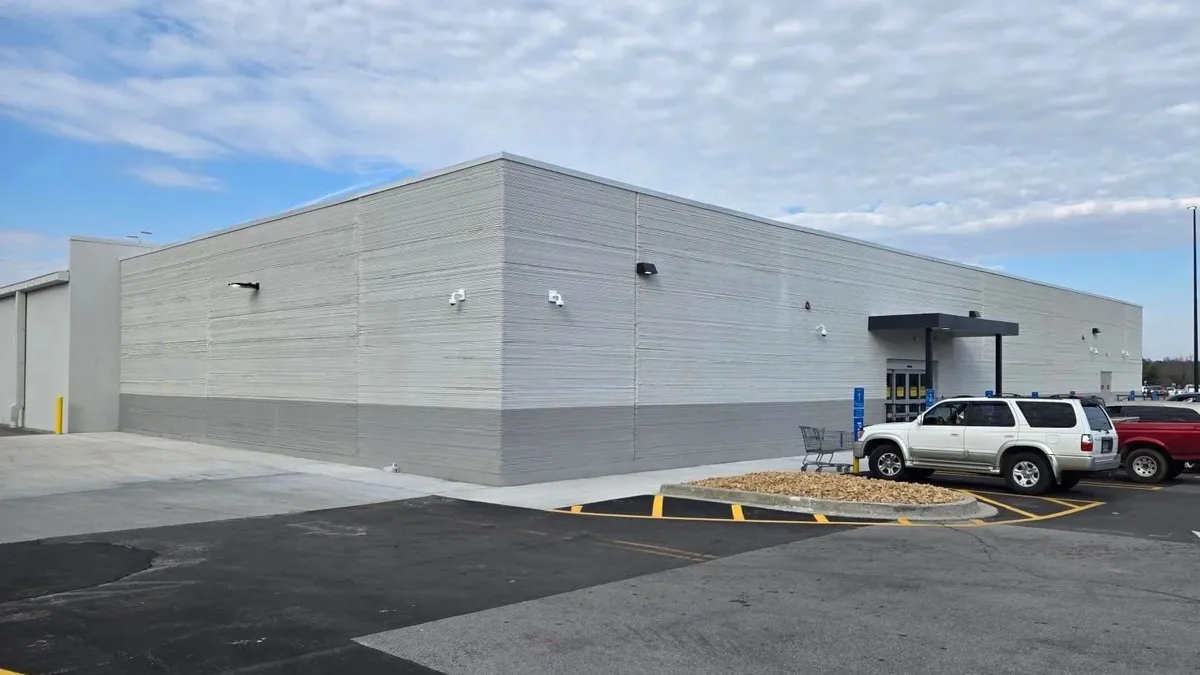
Alquist 3D is partnering with construction firm FMGI to build more than a dozen expansions on Walmart locations across the country, with each one being a little bit different. The first job was in August in Tennessee, with temperatures over 110F during the day. After a frustrating start, the team discovered that going nocturnal helped not only the workers but also the materials, which have an optimal temperature range of 5 to 35 °C, or 40 to 95F. The 8,0000 square-foot expansion only took 140 hours to print once the bugs were worked out.
3D Concrete Printing

(Image credit: Alquist 3D)

3D printed concrete really shines in the winter, when it's too cold for traditional construction methods. In January, Alquist 3D built a 4,400 square-foot addition to a Walmart in Lamar, MO, that only took 17 days and 71.3 print hours to build. Temperatures dropped to 24°F with sustained high humidity, but didn’t phase the process one bit.

Google Preferred Source

Follow Tom's Hardware on Google News, or add us as a preferred source, to get our latest news, analysis, & reviews in your feeds.

Denise Bertacchi
Freelance Reviewer

Denise Bertacchi is a Contributing Writer for Tom’s Hardware US, covering 3D printing. Denise has been crafting with PCs since she discovered Print Shop had clip art on her Apple IIe. She loves reviewing 3D printers because she can mix all her passions: printing, photography, and writing.

  • Jabberwocky79
    Can't wait for this technology to become available enough for me to have a 3D-printed house without having to move to another part of the country.
    Reply
  • Zaranthos
    People worry about AI wiping out all the jobs or requiring universal basic income, but growth in technology along with AI should reduce the costs of goods and services by a lot. If goods and service costs didn't drive up wages and inflation so fast or even reduced them many of those problems would fix themselves. If your house cost half as much, had two more floors so you could rent out the extra space, and was vastly more energy efficient you might be able to work for a lower wage, work less, spend time growing your own food, etc.

    Human labor has grown increasingly expensive, isn't always reliable, is sometimes not available or lacks certain skills needed, and often only works less than 25% of the time (breaks, 8 hour days, weekends off). Reducing the quantity of human labor required could reduce costs while still sustaining better average wages when comparing cost of living to wage ratios.

    3D printing buildings will continue to improve and likely branch out to other things like 3D printing roads, bridges, etc. The materials will improve over time to solve all kinds of problems like preventing fires, better energy efficiency, resiliency against earthquake damage, mold prevention, resistance to water damage, and more.
    Reply
  • Notton
    XfqLZQX96WA
    I'm just looking at these 3D printed houses and the common theme seems to be "Cracking" within a few years.
    IDK if it's because of poor build quality, or the workers need to hone their 3D printing skills, but why not go with prefabs at that point?

    Prefabs are tried and true tech, and Walmart only builds square warehouses, so why even 3D print that?
    https://www.theguardian.com/world/2015/apr/30/chinese-construction-firm-erects-57-storey-skyscraper-in-19-days
    Reply
  • LongTallMatt
    I don't think this is something we should be idealizing. Who gets paid to do work?

    I think this piece should be done with a little bit more thought and investigative journalism.

    And by that I mean get a copy of the contract. See who's getting paid what amount and how many people are involved in getting paid for the contract. For instance, you might have had 50 workers on a job getting paid $20,000 throughout the whole job and they would probably have spent that $20,000 throughout the whole economy because that's what the lower end of the economic spectrum is forced to do jow.

    But now when you have a robot doing the work you have 5 or 10 people getting paid $100,000 for the job and they're just probably going to invest it. You can only buy so many beds and so many pillows and so many houses as one person - that doesn't stimulate the economy nor does it stimulate GDP.

    A fluff piece on oh looky here - this cool - they can build a warehouse with a robot - glorifying he fact that 20+ people don't get to work - isn't good story and it's not worth writing about not reading.
    Reply
  • usertests
    LongTallMatt said:
    I don't think this is something we should be idealizing. Who gets paid to do work?
    If the job can be done more cheaply with a robot, then meatsacks should be doing something else.
    Reply
  • vinay2070
    usertests said:
    If the job can be done more cheaply with a robot, then meatsacks should be doing something else.
    Remember, you are a meatsack too, so are your friends and family and siblings etc, tech will come for your job or their jobs too.
    Reply
  • usertests
    vinay2070 said:
    Remember, you are a meatsack too, so are your friends and family and siblings etc, tech will come for your job or their jobs too.
    I have no friends or family. I am 100% programmed to usher in the end of Humanity.
    Reply
  • beyondlogic
    I'm sorry ladys and gents we have no lavatory due to a 3d printer malfunction
    Reply