Apple discontinues Mac Pro after 20 years — system had been stuck in stasis with M2 Ultra since 2023
Apple's iconic tower is gone, succeeded by the Mac Studio.
Get Tom's Hardware's best news and in-depth reviews, straight to your inbox.
You are now subscribed
Your newsletter sign-up was successful
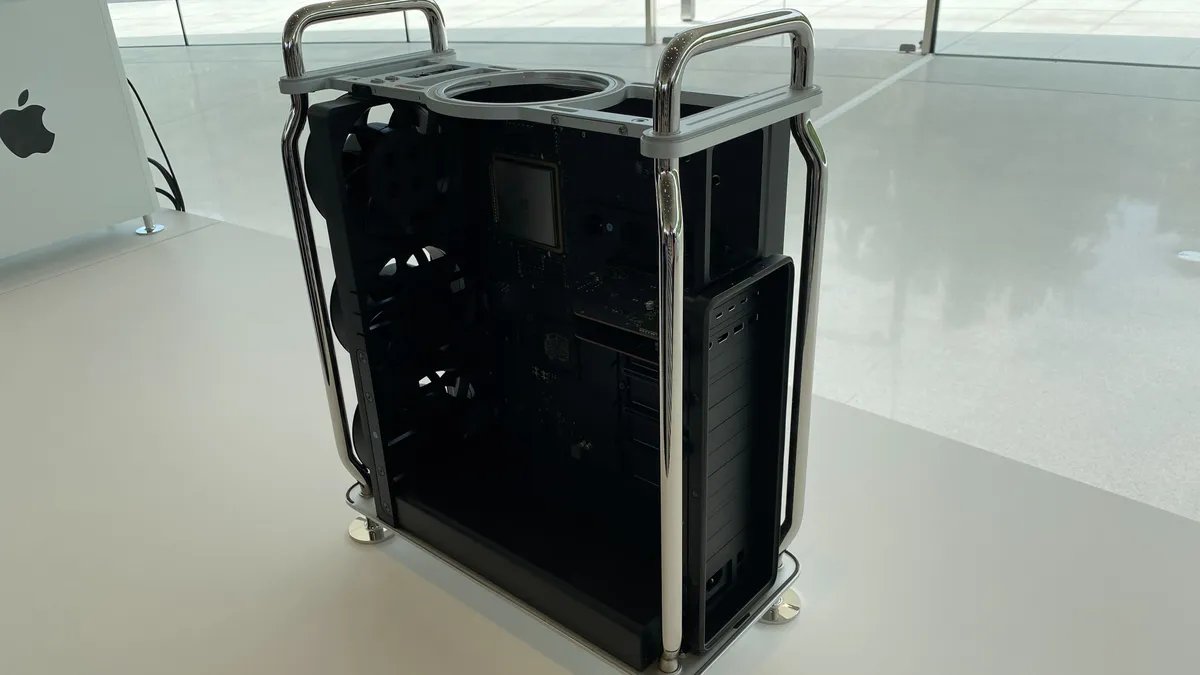
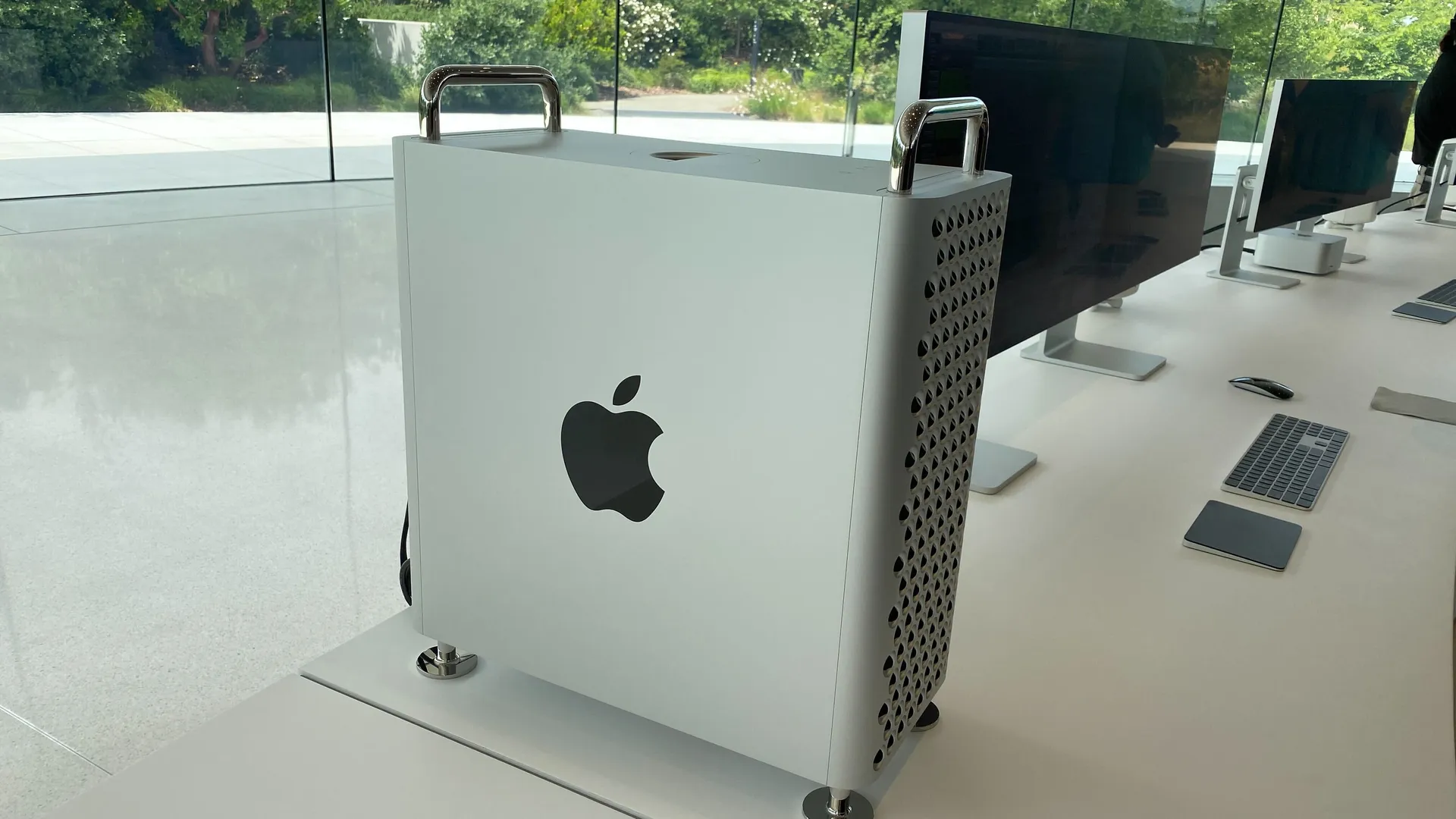
Apple has discontinued the Mac Pro, its most expandable workstation. Mentions of the system are being scrubbed from the company's website and online store.
Apple confirmed to 9to5Mac that it no longer has plans to produce the hardware.
For many onlookers, this isn't a huge surprise. Apple has had the Mac Pro on ice since its move to Apple Silicon in 2023. The tower has been stuck with the M2 Ultra ever since. The smaller Mac Studio has since taken over as the company's flagship workstation with options for the M3 Ultra and M4 Max last year.
The Mac Pro's last design refresh was in 2019, when the system still boasted Intel Xeon processors. The Mac Pro has a small but dedicated following, but it was clearly Apple's lowest volume Mac and, starting at $6,999.99, was far more expensive than the Studio.
The Mac Pro was unique from the rest of the Apple Silicon lineup in that it continued to allow for expansion through PCIe slots. Apple seemingly kept the Mac Pro around to support video and sound editors who needed specialized add-in cards or a lot of extra storage. The M2 Ultra doesn't support external graphics, so you can't use a dedicated GPU.

The system has had a number of iconic form factors, including the long-lived "cheese grater" design of the original (similar to the Power Mac G5) and the bold "trash can" design that ultimately had issues with thermals (and, ironically, expandability).
But Apple has increasingly demoed the Mac Studio with a range of Thunderbolt accessories, and Thunderbolt 5 models can be connected to pool their SoCs' resources together, which can create powerful clusters for AI workloads.
You can even rack mount the Mac Studio. While Apple doesn't sell that option (it did for the Mac Pro), a number of enterprise IT vendors make 3U and 5U mounts to fit Apple's new professional champ in server rooms.
Apple's desktop lineup is now down to just three systems: the iMac, Mac Mini, and Mac Studio. Apple clearly isn't abandoning pro users as a customer base, but it is dropping the most customizable Mac in favor of a more popular, streamlined device.

Follow Tom's Hardware on Google News, or add us as a preferred source, to get our latest news, analysis, & reviews in your feeds.

Get Tom's Hardware's best news and in-depth reviews, straight to your inbox.

Andrew E. Freedman is a senior editor at Tom's Hardware focusing on laptops, desktops and gaming. He also keeps up with the latest news. A lover of all things gaming and tech, his previous work has shown up in Tom's Guide, Laptop Mag, Kotaku, PCMag and Complex, among others. Follow him on Threads @FreedmanAE and BlueSky @andrewfreedman.net. You can send him tips on Signal: andrewfreedman.01
-
alan.campbell99 I recall at the time wondering if the Apple Silicon version could at least get around the fixed RAM config by way of a CXL RAM card or similar since it had PCI expansion options. That's probably not supported though either?Reply -
kae717 was this article written by AI??? it looks like a copy & paste and a couple of paragraphs are duplicated... very lazy...Reply -
Air2004 Reply
I was just about to say the same.kae717 said:was this article written by AI??? it looks like a copy & paste and a couple of paragraphs are duplicated... very lazy... -
bit_user Reply
Well, if they wanted to continue the lineage, CXL might've been an option. Especially because later versions of CXL support switching and fabrics, which would've avoided any RAM expansion cards contending for valuable and scarce lanes with storage or other I/O.alan.campbell99 said:I recall at the time wondering if the Apple Silicon version could at least get around the fixed RAM config by way of a CXL RAM card or similar since it had PCI expansion options. That's probably not supported though either?
Ultimately, I think limited expansion options is probably what killed the Mac Pro. They probably decided against putting more lanes in the Max SoC or moving up to PCIe 6.0 / CXL 3.0.
For a while, it seemed like a viable option might still be to source server silicon from someone like Ampere Computing. However, as Apple has continued to innovate in their ARM ISA implementation, I'm sure they wouldn't want a Pro that didn't support the same ISA extensions as the rest of their products. -
Jabberwocky79 Reply
Not disagreeing with your distaste for the overall quality, but it does make me chuckle every time someone asks that question. Does anyone really think that content written on any site isn't written by AI now? I'm at the point where I don't read anything with careful consideration because I assume a clanker has written it, loosely guided by a human. I skim, pick up the tidbits of information that are relevant to me, ignore the filler language, and move on. It's annoying, but that's the age we live in.kae717 said:was this article written by AI??? it looks like a copy & paste and a couple of paragraphs are duplicated... very lazy... -
8086 Apple would have sold many many more of the MAC PRO if the base price wasn't a few mortgage payments; the cost to benefit ratio just wasn't really there.Reply -
JamesJones44 Once Apple moved to Apple Silicon the Mac Pro basically became a more expensive Mac Studio. Apple never really invested heavily in supporting expansion with Apple Silicon via the PCI-E slots. What they did support was pretty limited and the sales numbers likely weren't enough to entice 3rd parties to make products specifically for it.Reply
Fixed memory with the Apple Silicon versions likely was a problem for a lot of Pro buyers as well. -
Sippincider ReplyApple clearly isn't abandoning pro users as a customer base
Just configured a 128GB M4 Studio, and current ETA is 4-5 months.
Yes there are multiple factors including Apple likely trying to manage supply-chain balance ahead of the M5 launch. But still, glad my livelihood doesn't depend on getting an BTO Studio on immediate priority.