


A trio of U.S. industry leaders in defense, autonomy, and directed energy have collaborated on a new solution to neutralize drone swarms. Today, the Leonidas Autonomous Ground Vehicle (AGV) was announced as an autonomous mobile answer to the growing asymmetric threat from the skies. Specifically, it combines the Epirus Leonidas high-power microwave platform, the Kodiak Driver autonomous system, and General Dynamics Land Systems’ system integration expertise.
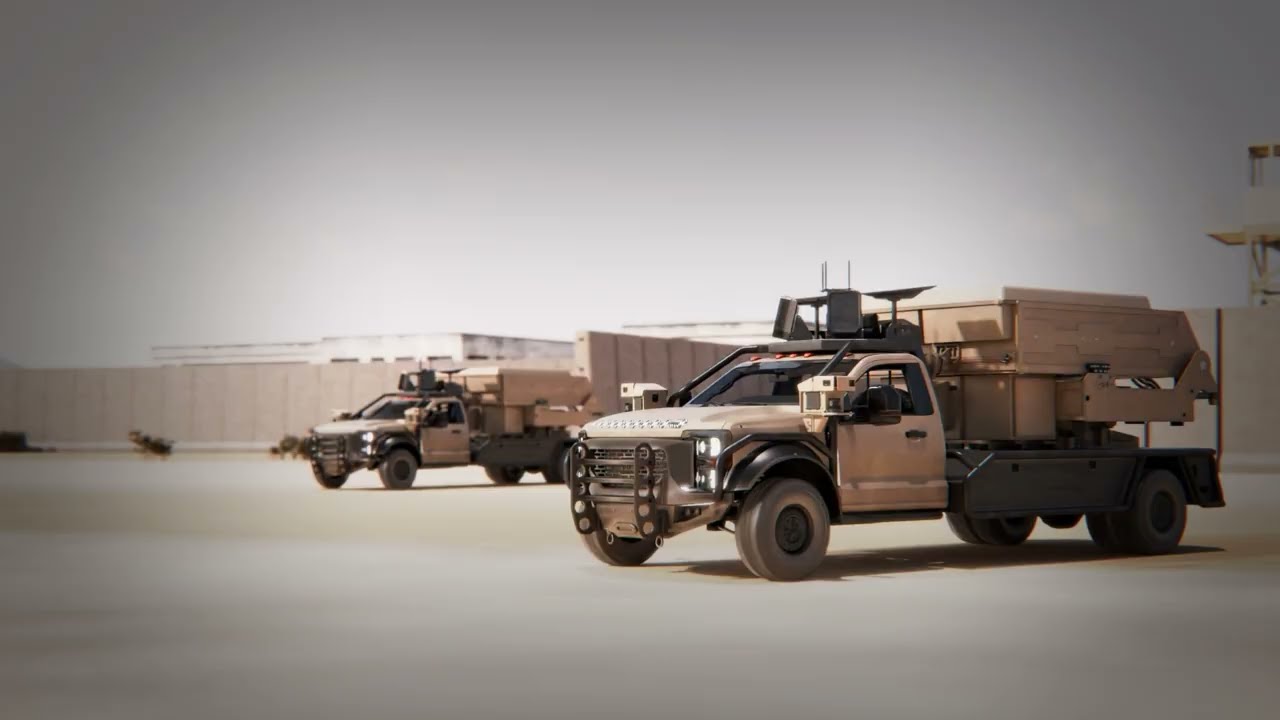
Advances in drone warfare are reshaping how nations think about offense and defense. We’ve recently reported on how Ukraine’s experience has been helping Gulf nations address this new kind of threat. As impressive as embattled Ukraine’s ingenuity is, countering ‘cheap’ drones effectively with ‘cheap’ anti-drone measures – an effective high-tech answer would be welcome. Perhaps the Leonidas AGV is it.
In a press release received by Tom’s Hardware, the collaborators behind the project highlighted that the AGV can be teleoperated to safely extend the lines of drone defenses and operated without human intervention. The rapidly deployable mobile unit can then dish out its deadly(to drones) directed microwave energy.

According to the AGV makers, it is effective against individual, swarm, or fiber-optic-controlled drone attacks. Previously, the Epirus Leonidas high-power microwave platform has enjoyed success in the field. We reported on it being demonstrated, downing 49 drones in one shot, last year. Thus, there is little reason to doubt its extended effectiveness as part of this autonomous mobile platform. It is basically driven to exactly where it will work best by Kodiak Driver from Kodiak AI. In case you haven’t heard of Kodiak AI, in 2024, it delivered the tech behind the first customer-owned and -operated driverless trucks in commercial service.
“Saturation drone attacks demand a fundamentally different approach to defense,” said Andy Lowery, CEO of Epirus. “Leonidas AGV combines autonomous mobility with high-power microwave effects to deliver a counter-UAS capability that rapidly maneuvers to defeat drone swarms without more boots on the ground. Together with GDLS and Kodiak, we’re enabling a new layer of autonomous drone defense for critical assets and infrastructure.”

General Dynamics Land Systems is a specialist unit of General Dynamics which provided the design, engineering, production, and combat vehicle support ‘glue’ to transition the AGV from a concept into a demonstrable prototype.
A full-scale Leonidas AGV prototype will be on display at Booth 801 this week, at the AUSA Global Force Symposium & Exhibition. The symposium begins today, at the Von Braun Center in Huntsville, Alabama.

Follow Tom's Hardware on Google News, or add us as a preferred source, to get our latest news, analysis, & reviews in your feeds.