









Elon Musk's first-gen orbital data center craft spans wider than a Boeing 747 and runs an interchangeable chip payload — AI1 satellite compute payload is 120 kW, peaks at 150 kW
The first-gen orbital data center craft spans wider than a Boeing 747 and runs an interchangeable chip payload.
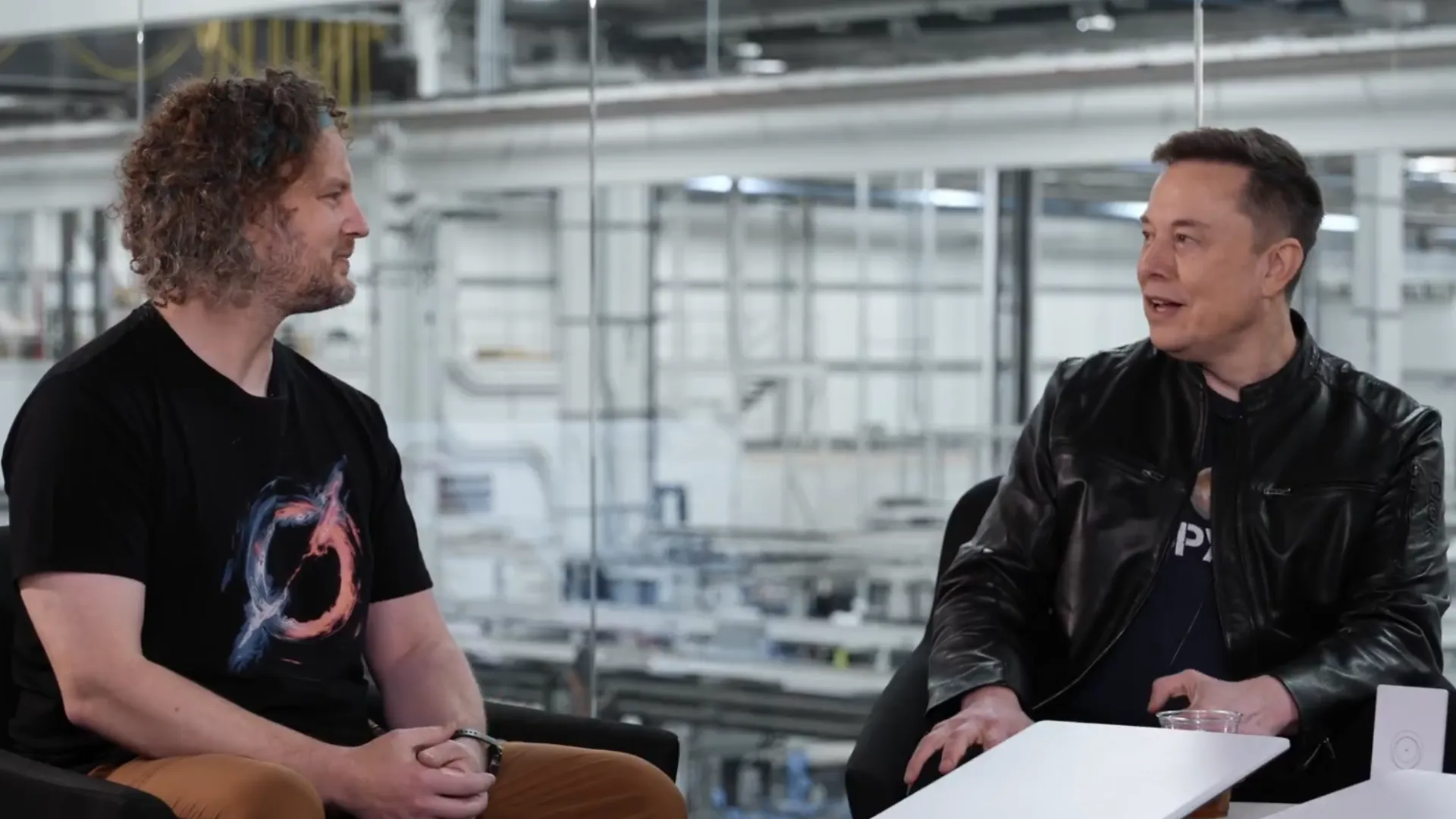
Elon Musk has laid out the first detailed design of SpaceX's AI1 satellite in a 30-minute video posted to the company's X account, the opening generation of an orbital craft SpaceX wants to build by the million to run AI workloads off Earth's power grid. Carrying a 150 kW peak compute payload across a 70-meter deployed wingspan, the spacecraft uses an interchangeable hardware design that lets different chipmakers supply the processors. The timing of this announcement is no accident, coming just three days before SpaceX’s IPO, which is set to price on June 11th and trade on June 12th at a target valuation near $1.75 trillion.
In his announcement, Musk pegged the satellite’s compute payload at roughly the draw of a single Nvidia GB300 rack, which pulls around 140 kW on the ground. One AI1, in those terms, is about one rack in orbit. In terms of its overall specs, SpaceX disclosed an average compute payload of 120 kW, a peak of 150 kW, and a density of 70 kW per ton, with the craft operating at roughly 600 km.
Watch @ElonMusk provide a technical update on SpaceX’s capability to manufacture, launch, and operate AI satellites at scale → https://t.co/PSCyWrNsOg pic.twitter.com/vhtr46uax7June 8, 2026
A satellite with these specs comes with some serious space requirements, and its 70-meter deployed wingspan edges past the 68.4-meter span of a Boeing 747-8. As for the interchangeable compute, that leaves the platform open to whichever vendor ships the most competitive AI silicon, rather than locking it to a single supplier.
This interchangeability is no doubt important to Musk, not least because SpaceX can’t yet guarantee its own supply of chips. The company is currently building Terafab, a chip fab that’s running as a joint venture with Tesla, while its S-1 IPO filing warns it can’t currently secure enough chips.
That aside, the elephant in the room is cooling: a rack on Earth sheds heat into moving air and circulating water, neither of which exists in a vacuum, where the only viable route is radiating it away as infrared. AI1 features up to 110 m² of deployable liquid radiators, as well as redundant pumping loops and integrated micrometeroid shielding. By comparison, the International Space Station’s ETACS rejects roughly 70 kW of heat — around half of what’s needed to cool a 140 kW GB300 rack — across 422 m² of radiator at a cost of up to $500 million, according to SemiAnalysis.
Musk has previously waved off potential thermal critiques, telling SpaceNews back in March that it's "safe to say SpaceX knows how to do heat rejection in space" and pointing to the company's fleet of more than 10,000 Starlink satellites.
SpaceX filed with the FCC in January to launch up to a million orbital data center satellites and has already signed compute deals, including a $920 million-per-month agreement with Google. The model has prominent skeptics: OpenAI's Sam Altman called orbital data centers "ridiculous" earlier this year.
Get Tom's Hardware's best news and in-depth reviews, straight to your inbox.

Follow Tom's Hardware on Google News, or add us as a preferred source, to get our latest news, analysis, & reviews in your feeds.

Luke James is a freelance writer and journalist. Although his background is in legal, he has a personal interest in all things tech, especially hardware and microelectronics, and anything regulatory.
-
cyrusfox I simply don't understand the reason for on satellite compute need. Seems prohibitively expensive with high risk of issues. Interference free and self sufficient being the only unique benefits I see. Cost of ownership is all upfront as it would be totally self sufficient for its usable life in Space right? Robustness here that can't be duplicated but at what cost?Reply -
Notton ReplyBy comparison, the International Space Station’s ETACS rejects roughly 70 kW of heat
It's not ETACS, it's EATCS.
EATCS: External Active Thermal Control System
The article fails to explain the acronym too.
Musk has previously waved off potential thermal critiques, telling SpaceNews back in March that it's "safe to say SpaceX knows how to do heat rejection in space" and pointing to the company's fleet of more than 10,000 Starlink satellites.
I'm just going off of this comment, but Starlink satellites have anywhere from 1kW to 3kW of solar power...
That's like... not even in the same range...
As for the SpaceX IPO...
AcjnLc4TH4M -
usertests Reply
It could cut through some red tape associated with datacenters on the ground, and it does tap into abundant solar at greater efficiency than could be achieved on the ground. Beyond that, it's questionable whether it can overcome various high costs. Definitely not without Starship in working order.cyrusfox said:I simply don't understand the reason for on satellite compute need. Seems prohibitively expensive with high risk of issues. Interference free and self sufficient being the only unique benefits I see. Cost of ownership is all upfront as it would be totally self sufficient for its usable life in Space right? Robustness here that can't be duplicated but at what cost?
Depreciation is baked in since they would presumably need to be deorbited after a few years, with no hope of being fixed, upgraded, or preserved. Just a bunch of expensive accelerators burning to a crisp. -
Faiakes Isn't this primarily an energy generation issue?Reply
How many kw of electricity can space solar panels generate and at what surface area? -
usertests Reply
https://finance.yahoo.com/sectors/technology/article/spacex-reveals-its-first-orbital-data-center-much-simpler-than-a-starlink-satellite-musk-says-141110185.htmlFaiakes said:Isn't this primarily an energy generation issue?
How many kw of electricity can space solar panels generate and at what surface area?
SpaceX is claiming a 150 kW solar array, 250 W/m^2. I don't know the exact dimensions because the 70m x 20m measurements are counting taller radiators, and some area without panels in the middle. But it should be 600 m^2. Maybe in the ballpark of 25m x 12m for each half?
There is greater solar intensity outside of the atmosphere, and it can be illuminated 99% of the time if they pick the right orbit. So you are generating more power than with the same area of panels on Earth. -
hotaru251 Reply
near infinite expandability, no communities whining and protesting datacenters, unmatched solar power.cyrusfox said:I simply don't understand the reason for on satellite compute need. Seems prohibitively expensive with high risk of issues. Interference free and self sufficient being the only unique benefits I see. Cost of ownership is all upfront as it would be totally self sufficient for its usable life in Space right? Robustness here that can't be duplicated but at what cost?
Theres many reasons for it but its not viable at the moment and muskrat is just making stuff up like hos tesla gen 1 can Full Self Drive in a few months (which is stated for yrs and then eventually "impossible".
its all to bump his companies value and make sure he gets his bonus from meeting specific goals. -
bit_user I read this as SpaceX just spinning the hype machine right before their IPO. They need to justify why anyone should pay the asking price of what's planned to be the largest IPO in history.Reply -
Arkitekt78 Reply
You're not wrong - I think... cant really tell because this is riddled with nonsensical speech and wannabe insults.hotaru251 said:near infinite expandability, no communities whining and protesting datacenters, unmatched solar power.
Theres many reasons for it but its not viable at the moment and muskrat is just making stuff up like hos tesla gen 1 can Full Self Drive in a few months (which is stated for yrs and then eventually "impossible".
its all to bump his companies value and make sure he gets his bonus from meeting specific goals. -
Elrabin Forget the Space X portion entirely.Reply
Elon is crazy if he thinks he can go from zero to gigawatts of capacity at the Terafab overnight to build the server platforms going into these satellites.
You're talking a company with zero fabrication knowledge trying to leapfrog industry leaders with decades of experience and hundreds of billions invested in just the last few years.
It's not happening. The requirements for EUV lithography machines alone has Terafab dead in the water, the ASML devices are backordered for years.