

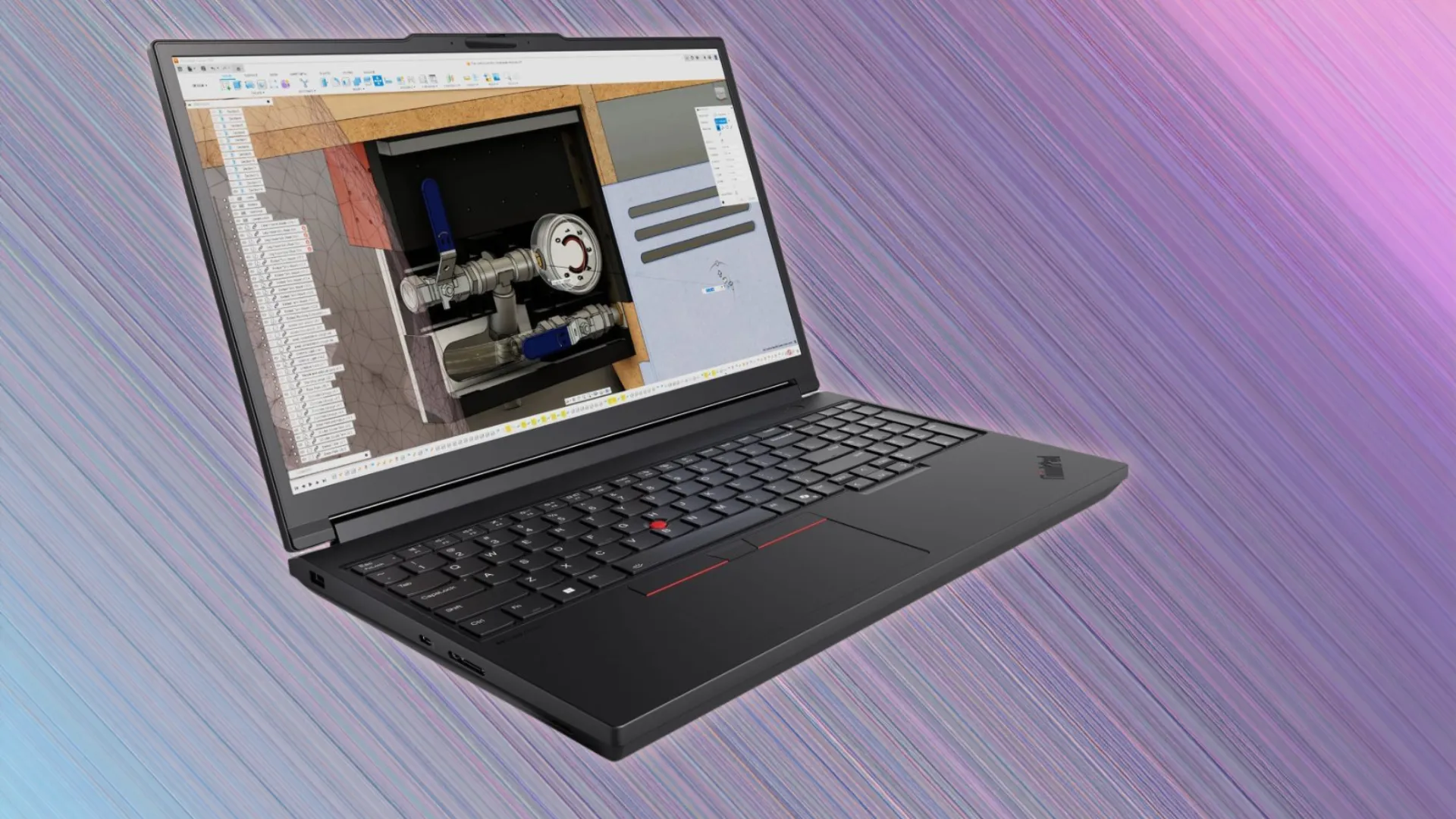
In a quest to build a thinner device, Lenovo has finally abandoned one longstanding feature that made the ThinkPad P series stand out from the competition — the use of a magnesium subframe, also dubbed the “roll cage,” to add strength and rigidity to the laptop model. Notebookcheck spotted the change, which marks the end of an era that began with the ThinkPad T60 in 2006, the company’s first ThinkPad model after taking over from IBM in 2005.
Magnesium alloy is widely used in premium laptop models because of its relative lightness and comparable rigidity, but it’s often used as a material for the external chassis. The ThinkPad P series was a different beast, though. Lenovo built this line of laptops as mobile workstations and ensured that it had the rigidity to face the physically most challenging of situations. While the magnesium roll cage added to the overall thickness of the device, it was something that Lenovo and its users were willing to compromise on in exchange for the reliability and durability that it offers.
“People will hold their machines in one corner of the keyboard, or the palm rest area, and that becomes a stress area,” Al Makley, Lenovo Executive Director of Workstation Development, told AEC Magazine. “So, we have to understand how is that area flexing, what is it in contact with on the motherboard, are you going to stress components? So, we look at the amount of flex in that area.” Lenovo Industrial Designed Sam Patterson also told AEC, “It does require some compromises on overall size – it adds a millimeter or two to the X, Y and Z dimensions, but it’s one of those things that’s not worth compromising on, because its value to the customer is so high. When you have a system that is this powerful, it becomes heavy quite fast, so managing the body and managing the strength of this chassis is difficult, so a roll cage is the logical thing to do.”

Aside from having the roll cage in the base of the laptop, its screen also features a magnesium subframe at the back of the display. “16 inches is a lot of panel, and you don’t want to get those videos on YouTube where someone’s bending it and going, ‘What is going on with this flex?’” adds Patterson.
Unfortunately, Lenovo’s latest P16 model, the ThinkPad P16 Gen 3, replaces the magnesium subframe with one that’s integrated directly in the frame. It’s unclear why Lenovo went ahead with this design change just to shave a few millimeters off the workstation’s dimensions. It could be that the company is trying to save on every ounce of expense as the memory chip shortage is taking a toll on computing.
After all, the P-series is already an expensive piece of kit, with the base model P16 Gen 3 starting at nearly $3,000 with just an Intel Core Ultra 5 245HX, an Nvidia RTX Pro 1000 Blackwell laptop GPU, 16GB of DDR5-4400 RAM, and a 512GB PCIe 4.0 SSD. The top-of-the-line trim features an Intel Core Ultra 9 275HX, with an Nvidia RTX Pro 5000 Blackwell laptop GPU, 128GB of DDR5-4000 RAM, and a 4TB PCIe 5.0 SSD. However, this costs an eye-watering $9,500 — something that’s just out of range for most common buyers.
All these specs might seem underpowered for the price, but companies are paying for the reliability that it delivers. But unless Lenovo developed a new manufacturing technique that allowed it to retain rigidity without the magnesium subframe, then this move to save a few dollars might actually be counterproductive to what its customers expect. If you find this to be too much for your needs, Lenovo also makes more reasonably priced devices with the latest Intel hardware, or you could pick a model from our list of the best laptops for productivity, portability, and battery life.

Follow Tom's Hardware on Google News, or add us as a preferred source, to get our latest news, analysis, & reviews in your feeds.