




Intel reportedly says it boosted yields by selling what would normally be 'scrap' or 'low-expectation' CPUs — customers more willing to accept lesser chips due to overwhelming CPU demand
Companies are buying everything — even somewhat defective chips.
Following the release of its latest earnings report, which revealed an unexpected uptick in profit margins, Intel has reportedly confirmed that the lift at least partially stemmed from selling would-be scrap chips for a profit. In an X post on April 24 (below), tech industry analyst Ben Bajarin said he had received clarity directly from Intel’s Investor relations team that customers are sweeping up "what may have been scrap or low-expectation output" CPUs, bringing in tangible revenue for the company.
Got some clarity from Intel IR on additional lift to margins. Intel got an unexpected margin lift from better yield salvage. Chips that would normally have been lower-value edge-die on the wafer were binned down and still sold into usable SKUs, turning what may have been scrap…April 24, 2026
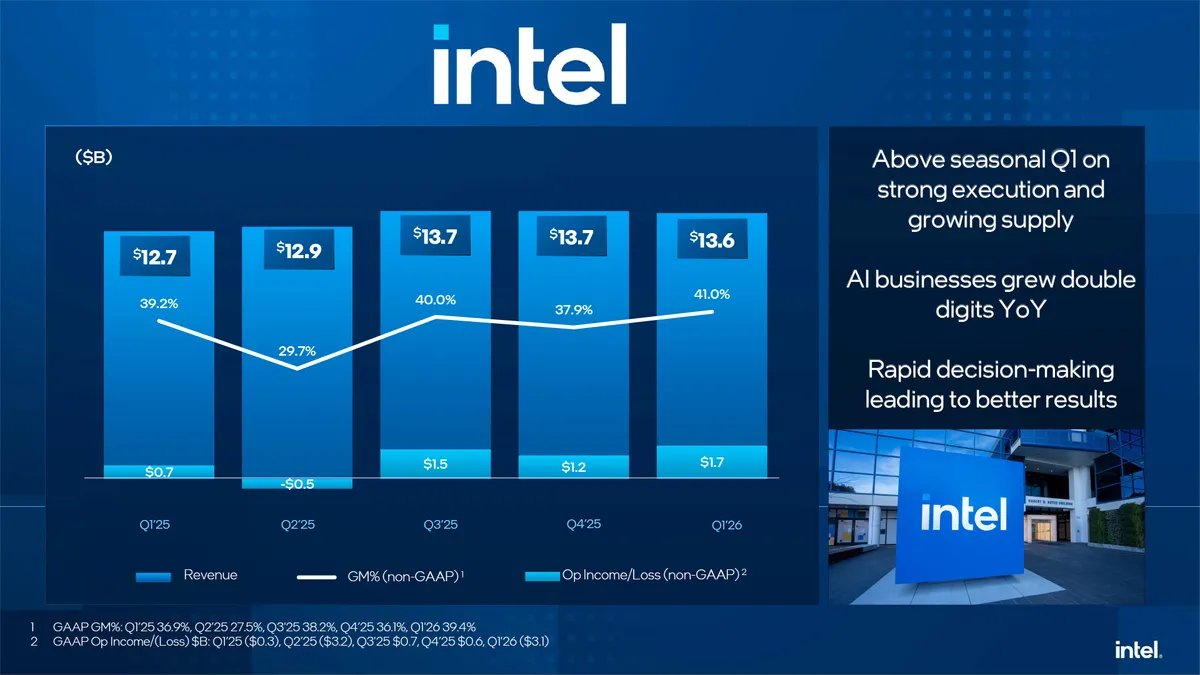
Intel's first-quarter earnings, reported on April 23, came in significantly better than expected. Revenue came in at $13.6 billion against expectations of $12.36 billion, and Non-GAAP gross margins hit 41% — 650 basis points above the company's own guidance of 34.5%. Furthermore, the company’s earnings per share beat expectations by 3000%. Those enormous differences left analysts wondering what went right, and apparently, part of the answer lies in somewhat defective chips.
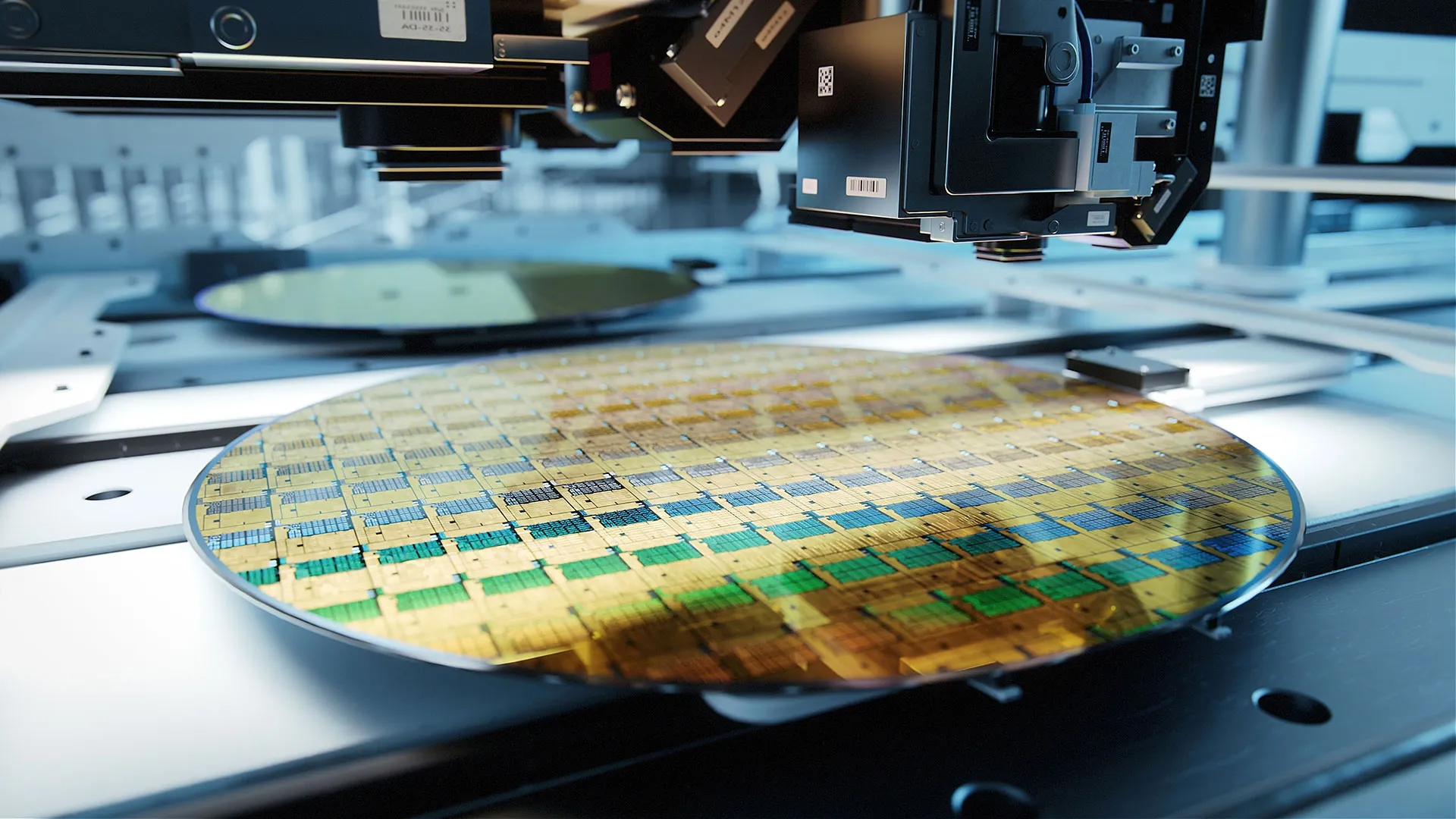
When chipmakers manufacture wafers, not all the chips that come off them are equal. The dies cut from the edges of a wafer tend to be lower quality, with more defects and lower performance than those cut from the center. If a chip doesn't meet the spec for a high-end SKU and is still usable, rather than binning it as scrap, Intel can relabel it as a lower-tier SKU and sell it at a lower price. It's still a sellable product, just not a premium one. Normally, some edge-die chips might not even make that cut.

According to Bajarin, Intel says the demand for CPUs is so strong that customers are buying everything — including those that would otherwise be scrap or low-expectation edge chips. Rather than throwing them away, Intel was able to "bin" them down — label them as a lower-spec SKU — and sell them anyway.
It is more nuanced than this, but, technically speaking, Intel made extra money selling 'scrap' that customers are now more willing to buy due to the chip shortage. The company got a surprise margin boost not from making better chips or cutting costs, but simply because demand is so voracious that chips it expected to underperform commercially are selling at usable prices. It's essentially found revenue.
This speaks volumes to the current CPU demand environment across the industry. An AI-driven infrastructure buildout is consuming compute capacity at a pace the supply chain was not designed for, creating a voracious appetite for server processors.
Intel’s Xeon CPUs, which power data center servers running AI workloads, have remained in sustained high demand with little sign of easing. That demand is being fuelled by major OEMs such as Dell, HP, and Lenovo, alongside hyperscalers including Microsoft, Google, and Amazon, all of which purchase Intel processors in massive volumes to build computers and expand data center infrastructure.

Get Tom's Hardware's best news and in-depth reviews, straight to your inbox.
Follow Tom's Hardware on Google News, or add us as a preferred source, to get our latest news, analysis, & reviews in your feeds.

Etiido Uko is a news contributor for Tom's Hardware covering the latest updates in big tech and the PC industry. He is a mechanical engineer and senior technical writer with over nine years of experience in documentation and reporting. He is deeply passionate about all things engineering and technology, and is an expert in gadgets, manufacturing, robotics, automotive, and aerospace.
-
TerryLaze ReplyRather than throwing them away, Intel was able to "bin" them down — label them as a lower-spec SKU — and sell them anyway.
So which intel SKUs magically popped up? Anybody has any lists? Nobody reported on this, right? Or did I just miss that?
but simply because demand is so voracious that chips it expected to underperform commercially are selling at usable prices. It's essentially found revenue.
This on the other hand tells a different story, that more people bought lower end CPUs that intel always were producing but weren't selling well until now. -
GiinTak Reply
Yeah, you would think a new lower tier sku popping up and driving profits would be, you know, noticed.TerryLaze said:So which intel SKUs magically popped up? Anybody has any lists? Nobody reported on this, right? Or did I just miss that?
This on the other hand tells a different story, that more people bought lower end CPUs that intel always were producing but weren't selling well until now. -
usertests This seems normal. The only difference is that CPU demand is unusually high. Maybe they can disable >75% of the cores on a very defective Xeon die and end up with something useful.Reply -
Dav_Daddy Isn't this what they've always done? In the PC space anyway.Reply
I thought anytime you have a high-end and mid/low tier CPU which share the same socket this is what was going on? If I recall they quit or scaled way back on this because people figured out with a few tweaks to the BIOS they could unlock the top tier features on lesser processors most of the time. -
evermorex76 So they're continuing to do what they and AMD (and every other semiconductor maker) have been doing for decades? Maybe just with even lower grade chips than they used to, creating ultra-low-end SKUs that wouldn't have made enough profit to be worth the assembly and packaging, but now they can sell for a higher margin because customers think even 10% performance is better than zero even if the cost to performance ratio is awful but absolute performance numbers are all that matter because they're selling their products and services at a ridiculous margin too and if it gains them an extra half-percent they're happy? In fact, the way these companies are run, it only gives them an extra half-percent of revenue, while increasing losses by a full 1%, but that doesn't matter somehow.Reply -
WINTERLORD More likly data centers are so constrained to get chips that there buying up the scraps for a lower end server roomReply
They not only have to buildout AI but they have to buildout data centers to handle the added traffic of ai queing all the search engines an such -
Normalspeed Reply
Intel's been doing this since before AMD was even an idea. The celeron was a broken pentium. It worked, just slower.Gururu said:Finally, they took one out of AMD playbook.
Maybe AMD should stop copying intel & only release high quality gear... But that's asking a bit much.