


Microsoft has outlined a new feature of Windows called Cloud-Initiated Driver Recovery (CIDR). This newly introduced capability lets Microsoft remotely roll back a bad driver to a previously known good version on affected PCs. Moreover, it can work without user action or OEM intervention. It sounds like a magic bullet for a long history of Windows Update woes, but we’ll have to see if it works when the rubber hits the road. CIDR will only work with drivers distributed via Windows Update.
Windows Update can cause plenty of problems when a bad driver gets through testing and gets pushed to users. Indeed, buggy drivers have caused many a lost hour, gray hair, wrinkle, high blood pressure, and so on, among Windows veterans. Microsoft also notes that a bad driver often means a user has to manually intervene and roll back to “a low-quality driver for an extended period.” So, the new CIDR is cautiously welcomed.
Microsoft spells out the CIDR process in its Tech Community blog, and there we learn that recovery starts by the Windows developer triggering "a recovery action directly from the Hardware Dev Center (HDC) Driver Shiproom." Once a problematic driver is flagged, the system recovers the previously known-good version of a driver via the Windows Update pipeline. “This is handled through coordinated updates to the PnP driver stack and the driver flighting and publishing services,” says Microsoft.

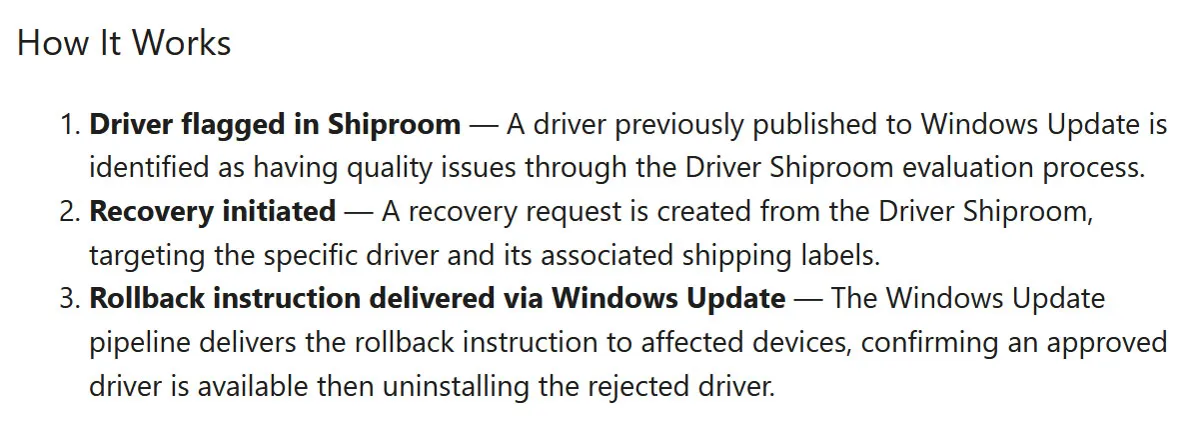
Importantly, Microsoft notes that “recovery is delivered through the existing Windows Update infrastructure — no new client agent or partner tooling is required.” That should help CIDR work well with what we’ve already got and for it to become an established standard. Likewise, partners don’t need to get involved in CIDR, Microsoft will manage it. However, Microsoft asks that these partners “continue monitoring their driver quality metrics in the Hardware Dev Center dashboard and to respond promptly to any shiproom feedback on rejected submissions.”
CIDR is rolling out now for validation and testing, and it is expected to automatically support the Hardware Dev Center publishing process from September onwards.

Follow Tom's Hardware on Google News, or add us as a preferred source, to get our latest news, analysis, & reviews in your feeds.