









Microsoft announces Majorana 2 quantum computing chip — claims a practical machine will come in 2029
With new materials, Microsoft is accelerating its quantum roadmap.
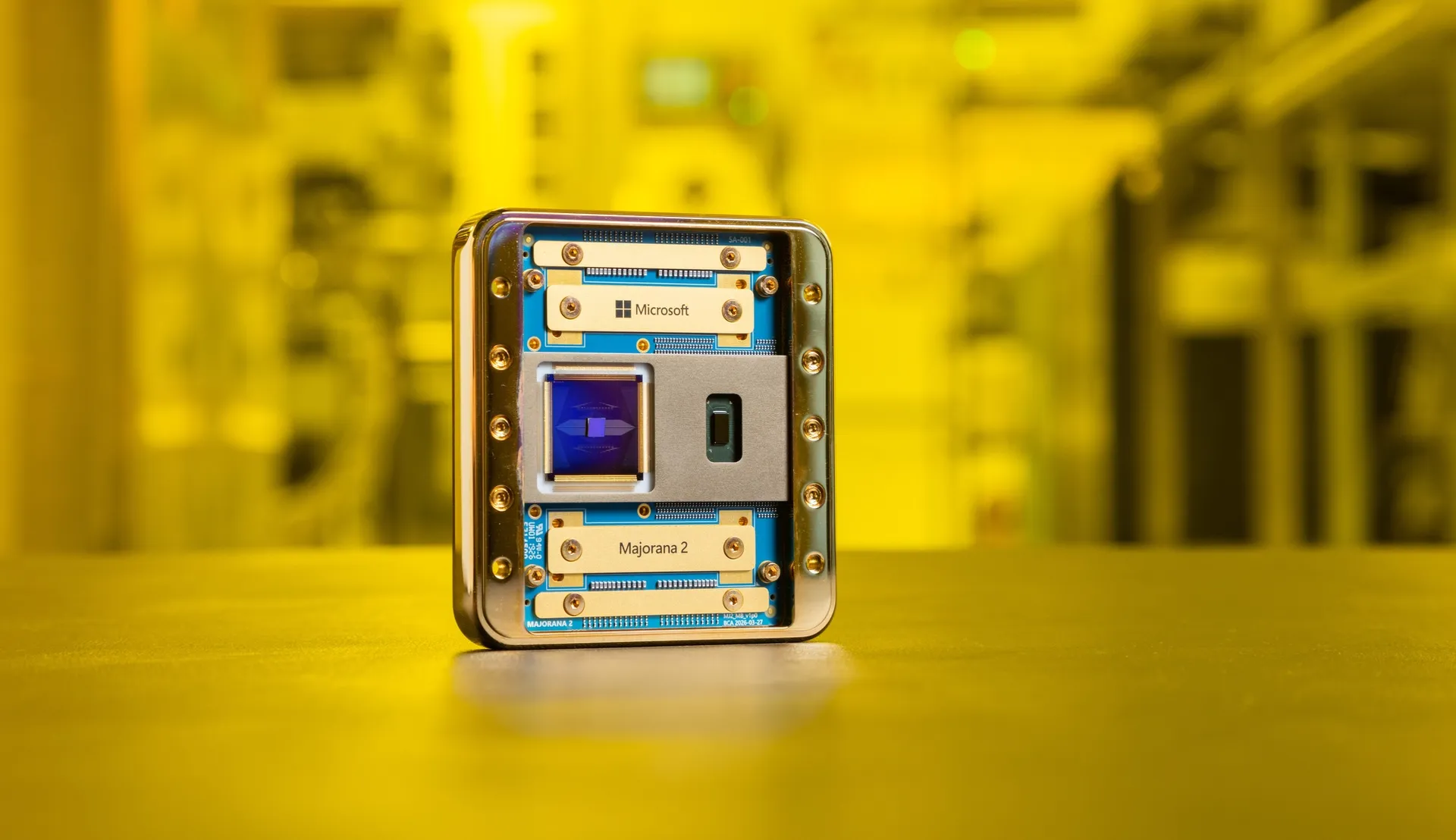
Microsoft announced its next-generation quantum computing chip, Majorana 2, to an audience of developers at its Build conference in San Francisco. The new chip was designed with its Discovery agentic AI and with material changes to accelerate the company's timeline for a practical, working computer.
In a blog post, Chetan Nayak, technical fellow and corporate vice president of quantum hardware, wrote that "To create Majorana 2, the Microsoft Quantum team improved Majorana 1’s material stack to create a more stable topological phase. Majorana 2 replaces Majorana 1’s superconductor, aluminum, with lead, and also updates the semiconductor active region to a combination of indium arsenide and indium arsenide antimonide. This change in materials results in significant increases in performance[.]"
Microsoft explains that this can help "shield fragile qubits from cosmic disturbances that can make them unstable."
The company claims that Majorana 2's qubits, units of information used in quantum computing, are 1,000 times more reliable than the previous generation and far more stable, with a mean lifetime of 20 seconds. Though some quibits have lasted as long as a minute, a result that has the company accelerating its roadmap towards relevant, practical quantum computing.
"Based on this rapid progress, we are accelerating our roadmap to a scalable, practical quantum computer—we have cut our timeline in half and now aim to reach this target by 2029. " Nayak wrote. "This achievement will mark a major milestone on the path to a transformative fault-tolerant quantum computer that has the potential to solve problems that affect all of humanity. "
The previous chip, Majorana 1, relied on states of matter that existed only in theory and was questioned by scientists. But the company says this chip is a massive step forward. We'll see how the scientific community responds to the new chip in due time. The full technical paper can be found here (PDF).
At Build, Microsoft announced that Discovery's agentic AI and the local app the team used to produce the new chips are getting a general release. Discovery is designed to assist with creating AI workflows for science and engineering.
Get Tom's Hardware's best news and in-depth reviews, straight to your inbox.

Follow Tom's Hardware on Google News, or add us as a preferred source, to get our latest news, analysis, & reviews in your feeds.

Andrew E. Freedman is a senior editor at Tom's Hardware focusing on laptops, desktops and gaming. He also keeps up with the latest news. A lover of all things gaming and tech, his previous work has shown up in Tom's Guide, Laptop Mag, Kotaku, PCMag and Complex, among others. Follow him on Threads @FreedmanAE and BlueSky @andrewfreedman.net. You can send him tips on Signal: andrewfreedman.01
-
usertests Reply
Ha ha.JRStern said:Will be required for Windows 12.
I wonder if we'll get "room temperature" quantum PCIe/M.2 cards in the next decade or three. -
TheyStoppedit Replyusertests said:Ha ha.
I wonder if we'll get "room temperature" quantum PCIe/M.2 cards in the next decade or three.
Already exists. Dynex has their Apollo quantum QPU, runs at room temperature. See, thats the thing here. Google, IBM, Microsoft, and all these companies are behind by about 30 years right now. They'll be playing catchup for a while now -
theverge Reply
But what does it actually do?TheyStoppedit said:Already exists. Dynex has their Apollo quantum QPU, runs at room temperature. See, thats the thing here. Google, IBM, Microsoft, and all these companies are behind by about 30 years right now. They'll be playing catchup for a while now -
TheyStoppedit It's a QPU. So it does everything that Microsoft's marijuana QPU does, but orders of magnitude faster, more accurate, doesn't suffer from decoherence, doesn't require $10M worth of cooling equipment, and it's a PCIe card that goes into a normal PC.Reply -
TheyStoppedit Reply
You should probably do research so you don't accidentally spread misinformation. Dynex is 100% legitimate, very very real. They are a legitimate, regulatory-friendly bonified, verified company that has won numerous tech awards, as well as done many keynote speeches at tech shows around the world. Do some research before you spread misinformationbit_user said:It's a crypto currency scam, actually. -
bit_user Reply
I did. We've been through this. It looks like a crypto scam, to me. They're just using the lure and promise of quantum computing to sell a crypto currency that they claim is funding its development. It's like a classic Ponzi scheme.TheyStoppedit said:You should probably do research so you don't accidentally spread misinformation.
My advice: get out while you can.
The deeper you look, the more it looks like AstroTurf. All the supposed publications and conferences you reference seem like fake fronts that aren't in the same circles where real quantum computing researchers run.TheyStoppedit said:They are a legitimate, regulatory-friendly bonified, verified company that has won numerous tech awards, as well as done many keynote speeches at tech shows around the world. Do some research before you spread misinformation
Yes, there are fake academic journals and fake conferences. It's a thing. -
TheyStoppedit Replybit_user said:I did. We've been through this. It looks like a crypto scam, to me. They're just using the lure and promise of quantum computing to sell a crypto currency that they claim is funding its development. It's like a classic Ponzi scheme.
My advice: get out while you can.
The deeper you look, the more it looks like AstroTurf. All the supposed publications and conferences you reference seem like fake fronts that aren't in the same circles where real quantum computing researchers run.
Yes, there are fake academic journals and fake conferences. It's a thing.
First off, they aren't "promsing" quantum computing. They are actively providing/delivering it. Any run down schmuck with a 2 dollar PC can sign up on the market, and start using it right away.
Secondly, the company has decided to completely abandon the crypto-side of the project and are going to be listing on traditional stocks. The crypto-blockchain is going to be shuttered, for many reasons, including, but not limited to the fact that knuckleheads who dont do research mistake it for a scam, and its not a good look. Case and point. The company is making a point of going full-regulatory as much as possible.
They are not selling a crypto-currency to fund its development. It was developed before the blockchain even went up, and the company has always been well-funded, long before the chain went up. The chain had a specific purpose, and a good reason for existing, which had NOTHING to do with funding at all. However, as I said, its being shuttered and replaced. Dynex will list on traditional stock markets.
There are plenty of people who have been to these tech shows from different places around the world who have been able to verify they were there. There is plenty of photos and videos of many different dynex personnel and many different tech shows in different countries doing different things since 2023.
Dynex has many partnerships which are public. Dynex has submitted many patents for its room-temperature QPU and other things.
There is a mountain of more information I could go on about. As someone who has been following the project since 2022, I have pretty good idea of what's going on. It's not a scam -
bit_user Reply
Disagree. What they're delivering isn't real quantum computing.TheyStoppedit said:First off, they aren't "promsing" quantum computing. They are actively providing/delivering it. Any run down schmuck with a 2 dollar PC can sign up on the market, and start using it right away.
Okay, then why are you hyping it?TheyStoppedit said:Secondly, the company has decided to completely abandon the crypto-side of the project and are going to be listing on traditional stocks.
One that's so good, you can't even say what it was?TheyStoppedit said:The chain had a specific purpose, and a good reason for existing, which had NOTHING to do with funding at all.
And I still won't buy, because they haven't done the same work as everyone else in the quantum computing industry to provide scientific evidence of their claims.TheyStoppedit said:Dynex will list on traditional stock markets.
Oh, I don't deny that Dynex people go to events. They're just not the kind of events that give them any scientific credibility.TheyStoppedit said:There are plenty of people who have been to these tech shows from different places around the world who have been able to verify they were there.
A patent is not the same as publishing in a reputable, a peer-reviewed scientific journal or presenting at a reputable academic conference. You can literally find patents of perpetual motion machines, even though such a thing is impossible to actually build.TheyStoppedit said:Dynex has many partnerships which are public. Dynex has submitted many patents for its room-temperature QPU and other things.
We've already been through this. Believe what you want, but I maintain there's no "there" there.TheyStoppedit said:There is a mountain of more information I could go on about.