

BRINC, a startup that specializes in building Drone as First Responder (DFR) aircraft, has just announced its latest product, called Guardian, which is equipped with an onboard Starlink receiver. This removes the signal limitation that the average drone has, which is required to be within signal distance of its base station or within range of cellular or other terrestrial signals. The company says that this gives the Guardian a much longer range — eight miles, instead of the usual three — from its base station, and is only limited by its battery power, not by its connection to its operator.
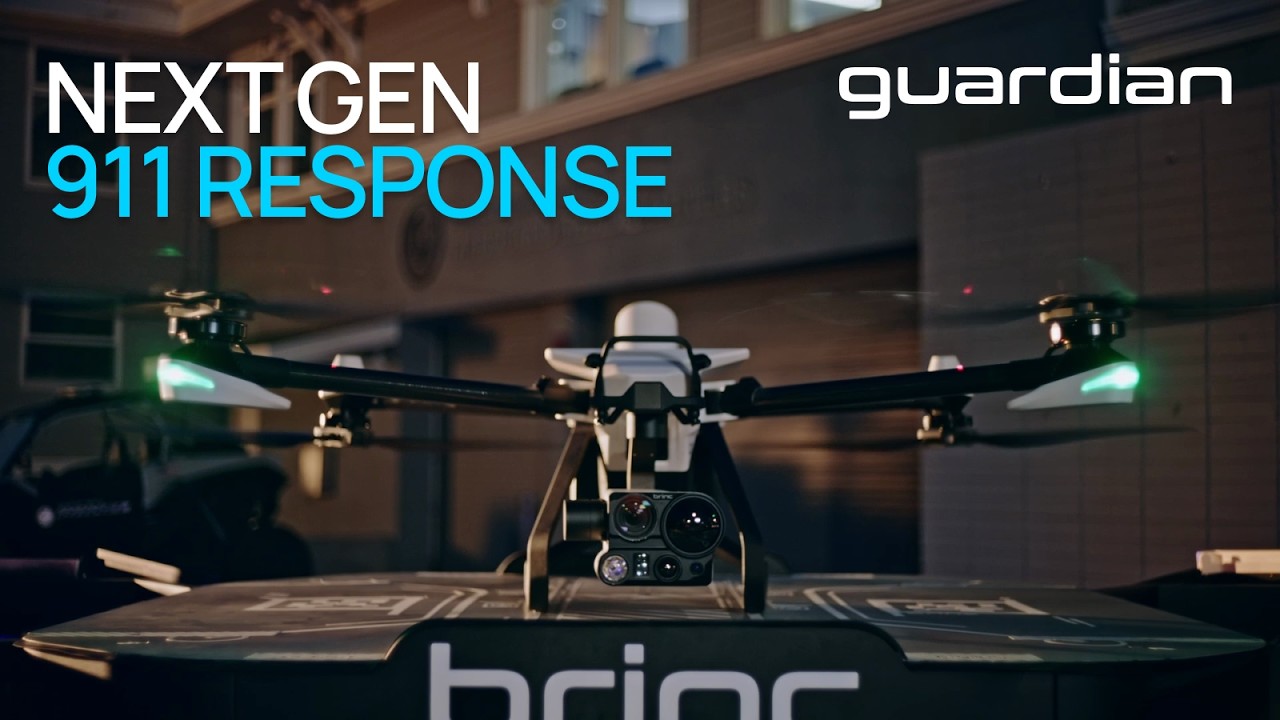
The company did not just stop at giving the Guardian a near-unlimited communication range through Starlink — it also received several upgrades that made it so much more flexible. One of these is the automatic battery swap capability, allowing the drone to quickly get back into action when it’s low on power instead of waiting 25 minutes on the ground to completely recharge. It can also carry various payloads, including defibrillators, Narcan, floatation devices, and other emergency equipment, depending on the situation, and deliver them to both civilians and first responders as needed.
The Guardian features an integrated camera with 4K video and 640 times zoom, making it easier to survey the surroundings and find people from over a thousand feet away. It can also carry a 1,000-lumen SkyBeam spotlight to help light up the skies during night rescue and recovery operations.

Aside from serving in medical and other emergencies, BRINC also built the drone for use with law enforcement. It comes with dual HD thermal zoom cameras, making it easier to spot individuals in low-light conditions, and has a built-in laser rangefinder for accurately determining distances without requiring officers to see the target. It also gets a speaker and a siren that’s reportedly three times louder than what you’d find on police cars, basically turning it into a tiny airborne police cruiser.
These technologies aren’t essentially new, especially as you’d likely find them on military drones. In fact, Russia is allegedly still using Starlink-connected drones in Ukraine, resulting in the company issuing an emergency fix to block the use of its service in bombing Ukraine. But by putting all these features together in a small package that can be operated by civilian agencies, BRINC is giving first responders so much more capability which were previously exclusive to expensive helicopters.

Follow Tom's Hardware on Google News, or add us as a preferred source, to get our latest news, analysis, & reviews in your feeds.