









Phytium Develops Eight-Core ARM CPU for Desktops
Phytium's D2000 chip targets high-end desktops.
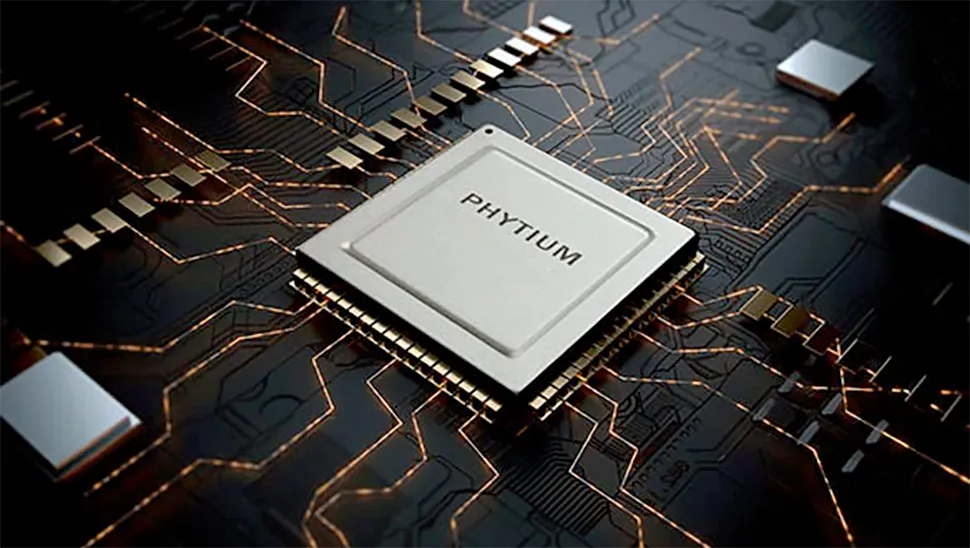
Tianjin Phytium Technology, a China-based processor developer, has introduced its new CPU for client PCs. The new D2000 processor packs eight general-purpose cores designed for both compact desktops, a'la Mac Mini, as well as sophisticated tower machines with expansion capabilities.
The Phytium D2000: Eight Cores for Desktops
The Phytium D2000 processor is a derivative of the FeiTeng-2000/4 CPU introduced last summer. The new chip doubles the number of custom ARMv8-compatible FTC663 cores from four to eight but largely leaves the rest of the chip intact, according to HKEPC.

Phytium's FTC663 cores feature a four-issue out-of-order pipeline, the company's newest dynamic branch predictor, the latest INT and FP units, and supports Arm's ASIMD instructions to speed up floating point workloads. Each pair of cores shares a unified 2MB cache (so the eight-core chip carries 8MB of L2 cache), and all eight cores share a 4MB L3 cache.
As expected for CPUs designed in China, Phytium's D2000 supports domestic SM2, SM3, SM4, and SM9 cryptography algorithms. Also, the D2000 supports the company's own PSPA 1.0 security platform.
Both the FT-2000/4 and the D2000 processors have the same I/O capabilities, including a 128-bit DDR4-3200/LPDDR4 memory interface, 34 PCIe 3.0 lanes (that can be split across four PCIe 3.0 x8, and two PCIe 3.0 x1 slots), two GbE ports, 32 GPIO lanes, and CAN, UART, I2C, SPI, as well as LPC interfaces. The CPU features built-in audio support but doesn't have an integrated GPU.
Phytium's FT-2000/4 and D2000 CPUs use the same 32×35mm 1144-pin FCBGA packaging. They are pin-to-pin compatible, making it particularly easy for PC makers to adopt the new chip and use it with existing motherboards.
Phytium plans to clock the D2000 processor at 2.30 ~ 2.60 GHz, which is in line with its quad-core predecessor. Meanwhile, the new CPU's TDP is 25W, up from 10W with the FT-2000/4, illustrating that the company uses a different process technology to fab the new chip.
Get Tom's Hardware's best news and in-depth reviews, straight to your inbox.
The Mysterious Foundry
Speaking of fabrication technologies, one of the most intriguing things about the Phytium D2000 processor is which contract maker of semiconductors produces it. The new CPU is fabbed with a 14nm node, whereas its predecessor was made using TSMC's 16nm fabrication process.
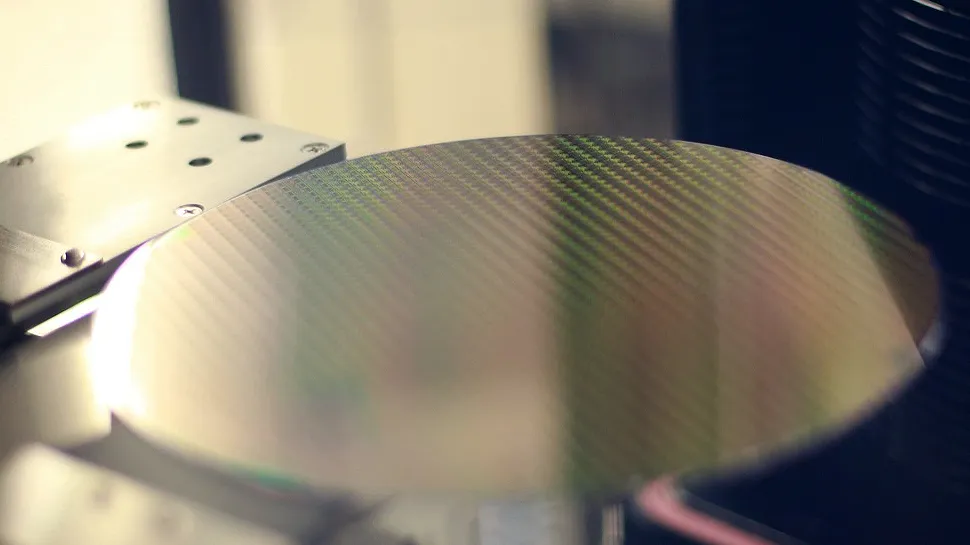
Officially, Phytium isn't revealing the foundry that makes the D2000 CPU, but the most likely candidates are Semiconductor Manufacturing International Corp. (SMIC) based in China and United Microelectronics Corp. from Taiwan. The less likely candidates are GlobalFoundries from the USA and Samsung Foundry from South Korea.
Keeping in mind that Phytium used to have ties with the People's Liberation Army's National University of Defense Technology (yet it claims it is an independent company now), it is unlikely that it outsourced production of its new CPU to a non-Chinese company given the ongoing US/China trade war that has already hit Huawei and SMIC badly. On the other hand, Phytium's upcoming 64-core S2500 processor for data centers and supercomputers will still be made using TSMC's 16nm node, perhaps because SMIC does not have experience producing large chips using its latest nodes.
Now that we have mentioned chip dimensions, the Phytium D2000's die size is 132 mm2, which is slightly larger than Apple's A10 (~125 mm2) that's made using TSMC's 16FFC node (a very dense technology).
Good Prospects
While Phytium's processors for server or client computers are unlikely to pose strong competition for AMD and Intel outside of China, the company is doing extremely well in Tianxia. Last year the company's unit sales surged 7.5X year-over-year.
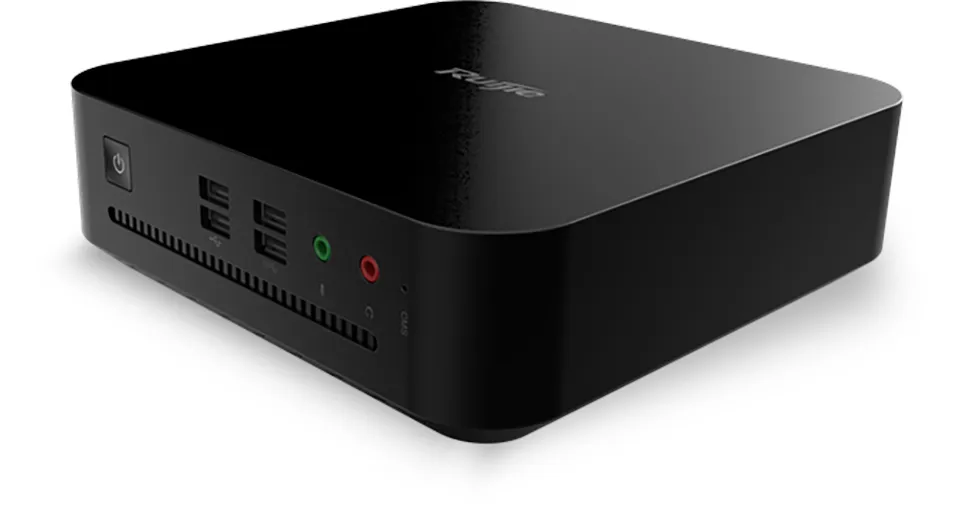
As China wants to reduce reliance on foreign chips, its government and local authorities are transitioning to systems running on domestic CPUs. Last year the company sold 1.5 million CPUs, up from 200,000 in 2019. Eighty percent of these processors were sold to various government clients.
With quad-core and eight-core CPUs in its product lineup, Phytium will be able to address a broader range of desktop PCs this year, which means that it can potentially sell even more processors in 2021 than the company did back in 2020.
The first systems based on the Phytium D2000 CPUs are projected to hit the market in the first quarter of 2021, reports PC Watch.

Anton Shilov is a contributing writer at Tom’s Hardware. Over the past couple of decades, he has covered everything from CPUs and GPUs to supercomputers and from modern process technologies and latest fab tools to high-tech industry trends.
-
Endymio ReplyKeeping in mind that Phytium used to have ties with the People's Liberation Army ...
And still does, of course.
Also, the article wrongly attributes the US's Huawei/SMIC ban to a "trade war". This particular ban has nothing to do with fair trade, but rather security concerns over companies with ties to China's military. -
Hrunga Zmuda Imagine how much better it would be with four high performance, and four energy efficient, cores, with a unified memory architecture that didn't require predicting diddly as it juggles data through the bus slowing things down significantly. And if it used TSMC's 5nm process (or it's upcoming 3nm process).Reply
Apple's competitors have a tough row to hoe. -
TerryLaze ReplyHrunga Zmuda said:Apple's competitors have a tough row to hoe.
This isn't made to compete on the free market, it's made so that china has a backdoor-less CPU to put in key positions.gg83 said:I hope these chips are trash, and that they waisted tons of money producing them.
I think they already sold (got payed for) all of them before even making them. -
jkflipflop98 ReplyTerryLaze said:This isn't made to compete on the free market, it's made so that china has a backdoor-laden CPU to put in key positions.
I think they already sold (got payed for) all of them before even making them.
FTFY -
salgado18 Reply
I don't think this is only about backdoors, but it's about technological independence. All CPUs todays are property of foreign countries (in China's view), so all their computers rely on foreign technology to work. If they have their own chips, in the event of embargos, factory relocations, tariffs and even wars, they can keep evolving their technological base. India is doing it too, and it makes sense to do so.TerryLaze said:This isn't made to compete on the free market, it's made so that china has a backdoor-less CPU to put in key positions.
I think they already sold (got payed for) all of them before even making them. -
hallby81 Reply
Just about every Chinese domestic business has ties to either the PLA or the Communist Party. Foreign entities might as well be asking to have their devices bugged, hacked, or even sabotaged.Endymio said:And still does, of course.
Also, the article wrongly attributes the US's Huawei/SMIC ban to a "trade war". This particular ban has nothing to do with fair trade, but rather security concerns over companies with ties to China's military. -
chickenballs Replysalgado18 said:I don't think this is only about backdoors, but it's about technological independence. All CPUs todays are property of foreign countries (in China's view), so all their computers rely on foreign technology to work. If they have their own chips, in the event of embargos, factory relocations, tariffs and even wars, they can keep evolving their technological base. India is doing it too, and it makes sense to do so.
The only reason why the PRC has managed to become a super power is because of naive and greedy politicians in the West.
It is quite incredible that in less than two decades the PRC has managed to become a critical supplier of advanced technology like 5G and commercial drones and even medical equipment.
The liberal democracies and their politicians should take the democratic peace theory a lot more seriously.
Would you rather have the intelligence services of Sweden or the UK to listening to your phone conversations or a country which execute political prisoners and harvest their organs to do that?TerryLaze said:Well, free of western back doors, sure.