Asus, Nvidia Intro First Windows RT Tablet on Video
It's the very first Windows RT device revealed to the public
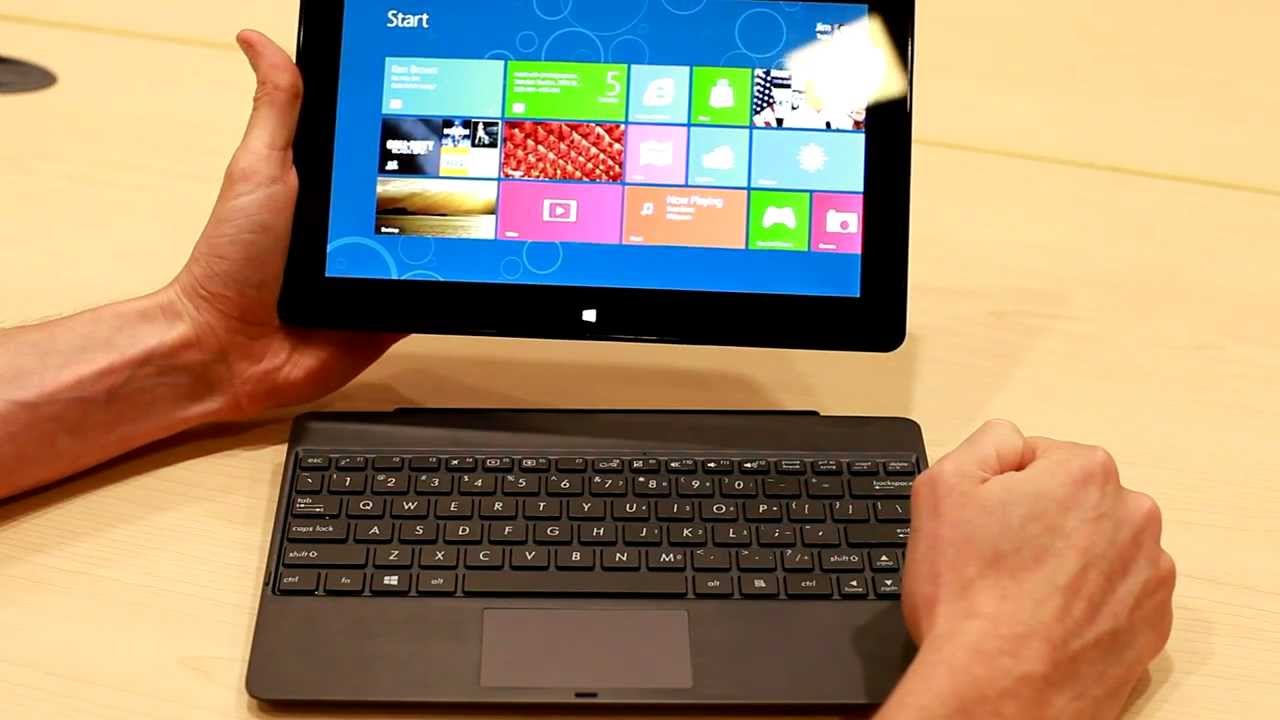
At a press conference on Monday led by Asus Chairman Jonney Shih, both Asus and Nvidia introduced the world's first Windows RT consumer device: essentially a Windows 8-based 10.1-inch convertible tablet running on an ARM-based quad-core Tegra 3 SoC.
So far pricing and availability is unknown, but Microsoft is expected to launch Windows 8 in October at the least -- Windows RT may arrive in the same timeframe or sometimes thereafter. An Android-based Transformer Prime with similar specs currently costs around $499 and the optional keyboard dock for around $99.
"The tablet will fulfill Microsoft’s vision to deliver a no-compromise, touch-first Windows experience," Nvidia said in a bog. "Nvidia and Asus have been working very closely with Microsoft to ensure that the Windows Metro interface runs beautifully on Windows RT systems powered by Tegra3."

Additional reports have stated that the tablet is called "Asus Tablet 600" and shown running Windows RT Tablet Preview edition during the press conference. It weighs 520 grams and measures just 8.35-mm thick, and features a rear-facing 8MP camera with LED flash, a front-facing 2MP camera, 2 GB of RAM, 32 GB of internal storage, Wi-Fi and Bluetooth 4.0 connectivity, a 1366 x 768 IPS IPS+display, a digital compass and NFC technology.
Like the Asus Transformer Prime, it will have an optional keyboard dock sold separately. The dock will have a trackpad and integrated battery.
"It’s already clear that consumers want a touch-friendly, mobile device with extremely long battery life," Nvidia said. "Tegra-powered Windows RT devices like Asus’s Windows RT tablet will be thin and light, silent with no fan, and able to deliver great performance with true multi-tasking). Plus, they’ll offer days of battery life."
Expect actual pricing and release details later this year.
I have been using win8 on my little ASUS MT101T, and it is AWESOME (granted, not so awesome on the desktop platform, but that is not the point). The latest win8 release runs much faster (though the setup time was much longer, and the first hour was nearly unusable while everything was syncing with various online services... but after that it is very slick), improved my battery life by an hour or more, the touch finally works flawlessly (first version I could only use the touch screen like a mouse, and I could not get charms to work. second version was better, but touch would revert to mouse mode after sleep, but charms and multi touch worked finally. Now it all works right and I can use it in touch or key/mouse mode with no problem on either interface.).
My only complaint is in the graphics department (but it is an old Atom... so what do you expect?). Throw in a better gpu, more efficient cpu, and a monitor that does not have to run in stretch mode to work right and I will be all over it in a heartbeat.
Win8 is not worth upgrading to for the desktop, but for small netbooks and tablets it is really something wonderful. And if it runs this snappy on a 3 year old netbook (or rather a netbook using 3 year old parts), then I bet it will be much better on something more modern.
Doesn't anyone take the time to proof read this stuff. I know that it's petty to scoff about such issues. but it is so common on this site that I think it is worth mentioning. It really doesn't take much effort to spot these kind of mistakes, just basic misspellings that any middle/high school student could find. This is especially baffling because this is supposed to be professionally written material.
I would buy one of these.
My dream tablet PC would be as follows:
CPU: Either a High-End AMD Brazos (E-450) OR a low end, single module (Dual Core) AMD Trinity such as the A6-4455M
DISPLAY: 12 inch IPS panel (I find 10 inch too small) with 2560 x 1440 resolution
and a keyboard dock like the ASUS Transformer
WINDOWS 7 Dual Boot with ICS Android (Android for quick boot/checking emails via touch-screen, Windows 7 for real work)
No capital letter after a full stop. You should not start a sentence with but. If it was supposed to be a comma then that's still a mistake.
"It really doesn't take much effort to spot these kind of mistakes"
Kind should be plural.
If you are going to be a dick about spelling and grammar at least get it right yourself.
say hello to "20min" battery life =(
They gotta "scale down" mobile form factors with weaker chips that barely sip power insted of drinking it wholesale. It really is a tradeoff untill they make a seroius breakthough in batteries.
And that would not be the whole issue. Who would like to hold in their hands a portable heater that blows hot air in the summer. It might be good during the winter nights but it won't be very cool during hot summer days.
Wishes like the one above show that there are lots of kids who have no idea what they are talking about.
Unless maybe this Operating System will be best used for searching porn...
I don't understand why tablets have to have low-spec hardware (netbook hardware). The ultrabooks are essentially similar in size, and they use higher-powered hardware.
Tablets do not necessarily need to be "toys".
The iPad 3 has a 42.5 Watt-hour battery. With the A5X chip, it gets 6-10 hours battery. My 11.6" Acer netbook has a 47 Watt-hour battery, and gets about 6-7.5 hours battery, which utilizes an AMD Fusion C-60 APU. An x86 isn't going to mean 20 min battery. With a rough calculation (assuming 6 hour battery-life), my unit drains ~8 watts per hour, which includes screen, wifi, CPU, GPU, and chipset. in a "normal" tablet unit (say, an iPad 2, which uses a 25W-hr battery), that would translate to about 3 hours battery, assuming the same 8 watt drain. Obviously down-scaling the screen, motherboard, using low-voltage RAM, and utilizing a more efficient x86 CPU, such as AMD's Z-01 APU (5.9W TDP vs the C-60's 9W TDP) will decrease power draw, so it would look more like 5 hours battery, vs 7. While a significant difference, it's still do-able. Also keep in mind, this is all on the aging 40nm fabrication process. 28nm is the norm, which will further decrease power draw.