




Artemis II will use laser beams to live-stream 4K moon footage at 260 Mbps — one giant step beyond the S-band radio comms of the Apollo era

Artemis II will use laser comms to live-stream 4K moon using the O2O system
(Image credit: NASA)

NASA’s Artemis II mission blasted off on Wednesday. Now brace yourselves for exciting high-resolution 4K footage live-streamed from the surface of the moon thanks to NASA's laser-based O2O system. The cutting-edge Orion Artemis II Optical Communications system (O2O) will be used to beam 4K moon footage at up to 260 Mbps. We should also be treated to never-before-seen views of “the far side of the Moon, using Nikon digital cameras,” reports The BBC’s Sky at Night magazine.

(Image credit: NASA)

So, what is O2O? NASA prepared a page dedicated to the technology ahead of the beginning of the Artemis II mission, here. Basically, O2O is a laser-based communications system that will be able to pipe the headlining 4K footage from astronauts on the moon to the Earth. Data rates of 260 Mbps can be achieved by O2O, and it isn’t just for fancy videos; it will also be used for fast and efficient transmission and receipt of procedures, pictures, flight plans, and more.

Meanwhile, on Earth, laser ground stations are situated in Las Cruces, New Mexico, and Table Mountain, California. These locations were chosen for their typically clear skies, important for fast and reliable laser communications.

Article continues below

However, the astronauts will also use traditional radio communications to stay in contact with the ground team via NASA's Deep Space Network (DSN). With prior mention of the potential for cloud interference, this could be an essential backup. DSN was the key communications tech used by Voyager, the Mars rover, and Artemis I.

Losing sight of the Earth on a planned mission to the far side of the Moon will block both laser and DSN comms, notes the source report. NASA is well aware of this ‘dark window,’ which is estimated to last for 41 minutes.
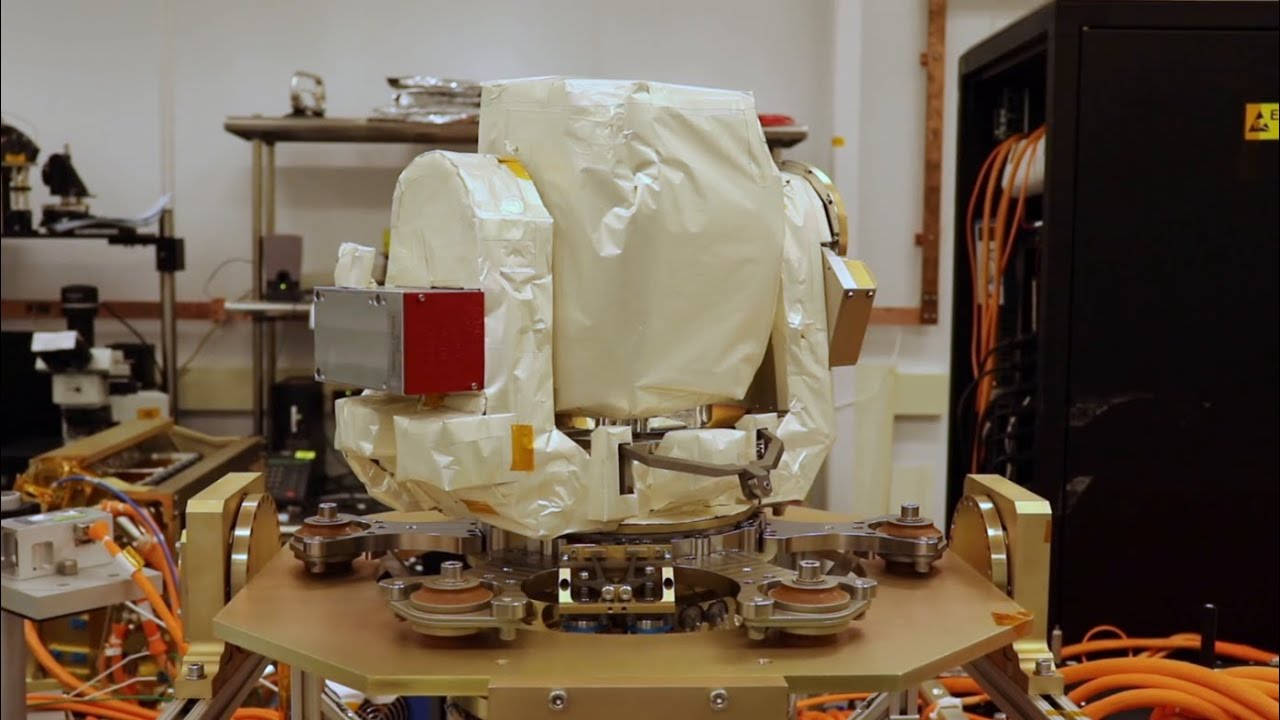
O2O Optical Module - YouTube O2O Optical Module - YouTube
Watch On

If you aren’t that impressed by the 260 Mbps O2O laser comms terminal's performance, NASA’s page about this laser tech highlights a Lunar Laser Communications Demonstration it has completed that achieved 622 Mbps. Moreover, some nearer-Earth space laser comms projects have reached data speeds up to 200 Gbps.

Google Preferred Source

Follow Tom's Hardware on Google News, or add us as a preferred source, to get our latest news, analysis, & reviews in your feeds.

Mark Tyson
News Editor

Mark Tyson is a news editor at Tom's Hardware. He enjoys covering the full breadth of PC tech; from business and semiconductor design to products approaching the edge of reason.

  • ArcadianR
    We would like to invite you to join the rest of us who live in the twenty first century and who thus speak Metric.
    Reply
  • SmoothBokeh
    ArcadianR said:
    We would like to invite you to join the rest of us who live in the twenty first century and who thus speak Metric.
    Please show me where in the article there was any unit of measure that would use metric??

    Also, lots of people use Imperial.
    Reply
  • beyondlogic
    SmoothBokeh said:
    Please show me where in the article there was any unit of measure that would use metric??

    Also, lots of people use Imperial.
    a large amount of the world uses metric only the usa uses imperial mainly and a few other countries.

    imperial is prone to error
    Mars Climate Orbiter crash.
    was one such incident

    another was a plane was wrongfully fuelled due to getting the conversion wrong.
    Reply
  • USAFRet
    beyondlogic said:
    a large amount of the world uses metric only the usa uses imperial mainly and a few other countries.

    imperial is prone to error
    Mars Climate Orbiter crash.
    was one such incident

    another was a plane was wrongfully fuelled due to getting the conversion wrong.
    And still, nothing in that article stated metric or imperial.
    Reply
  • bit_user
    Speaking of video showing the moon, one thing I know about the lunar surface is that the color of the regolith is quite dark. I think like dark grey black volcanic rocks you'd find on Earth. The reason the moon seems to shine so brightly is merely an effect of the immense amount of energy it's receiving from the sun.

    According to this, it's receiving 1 kW of solar radiation per m^2:
    https://what-if.xkcd.com/13/
    BTW, that's a really fun read - especially if you ever wondered about stuff like how many laser pointers it'd take to illuminate the moon.
    Reply
  • helper800
    beyondlogic said:
    a large amount of the world uses metric only the usa uses imperial mainly and a few other countries.

    imperial is prone to error
    Mars Climate Orbiter crash.
    was one such incident

    another was a plane was wrongfully fuelled due to getting the conversion wrong.
    None of those events were caused by imperial units being, "prone to error."
    Reply
  • Conor Stewart
    ArcadianR said:
    We would like to invite you to join the rest of us who live in the twenty first century and who thus speak Metric.
    The only units I saw in this article were Mbps, Gbps and minutes, so what are you on about?
    Reply