









Arm to sell its new AGI CPU in China — 'we would expect the demand for this product to be just as strong in China as it is in the rest of the world'
Despite sanctions that limit IP licensing.
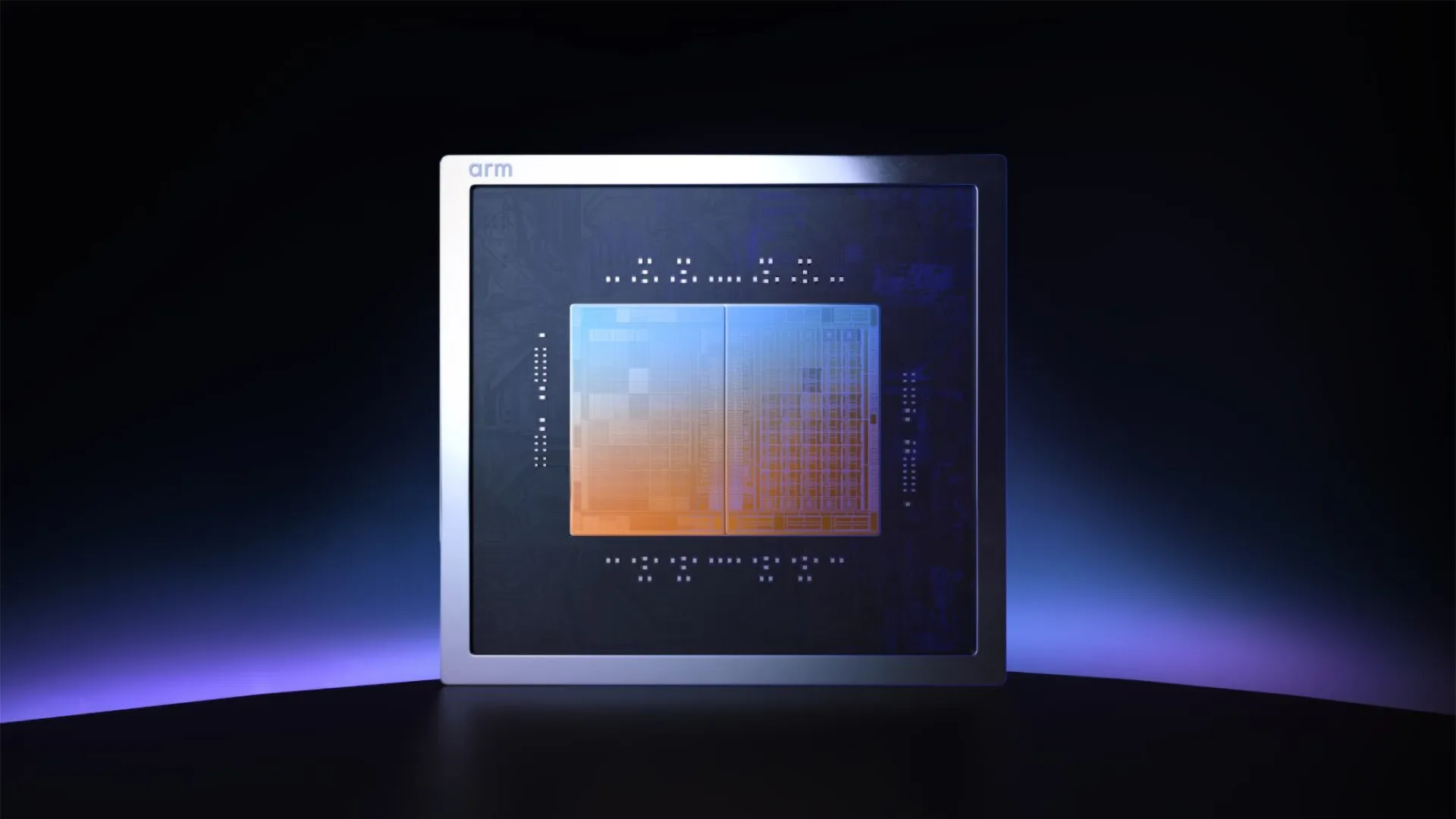
Arm's introduction of its AGI CPU last week was an expected yet, still a milestone event that marked the transformation of Arm from a technology IP licensor into a supplier of standard CPUs competing directly with AMD, Ampere, and Intel. But the surprises did not end there, as the company intends to sell AGI processors to customers in China, despite the fact that Neoverse V3 cores that power the new silicon cannot be licensed to Chinese CPU developers due to sanctions.
"We just do not have any customers today that we are able to talk about publicly," said Rene Haas, chief executive of Arm, in an interview with ChinaDaily. "But we would expect the demand for this product to be just as strong in China as it is in the rest of the world."
Arm's AGI dual-chiplet processor packs 136 Neoverse V3 cores with 2 MB L2 cache per core running at 3.70 GHs, features a 12-channel DDR5 memory subsystem supporting 8800 MT/s memory, and has an I/O that supports 96 PCIe Gen6 lanes with CXL 3.0 on top for caching and memory expansion. The CPU is made using a 3nm-class process technology and consumes around 300W.

While Arm certainly would like to sell its AGI CPU everywhere, an interesting wrinkle from the announcement is that these processors will be available to buyers in China. This is a bit surprising as Arm cannot license its HPC-oriented Neoverse V cores to entities from the People's Republic (PRC) due to export restrictions. If Arm were to provide this core (or related design, such as CSS) directly to a Chinese chip designer, that would transfer advanced semiconductor know-how to a potential foe, something current U.S./U.K.-aligned controls aim to limit. However, the Arm AGI CPU is a finished product, not IP, which enables Arm to sell it to Chinese entities.
As Arm's AGI processor is a commercial semiconductor device, and by selling it, no design transfer occurs, its export is governed by different rules, such as performance thresholds like absolute performance, compute density, interconnect bandwidth, and so on. As it turns out, Arm's AGI processor with 136 cores offers performance that is compliant with the current U.S./U.K.-aligned export controls.
Arm positions Neoverse V3 as its fastest infrastructure and supercomputer core to date, but unlike prior generations, the company has not disclosed FP32/FP64 throughput, leaving only indirect clues from SIMD width and pipeline count. As a result, any FLOPS estimate today is inferred, not specified, so we cannot really say whether or not Chinese entities can now get a high-performance HPC-oriented processor with a high core count without any restrictions.
This is particularly interesting as Arm offers a reference-design 2-node blade, which is designed to fully populate a standard air-cooled 36kW rack that delivers 8160 cores. Arm has also teamed up with Supermicro to develop a 200 kW liquid-cooled system that can accommodate 336 Arm AGI processors and deliver over 45,000 CPU cores in a single deployment. Obviously, such building blocks can be used to build actual supercomputers with decent FP32 and FP64 throughput, possibly giving Chinese entities an opportunity to get modern Western supercomputer technologies.
Get Tom's Hardware's best news and in-depth reviews, straight to your inbox.

Follow Tom's Hardware on Google News, or add us as a preferred source, to get our latest news, analysis, & reviews in your feeds.

Anton Shilov is a contributing writer at Tom’s Hardware. Over the past couple of decades, he has covered everything from CPUs and GPUs to supercomputers and from modern process technologies and latest fab tools to high-tech industry trends.
-
bit_user Reply
Why is that surprising? Can't you buy the latest EPYC and Xeon CPUs in China? If so, then it's only logical that ARM's new server CPU would also be available there.The article said:But the surprises did not end there, as the company intends to sell AGI processors to customers in China, despite the fact that Neoverse V3 cores that power the new silicon cannot be licensed to Chinese CPU developers due to sanctions.
One big difference between IP licensing and CPU sales is that the latter can be shut off at any time. Whereas, in the former case, if they have the IP, they can potentially just keep making their own chips for as long as they want.
Well... you can see here that "the Vector datapath to be 2x128 bits or 4x128 bits":The article said:Unlike prior generations, the company has not disclosed FP32/FP64 throughput, leaving only indirect clues from SIMD width and pipeline count. As a result, any FLOPS estimate today is inferred, not specified, so we cannot really say whether or not Chinese entities can now get a high-performance HPC-oriented processor with a high core count without any restrictions.
https://developer.arm.com/documentation/107734/latest
I think it's a pretty safe bet they went with 4x128 bits. They've also said it supports an all-core clock speed of 3.2 GHz. Assuming all vector pipelines are capable of FMA, I'd therefore expect throughput of 32 * 136 * 3.2 GHz = 13.9 fp32 TFLOPS or 6.96 fp64 TFLOPS. That's well below what max core-count AVX-512 equipped EPYCs and Xeons can already do, not to mention HPC-oriented GPUs.
So, in terms of raw compute power, it's really nothing special. Where it probably shines is more in the realm of integer performance per W. Not to mention I/O performance, with its PCIe 6.0 and CXL 3.0 support.