





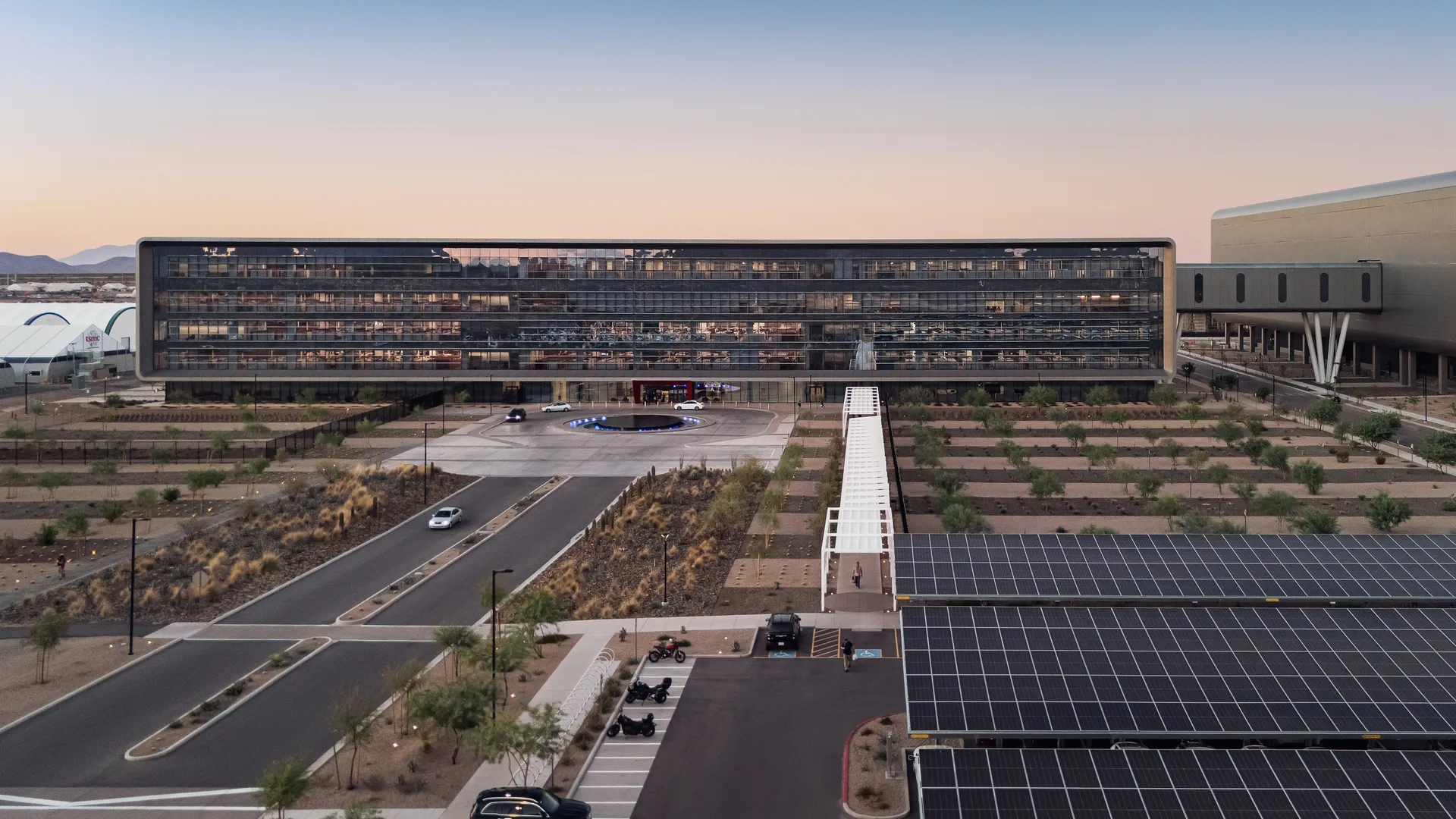
TSMC allocates $20 billion to Arizona expansion — project faces water and labor shortages, complicated by visa rules
Despite challenges, TSMC is optimistic about Fab 21.
TSMC's board of directors on Tuesday approved a capital injection of $20 billion into the company's wholly owned subsidiary TSMC Arizona, which will be used to continue the expansion of the Fab 21 site. While the allocation proves that the project is moving smoothly, the company is still facing multiple challenges in Arizona, including labor and water shortages, according to a report from Taipei Times.
The approval of a capital injection is a formal procedure that grants TSMC management the right to use the money for the expansion of Fab 21, and while it is an important milestone, it is a formality, as this is a part of the $165 billion expansion plan that the company introduced last year. What is more important is that TSMC's Fab 21 earned $514 million in profit last year, according to Yeh Chun-Hsien, Taiwan National Development Council (NDC) Minister. Making a profit in a new fab in the first year of full-scale operation is quite a big deal for foundries.
TSMC informed Taiwanese officials that the startup phase of its first Arizona fab proceeded more smoothly than originally projected, which strengthens confidence in the long-term viability of the site, according to Yeh Chun-hsien. At the same time, the company continues to deal with multiple operational difficulties in the U.S., including limited water availability, labor shortages, visa complications for foreign employees, concerns about long-term electricity supply, and regulatory compliance, the report claims.

Water access remains one of the most pressing issues for the project due to the dry and hot climate in Arizona. The company has previously attempted to ease concerns regarding water usage and long-term water supply at Fab 21 by incorporating extensive water recycling and treatment infrastructure capable of supporting advanced fab requirements, though it is unclear whether this has already been done. TSMC hopes to receive assistance from Arizona authorities to ensure reliable water resources for its operations, though environmental and electricity consumption regulations remain concerns as they complicate the project and prevent securing stable power delivery for the site.
Labor availability also remains another major issue. To make matters worse, the company faced difficulties obtaining visas for overseas personnel needed to support operations in Arizona due to the Trump administration's $100,000 fees on the entry of new H-1B visa holders.
In addition, TSMC is encouraging Taiwanese suppliers of semiconductor chemicals and manufacturing equipment to establish operations in the U.S. adjacent to its Arizona campus. However, Yeh noted that enabling broader supplier migration could require adjustments to Taiwan's investment-related laws.

Follow Tom's Hardware on Google News, or add us as a preferred source, to get our latest news, analysis, & reviews in your feeds.

Get Tom's Hardware's best news and in-depth reviews, straight to your inbox.

Anton Shilov is a contributing writer at Tom’s Hardware. Over the past couple of decades, he has covered everything from CPUs and GPUs to supercomputers and from modern process technologies and latest fab tools to high-tech industry trends.
-
TechieTwo If they generated $514 million in profit the first year they can certainly pay for electricity generation systems and other needs instead of taxpayers paying.Reply -
PEnns Reply
Well, they are not an AI company, I would trust them to do that.TechieTwo said:If they generated $514 million in profit the first year they can certainly pay for electricity generation systems and other needs instead of taxpayers paying. -
passivecool Reply
Why do the first posters never bother to read the article beforehand?TechieTwo said:If they generated $514 million in profit the first year they can certainly pay for electricity generation systems and other needs instead of taxpayers paying.
TSMC had net revenue after taxes of USD 3.8 billion, running a profit margin of (an amazing) 45%
So yes, they can afford to implement total fab AIO closed loop cooling and take care of their own energy needs. But they will only want to if they have to.
It is a weird USA 'socialism' autoimmune condition that allows large corps to roll over the immense infrastructure costs onto the local consumers.
If I were a world leader with all my fabs where china is drooling down my neck to take over the country in which i operate - I would also be interested in derisking and opening fabs in the main distribution markets. You can make energy anywhere. Okay creating the infrastructure to train people to become competent employees is a whole different story. To not break every TH rule I will omit any comment on the policies required to not shoot the transition in the knee. Both knees. And the head. Twice. -
hotaru251 Reply
Water access remains one of the most pressing issues for the project due to the dry and hot climate in Arizona.
who could have foreseen this....oh wait EVERYONE...
the entire region has water issues for decades. Heck iirc they expect it to be so bad unless something changes (and this was b4 ai and their water chugging selves took root) that it could be just a few decades before its uninhabitable due to lack of water. -
jabliese Just in case anyone important reads this, the Rust Belt has lots of water. And lots of potential employees.Reply -
trica *Builds fab in a LITERAL DESERT.Reply
*Water issues.
*"But, who could have PosSiBLy FOreSeEN such difficulties?"
Anyone above room temperature IQ, that's who. -
ManDaddio Why can't they train people? Or sponsor programs at colleges to train people?Reply
There is no need to import people.
Water can be piped in if the desire was there. Or recycling the water as done in many industries.
And Arizona is a good place for a fab for many reasons. People should do research rather than listen to bad news or propaganda. -
Sulio They don't have labor shortages due to visa issues, they just refuse to hire Americans because we don't stand for the way they want to treat their employees.Reply