Microsoft Reveals a More Aggressive Smartphone Plan
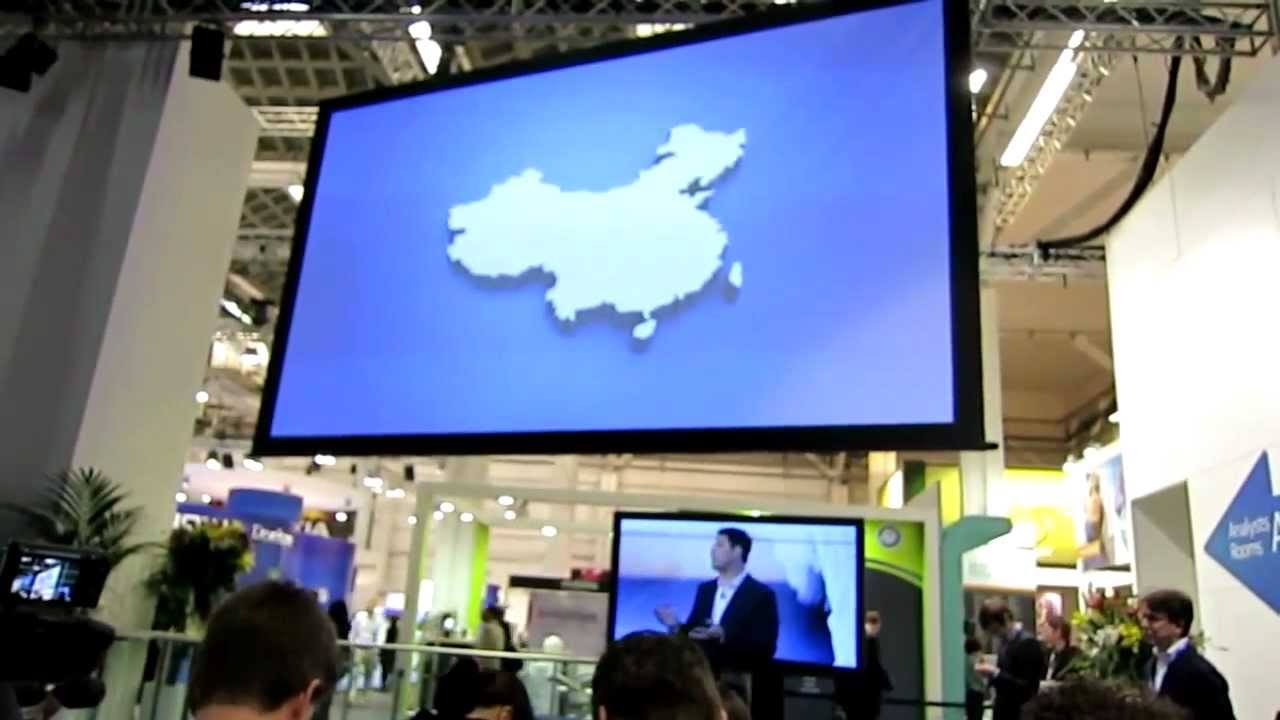
Microsoft is at MWC this week and the company yesterday attended Nokia's press conference to talk about about its smartphone strategy.
Terry Myerson, Corporate Vice President of Windows Phone Division, explained Microsoft's new smartphone strategy earlier at Nokia's press conference.
Lumia 610: 800 MHz S1 & 256 MB of RAM
At the present time, WP7 trails Android and iOS in terms of market share by a decent figure, but Microsoft still has ambitions to be number one or two within the next couple of years. To that end, the minimal hardware specifications for WP7 have been lowered. According to Terry, the requirement is now a SoC with performance greater than or equal to Qualcomm's 800 MHz 7x27A S1 Snapdragon and 256 MB of RAM. This increases Microsoft's potential customer base by 60 percent.
Microsoft's announcement ties in perfectly with Nokia's Lumia 610 release, which is purportedly going to retail for between $100 and $150. However, this won't be the only budget oriented WP7-based smartphone. In our discussions with Microsoft, we were clearly told that more will be launched soon.

This is a better strategy in our opinion. Microsoft can't expect to only play for the high-end smartphone market. In order for WP7 to be truly successful, it must be adopted by the wider public.
Wide Family of 1.0 GHz + WP7-based Smartphones
Acer Allegro
Dell Venue Pro
ZTE Tania
Fujitsu IS12T
HTC Radar
HTC Titan
HTC Titan II
Samsung Omnia W
We're still not sure now feasible this strategy will be in the long term. While the Lumia 610 has an attractive price tag, it also is a little slow when hammered with high processing tasks. For example, input lag exceeds 300 ms if you if you try to scroll an app when it starts up. This is a phenomenon we first noticed on the Lumia 710, but it applies much more to the 610's reduced hardware performance profile.
Hopefully, Microsoft is able to make further optimizations to compensate for the lowered hardware requirements of WP7. While it's appealing to pay less, we don't think that should come at the expense of a snappy and fast Metro interface.


Keep the controls on your OS so carriers can skin it and keep your phones updated with software and that is all I want.
We are sick and tired of the broken, fragmented, shoddy supported likes of the Android world.
LOL
Keep the controls on your OS so carriers can skin it and keep your phones updated with software and that is all I want.
We are sick and tired of the broken, fragmented, shoddy supported likes of the Android world.
I have both a WP7 and Android with ICS.
Nokia Lumia 710 comes with a 1300 mAh battery and Nokia Lumia 800 comes with a 1450 mAh battery.
On the other hand Samsung Omnia W comes with a 1500 mAh battery and an AMOLED screen (Lumia has a LCD screen) which is far better than the LCD in terms of power consumption. But then how come the Lumia 710 has a talk time of 7 hours, Lumia 800 of 9 hours and the Omnia W of 6 hours?
It doesn't add up.
Specs wise those three phones have no big difference hardware wise (except the 16 GB memory of Lumia 800) and the only difference point is the battery which is in my opinion a big factor.
Here is the proof to back up my claim
http://www.crazy4cellphones.com/blog/nokia-lumia-710-vs-samsung-omnia-w-8350.html
"In battery performances the Samsung Omnia W has larger capacity with li-ion 1500 mAh battery, the 200 milliamps doesn’t sound that much but its still better than the Nokia Lumia 710 li-ion 1300 mAh battery. With the web browsing test the Omnia W survived with a whopping 2 hours 40 minutes than the Lumia 710. This is all because of the bigger battery and power saving Super AMOLED technology. Even in video playback the Lumia was underperformer in front of Omnia. The Samsung Omnia W played continuous video playback for 7 hours 49 minutes but the Nokia Lumia 710 only for 3 hours 27 minutes. Again thanks to the Super AMOLED display."
I do not believe Rim will sell an additional 30% in 2012 compared to 2011.
Windows mobile I am not so sure about, because there will be plenty of people leaving the android and ios camps in order to try out new software. But relatively few will leave ios and android for blah-berry (been there done that)
It's not talked about much, but worldwide RIM is huge. Just losing attention in North America.
Something is wrong with this projections. I do not even own any apple products, and I am not a fanboy, in fact I am very happy using rooted android devices.
As your share increases, it's hard to continue to maintain that growth, because you get closer and closer to your full potential.
It's hard for me to believe that apple has hit their potential, and rimm has not. Rimm has been in this game much longer, and from what I can tell in my office of 50 or so coworkers most have left rimm for android and ios.
I agree that Rimm is having an easier time growing in emerging markets than North America, but so are Apple/Samsung/Nokia.
I am just saying if these projections were correct Rimm's share price would not be trading at $14 dollars a share.
I hate to tell ya this, but apple sucks rocks everywhere EXCEPT north america.
I know that, you know that, but the millions of other isheep dont know that.
You have to accept the fact that most people are sheep, and ios products have all the buzz in the industry.
Most people are not like us, they dont root their devices, jailbreak, run command line.
Well said.
And all those coworkers who have traded their devices in, are they planning to buy a new phone next year? Probably not, as they'll ride out their contracts and those are not going to be new customers.
Every customer they add is one less customer they can use as growth. Can't you see how that will cause their growth to slow down?
so figure people with smartphones will upgrade on average every 18 to 26 months.
Either way, old customers aren't considered growth, at most you get to maintain those numbers. People who have not upgraded or changed platforms, those are the growth numbers.