Introduction
Ready For The Mass Market? Dual Athlon Boards

In principle, two processors are better than one. This fact is in line with the approach we've often taken: that you can never have too much performance. Even an Athlon XP 2000+, which is already quite powerful, quickly reaches its limit when dealing with certain applications. This is confirmed by the shop-talk among hardware fans, who like to have their films converted to DVDs in a matter of minutes. In other words, we need more computing power! It should be mentioned here that the restricted distribution of dual CPU systems can only be attributed to a lack of software support. Admittedly, the search for perfect software which uses the full capacity of two processors is like looking for a needle in a haystack. So, where are the multi-threading applications we've been hearing about?
Even among the heaps of modern PC games, the aging Quake III stands out because it actually supports dual CPU operation, albeit in a rudimentary way. On the other hand, using a program for converting DVD films to space-saving MPEG-4 format is a classic killer application - Xmpeg or Flask Mpeg uses 100% capacity of both CPUs.
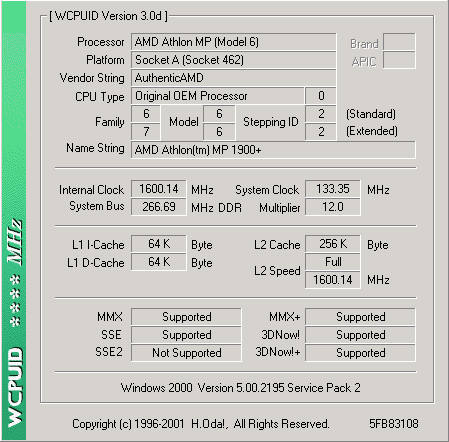
Testing basis: Two Athlon MP 1900+'s.

And don't forget, two processors mean prestige - even the BIOS logon is enough to get you noticed among your friends.