




Fueled by Musk's TeraFab tie-in, Intel's market cap hits highest level in 25 years — tops $300 billion on CPU, AI, and foundry momentum
A 3.5X increase since April, 2025
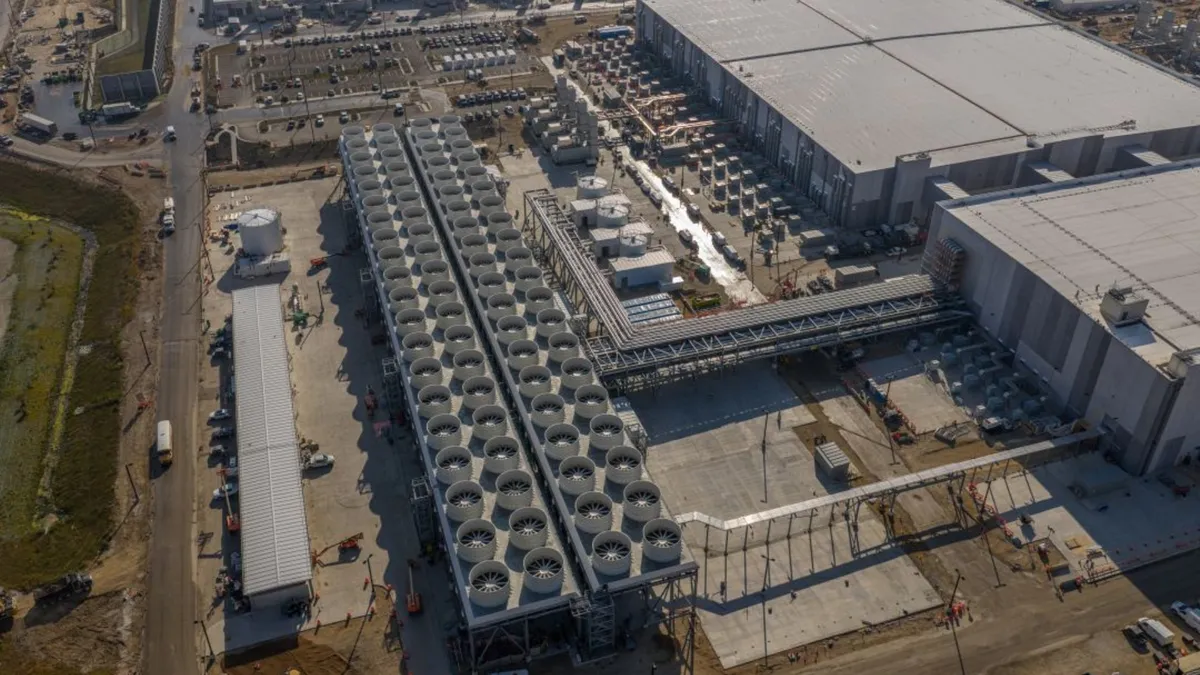
With production of Core Ultra 300 'Panther Lake' and Xeon 6+ 'Clearwater Forest' ramping at Intel's fab in Arizona, Intel is seemingly on the right track to recovery in the coming years. While it's not out of the woods yet, Intel's market capitalization on Thursday was its highest in over 25 years, or since the dot-com boom went bust, according to CompaniesMarketCap.com.
Intel's market capitalization increased to $305 billion on Thursday, up 3.5X from mid-April 2025, and up 2.8X from August 20, 2025, when the U.S. government announced plans to acquire a 10% stake in Intel. The company is now the world's 48th most valuable company by market capitalization. While it trails ASML, AMD, Applied Materials, Lam Research, and other semiconductor peers, it is well ahead of KLA, IBM, Siemens, and Texas Instruments.
The sharp increase follows Intel's announcement of Google's commitment to use Xeon processors for years to come, which emphasizes relevance of Intel's CPUs; the TeraFab partnership, which gives a nod to Intel's capabilities in design, produce, and package high-performance processors at scale; and a host of various AI-related narratives meant to demonstrate applicability of the company's products in the rapidly growing artificial intelligence sector.

Intel's peak market capitalization was $502.71 billion at the height of the dot-com cycle in August 2000, when the company dominated both PCs and web servers. In today's dollars, that would be around $1.0 trillion. Formally, Intel's current capitalization of $305.25 billion is higher than its $219.1 billion capitalization in late 2003 when the company took the rapidly growing laptop market by storm with its Centrino platform and re-accelerated its growth.
Nonetheless, $305 billion is higher than Intel's peaks in recent years: $257.23 billion in mid-2018 due to Intel's dominance in the growing data center sector $273.43 billion in early 2020 due to the cloud computing boom, and $262.87 billion in April 2021 due to the PC market and cloud computing growth amid the pandemic. That said, Intel is indeed going in the right direction, at least if you ask investors.
Still, Intel's valuation history reflects a transition from a dominating CPU vendor commanding PCs and servers to a mature, execution-sensitive semiconductor company. Intel's market capitalization today is driven more by its strategic narratives associated with AI, foundry, and process technology ambitions, and mid-term product roadmaps than by its earnings. The recent climb toward ~$300 billion indicates renewed investor optimism, but unlike the 2000 peak, this optimism is based on expectations of a turnaround rather than on the already achieved dominance and expectations for skyrocketing sales.

Follow Tom's Hardware on Google News, or add us as a preferred source, to get our latest news, analysis, & reviews in your feeds.

Get Tom's Hardware's best news and in-depth reviews, straight to your inbox.

Anton Shilov is a contributing writer at Tom’s Hardware. Over the past couple of decades, he has covered everything from CPUs and GPUs to supercomputers and from modern process technologies and latest fab tools to high-tech industry trends.
-
timsSOFTWARE I don't know where current Intel designs came from - I know they are started some years before - but it does seem like, whatever they're doing, it's coming from the right place. But that's because their current designs are class-competitive. What I expected - based on what Lip Bu Tan's intro suggested - was that Intel was going to sink into acceptance of 2nd (or worse) place. And I don't know if where they are now is a reflection of current strategy, or past strategy - but getting back to being in competition for #1 is absolutely what they needed.Reply -
Pierce2623 I mean I guess you could call selling Xeons “AI momentum” if you get creative but we all know Intel missed the boat on AI even worse than AMD did.Reply -
Thunder64 ReplyGururu said:If you bet on Intel, you won big.
You mean if you had inside knowledge (illegal insider trading) and knew that Intel would get The US Gov't, Nvidia, and now Alphabet to invest in Intel, you won big.
Cut the crap. If you didn't know any of that, you got lucky. -
thestryker Reply
Intel's stock had tanked to the point that the valuation was below the actual value of their assets. Once that happened the math became real easy: if the company survived the stock price was going to go up so the bet was simply whether or not the company would survive. Doesn't take insider trading to understand that reality.Thunder64 said:You mean if you had inside knowledge (illegal insider trading) and knew that Intel would get The US Gov't, Nvidia, and now Alphabet to invest in Intel, you won big.
Cut the crap. If you didn't know any of that, you got lucky. -
Thunder64 Replythestryker said:Intel's stock had tanked to the point that the valuation was below the actual value of their assets. Once that happened the math became real easy: if the company survived the stock price was going to go up so the bet was simply whether or not the company would survive. Doesn't take insider trading to understand that reality.
And you might've made some money in the long term without all of those investments, that is luck. -
Gururu Reply
It's the most advanced fab owned by the USA. That alone tells me if someone wasn't willing to invest, they were clouded by an "unhelpful" bias.Thunder64 said:You mean if you had inside knowledge (illegal insider trading) and knew that Intel would get The US Gov't, Nvidia, and now Alphabet to invest in Intel, you won big.
Cut the crap. If you didn't know any of that, you got lucky. -
Zaranthos I'm very happy about this. Intel was in danger of dying and that would have been a terrible thing for competition, jobs, and progress in general. Intel putting some focus in the GPU market couldn't have been timed better either since supply was lacking and driving prices to absurd levels.Reply
I also like seeing fab locations being more global and less tied to a single country or region as it protects the space from unknowns like natural disasters, war, or supply chain issues. AI and a focus on domestic production probably saved Intel and that's a good thing.
Now I'd like to see Microsoft start to feel the competition from android, Linux, and Apple so they could get back to focusing on a quality product people want to use instead of the our way or the highway approach to UI design, features (many people never wanted) enabled by default, bloat, and years old legacy support that could at the very least be made install conditional. -
TerryLaze Reply
According to whom?!?Zaranthos said:I'm very happy about this. Intel was in danger of dying
Intel always had enough money in the bank to keep going for many years, there was never a point they were in actual danger of dying, of taking a huge hit yes but nowhere near of dying.
Ms just became the second company to break 3trillion market cap.....they aint gonna feel nothin from nobody no time soon.Zaranthos said:Now I'd like to see Microsoft start to feel the competition from android, Linux, and Apple -
Thunder64 ReplyGururu said:It's the most advanced fab owned by the USA. That alone tells me if someone wasn't willing to invest, they were clouded by an "unhelpful" bias.
Please, don't insinuate I'm biased. As was said in "Idiocracy", I like money. It was a matter of knowing when it would hit a low. You know, buy low, sell high?