





AI data centers trigger massive 'irreversible' 76% electricity price spike in largest US region — federal watchdog demands tech giants pay for their own power infrastructure

Electricity transmission towers
(Image credit: Shutterstock)

Monitoring Analytics, the federally mandated independent watchdog that keeps an eye on the critical PJM Interconnection that distributes power around the U.S., said in a new report [PDF] that a massive 75.5% increase in power costs in the largest region of the U.S. has been directly caused by data centers, and it also blamed the regional market operator for failing to keep up with the rising demand. The price increases have been steep; wholesale electricity prices went up from $77.78 per MWh in the first quarter of 2025 to $136.53 per MWh in the same period of this year.

“The price impacts on customers have been very large and are not reversible,” the watchdog said in the report. “The price impacts will be even larger in the near term unless the issues associated with data center load are addressed in a timely manner, prior to the next BRA (base residual auction), scheduled for June 2026.” Monitoring Analytics says that PJM Interconnection is trying to rewrite the rules for the capacity market and bake in data center demands into its forecasts. The watchdog is critical of this proposal as it will raise the prices for all electricity consumers, putting an unnecessary burden on households and small businesses.
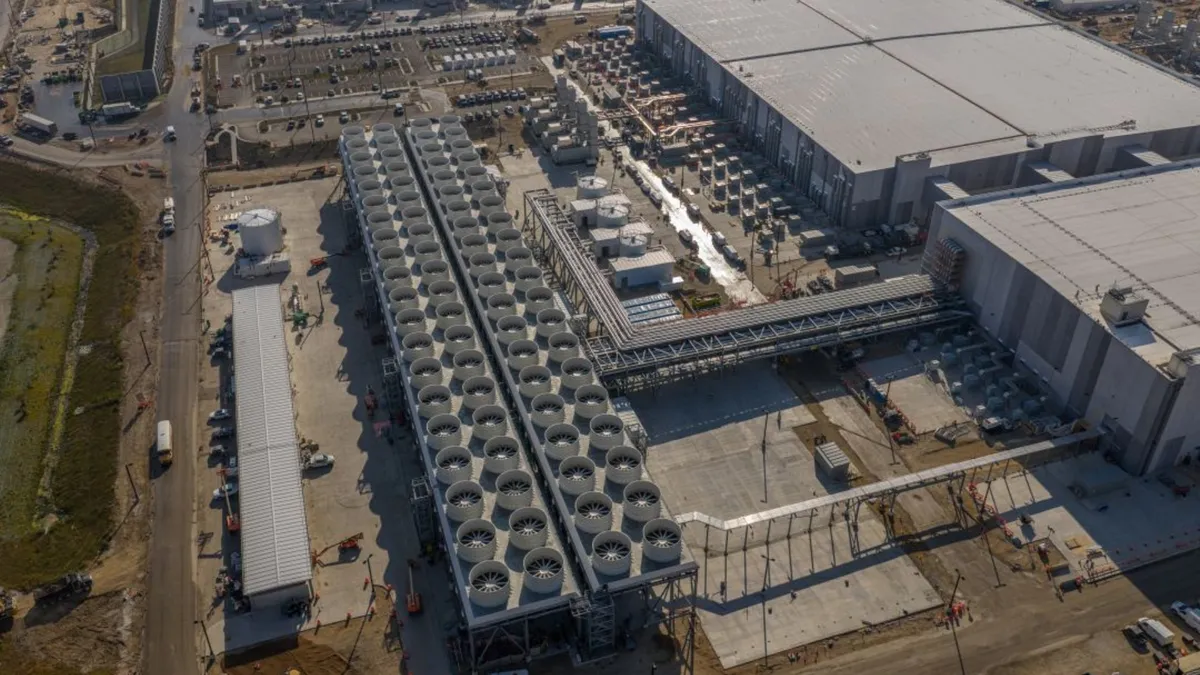
There is a possible solution to this problem: make data centers and other major consumers negotiate directly with power producers instead of mixing that demand with the BRA. This auction is where capacity is sold some three years ahead of when it’s needed, and including data center demand in the BRA will push prices up for everyone. In fact, the report says that without the AI infrastructure built out, the PJM Capacity Market would not have seen the high prices we’re experiencing now. So, by making data centers negotiate directly with power producers, this will ensure that the expanded capacity is solely shouldered by these large consumers and help keep utility bills stable for everyone else.

Latest Videos From

However, this is not within the interests of PJM Interconnection. After all, by keeping massive data center loads baked into the general capacity forecast, the power auction would result in higher prices as demand moves up, but supply stays at relatively the same level. This higher cost, in turn, would then be passed on to transmission operators and local utilities, eventually making its way into the bill of the individual consumer.

The increasing backlash against data center development, particularly its impact on electricity prices, has caught the attention of the federal government. In March of this year, President Donald Trump gathered some of the country’s biggest AI hyperscalers in the White House and made them promise that they would “pay their own way” when it comes to AI infrastructure costs. This is, in principle, what Monitoring Analytics is pushing for: have tech companies pay for their own power — both the electricity they consume, and the infrastructure needed for it.

Unfortunately, the “ratepayer protection pledge” is nothing but a promise, and it cannot force institutions like PJM Interconnection to not pass on the burden of cost to the average American unless Congress passes a federal law that forces the Federal Energy Regulatory Commission (FERC) to prevent cost-shifting.

Google Preferred Source

Follow Tom's Hardware on Google News, or add us as a preferred source, to get our latest news, analysis, & reviews in your feeds.

Jowi Morales
Contributing Writer

Jowi Morales is a tech enthusiast with years of experience working in the industry. He’s been writing with several tech publications since 2021, where he’s been interested in tech hardware and consumer electronics.

  • Pete Mitchell
    AI driving up the cost of RAM, SSDs, and now electricity. The AI companies should be paying 100% of the cost for the infrastructure and power generation required. But instead, as always, everyone else pays for it. Boo to the tech-bros.
    Reply
  • trica
    Pay your own way, billionaires.
    Reply
  • USAFRet
    'irreversible' ?
    There's always an OFF switch.
    Reply
  • hotaru251
    There is a possible solution to this problem: make data centers and other major consumers negotiate directly with power producers instead of mixing that demand with the BRA.

    or just make it if you use x amount of power that is over a specific normal threshhold you are required to fund expanding the grid and pay whatever it costs to not impact the normal consumers.

    those using excessive power should 100% be covering the usage demand to prevent others from being effected.
    Reply
  • micheal_15
    Fun fact: in the UK Wholesale electricity generation price is DOWN by over 75% over the past 24months. At some points there was excess energy on the grid from renewable sources, which had to be dumped to avoid overloads.

    But prices are UP by over 150%. Every single UK energy provider has at minimum TRIPLED their yearly profits.

    But they claim they need to DOUBLE electricity prices by the start of 2028.

    All because successive government allowed them to lump "wholesale per unit" with "shareholder dividends", and pretend its JUST the wholesale price. Co-incidentally every tory PM and Labour PM has 10s of millions in unexplained wealth generated during their time in power.......
    Reply
  • bill001g
    trica said:
    Pay your own way, billionaires.
    Technically they are and that is what is causing the problem. They also are paying double or triple or more for electricity ram gpu etc.

    The people/companies making the profit are the ones selling these in demand resources. Some very efficient power producers are making massive profits. There is no real way to fix this. All this stuff works like ebay. Whoever will pay the most gets the resources. The power companies that sell to end consumers bid for this power from the producers and have to pass along the high charges. To a point the power producers are not stupid. They would much rather sign a multi year contract with a power company selling to end consumers than some AI data center that might not exist in a couple years. They run the risk of a piece of paper promising to pay them for power that is now worthless. There are a lot of these power producers who are gambling and signing long term contracts with AI data centers. When the AI fails and they come begging to the government for a bailout they need to be laughed at and given nothing.
    Reply
  • rluker5
    If only there were a way to pass these costs on to the AI consumer.
    Get an unwanted and vaguely dubious search result summary from AI: $5 please.
    Hit an AI generated YouTube clip while scrolling: that will be $20.
    The prices might seem a little steep, but look at the crazy power consumption.
    Where is it all going? I don't think it would be this bad if everyone drove an electric car.

    Make people pay the actual cost and maybe decisions will be made.
    Reply
  • Shiznizzle
    If you yanks are not on the street with your pitchforks like the cuban housewives with their pots at the moment then you just need to be quiet. Even writing a letter to your elected congressional house member is better than nothing.

    Doing nothing is what billionaires hope you do because then the cost of their vanity Ai projects is paid by you, not them
    Reply
  • heffeque
    Shiznizzle said:
    If you yanks are not on the street with your pitchforks like the cuban housewives with their pots at the moment then you just need to be quiet. Even writing a letter to your elected congressional house member is better than nothing.

    Doing nothing is what billionaires hope you do because then the cost of their vanity Ai projects is paid by you, not them
    People with money will invest in solar panels, batteries, and enjoy cheaper bills, while lower-middle class will protest with some signs and not much more.
    Reply
  • bill001g
    heffeque said:
    People with money will invest in solar panels, batteries, and enjoy cheaper bills, while lower-middle class will protest with some signs and not much more
    Solar panel investment pay back times likely is somewhat helped by the high electrical costs. It is still fairly long time to break even. The loss of subsidies and china not dumping cheap panels any more has increased the costs. The new problem is the silly insurance companies. It is almost as though big energy is paying off the insurance companies. Even if you were to exclude the solar panels from the insurance they still want to increase the rates a lot because of some fear of increased roof damage from storms.
    Reply