Meta to fund seven new natural gas power plants to fuel AI data centers — Entergy partnership to deliver 7 gigawatts of power for Louisiana AI facility

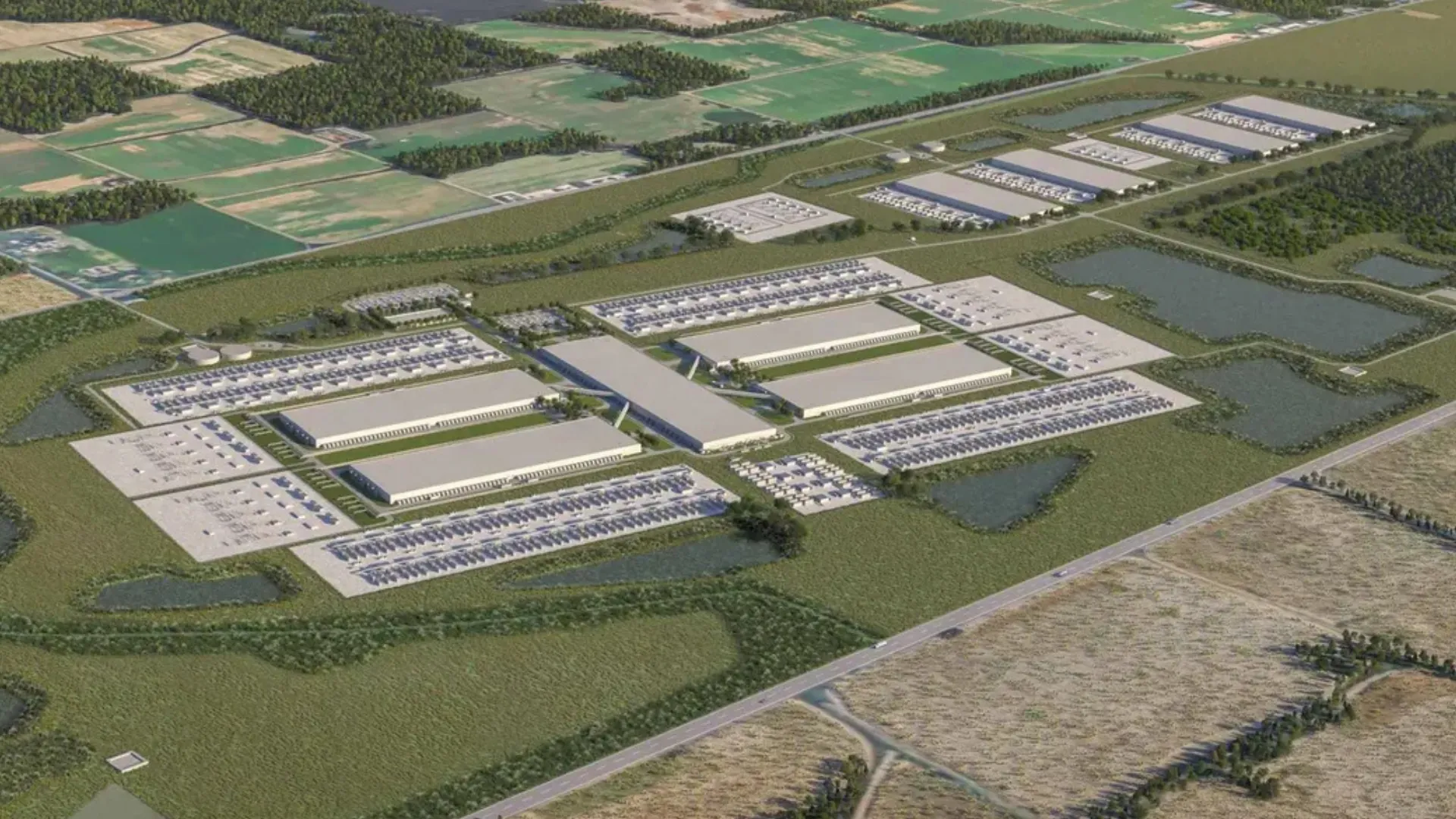
A rendering of Meta’s planned data center in Louisiana
(Image credit: Meta)

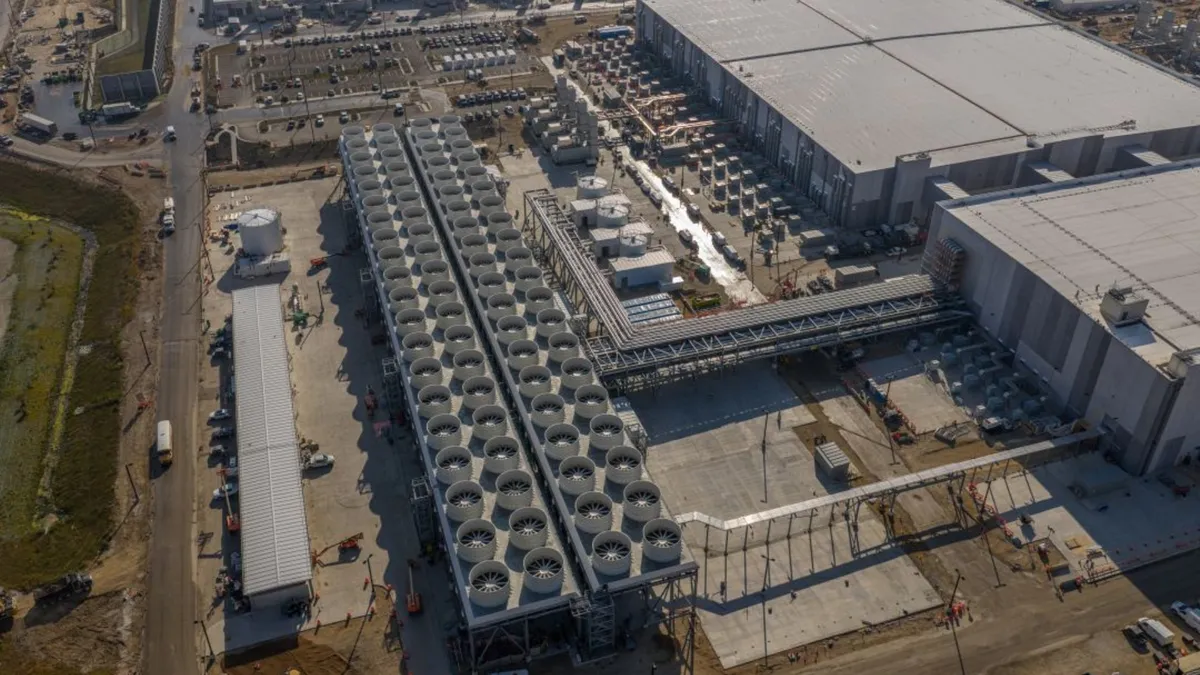
Meta is paying for the construction of seven new natural gas plants to supply its largest data center, massively expanding the fossil fuel infrastructure underpinning its AI buildout. The company reached a new agreement with Entergy Corp. to build the plants, which will provide an additional 5.2 gigawatts of electricity to the Hyperion campus in Richland Parish, Louisiana, Entergy's local subsidiary said Friday, as reported by Bloomberg.

Entergy received approval to build three gas plants last year, which will generate roughly 2.3 gigawatts of electricity for Meta. With the new expansion, Hyperion will be served by a total of 10 natural gas facilities, delivering more than 7 gigawatts. Entergy received regulatory approval for that initial batch of plants in 2025 and subsequently applied to connect additional gas generation to Louisiana's grid to meet rising demand. Still, the seven new plants will need their own sign-off from state regulators before construction can begin.

Article continues below

The deal is structured so that Meta “pays its full cost of service,” according to Entergy, which projects the agreement will deliver more than $2 billion in customer savings over 20 years. Meta declined to say how much it would spend on the gas plants and associated infrastructure, per Bloomberg. Of Hyperion's total power draw, approximately 5 gigawatts will go to compute workloads, with the remainder powering broader campus operations, a Meta spokesperson said.

All this comes amid a growing political fight over who pays for AI-driven electricity demand. Earlier this month, President Donald Trump demanded that technology companies pledge to cover their own power costs, ensuring residential bills don’t rise as a result of the data center infrastructure boom.

Rachel Peterson, Meta's vice president of data centers, says that the Entergy filing aligns with the so-called Ratepayer Protection Plans proposed by the White House and with Louisiana’s “business-friendly [regulatory] environment.” A Meta spokesperson said that the company remains committed to its climate goals, but didn’t elaborate on how building a total of ten gas plants to feed its AI ambitions fits within them.

The agreement includes a Meta commitment to help fund up to 2.5GW of new renewable energy resources, and the two companies also signed a memorandum of understanding to explore the future development and use of nuclear power.

Google Preferred Source

Follow Tom's Hardware on Google News, or add us as a preferred source, to get our latest news, analysis, & reviews in your feeds.

Luke James
Contributor

Luke James is a freelance writer and journalist.  Although his background is in legal, he has a personal interest in all things tech, especially hardware and microelectronics, and anything regulatory. 

  • Notton
    I wonder how long it will take before fossil fuels become so expensive that it's cheaper to build a wind and solar power plant with a sodium battery (or a hydrogen fuel cell)

    Louisiana is working on a bunch of off-shore wind farms, isn't it?
    Reply
  • LordVile
    Notton said:
    I wonder how long it will take before fossil fuels become so expensive that it's cheaper to build a wind and solar power plant with a sodium battery (or a hydrogen fuel cell)

    Louisiana is working on a bunch of off-shore wind farms, isn't it?
    Already is cheaper just takes longer and you get less capacity per area. Nuclear would be significantly better than all other options however
    Reply
  • usertests
    Notton said:
    I wonder how long it will take before fossil fuels become so expensive that it's cheaper to build a wind and solar power plant with a sodium battery (or a hydrogen fuel cell)

    Louisiana is working on a bunch of off-shore wind farms, isn't it?
    Natural gas doesn't have the same issues as oil: https://tradingeconomics.com/commodity/natural-gas
    Look out for some further big drops in solar costs: https://unchartedterritories.tomaspueyo.com/p/can-solar-costs-keep-shrinking
    This is a little off your question but worth a look: https://www.npr.org/2026/03/12/nx-s1-5737287/solar-panels-utilities-energy-saving
    Reply
  • jp7189
    Solar? Lol.

    7GW nat gas is the equivalent of 280 square miles of solar panels, and a heck of a lot of batteries. Food crops are a better choice for that land area.

    Im working on a datacenter project where they are covering every visible spot with solar to make the people happy. It amounts to just enough to power the lighting and some convenience plugs. No actual equipment.

    Long story, short, solar is just lip service for people that dont understand the scale of the math involved in these projects.

    The obvious solution is dont build the datacenters in the first place, but thats not gonna happen.

    ..and i agree that nuclear is by far the best choice, but popular opinion will never let that happen, so nat gas is all thats left.
    Reply
  • SSGBryan
    None of these will be on line until 2030 at the earliest.
    Reply
  • derekullo
    jp7189 said:
    Solar? Lol.

    7GW nat gas is the equivalent of 280 square miles of solar panels, and a heck of a lot of batteries. Food crops are a better choice for that land area.

    Im working on a datacenter project where they are covering every visible spot with solar to make the people happy. It amounts to just enough to power the lighting and some convenience plugs. No actual equipment.

    Long story, short, solar is just lip service for people that dont understand the scale of the math involved in these projects.

    The obvious solution is dont build the datacenters in the first place, but thats not gonna happen.

    ..and i agree that nuclear is by far the best choice, but popular opinion will never let that happen, so nat gas is all thats left.
    Take a look into agrivoltaics.

    Agrivoltaics is the dual-use co-location of solar photovoltaic (PV) panels and agriculture on the same land, optimizing land productivity by combining energy generation with crop cultivation, livestock grazing, or pollinator habitats. It reduces water usage, offers farmers diversified income, and provides shade to crops.

    Agrivoltaics operates by elevating panels or spacing them to allow sunlight and rain to reach the ground, or by placing panels over specialized crops. The panels provide partial shade, reducing heat stress on plants and reducing irrigation water requirements
    Reply
  • Shiznizzle
    jp7189 said:
    Solar? Lol.

    7GW nat gas is the equivalent of 280 square miles of solar panels, and a heck of a lot of batteries. Food crops are a better choice for that land area.

    Im working on a datacenter project where they are covering every visible spot with solar to make the people happy. It amounts to just enough to power the lighting and some convenience plugs. No actual equipment.

    Long story, short, solar is just lip service for people that dont understand the scale of the math involved in these projects.

    The obvious solution is dont build the datacenters in the first place, but thats not gonna happen.

    ..and i agree that nuclear is by far the best choice, but popular opinion will never let that happen, so nat gas is all thats left.
    What will you do with the waste that nobody wants when it lasts 100.000 years?

    The waste will live longer than the english language.

    Tidal currents produced energy needs more looking at.
    Reply
  • usertests
    Shiznizzle said:
    What will you do with the waste that nobody wants when it lasts 100.000 years?

    The waste will live longer than the english language.
    Newer designs could produce less waste: https://en.wikipedia.org/wiki/Generation_IV_reactor
    Another notable MSR feature is the possibility of a thermal spectrum nuclear waste-burner. Conventionally only fast spectrum reactors have been considered viable for utilization or reduction of the spent nuclear fuel. Thermal waste-burning was achieved by replacing a fraction of the uranium in the spent nuclear fuel with thorium. The net production rate of transuranic elements (e.g. plutonium and americium) is below the consumption rate, thus reducing the nuclear storage problem, without the nuclear proliferation concerns and other technical issues associated with a fast reactor.
    https://en.wikipedia.org/wiki/Fast-neutron_reactor
    The fast spectrum is key to breeder reactors, which convert highly abundant uranium-238 into fissile plutonium-239, without requiring enrichment. It also leads to high burnup: many transuranic isotopes, such as of americium and curium, accumulate in thermal reactor spent fuel; in fast reactors they undergo fast fission, reducing total nuclear waste. As a strong fast-spectrum neutron source, they can also be used to transmute existing nuclear waste into manageable or non-radioactive isotopes.
    In the GEN IV initiative, about two thirds of the proposed reactors for the future use a fast spectrum.
    Reply
  • SSGBryan
    A nuclear power plant will take 3 - 4 times as long to build.

    None of this stuff is ever getting built; it is nothing but announcements.
    Reply
  • helper800
    Shiznizzle said:
    What will you do with the waste that nobody wants when it lasts 100.000 years?

    The waste will live longer than the english language.

    Tidal currents produced energy needs more looking at.
    If you are referring to nuclear energy, you have not done enough reading. None of the high level or intermediate level radioactive waste lasts 100k years at any level of radioactivity that matters. Even high level waste is easily dealt with. Tidal energy is never going to produce more than 1 or 2 percent of the worlds energy needs even if focused on, its a dead end.
    Reply